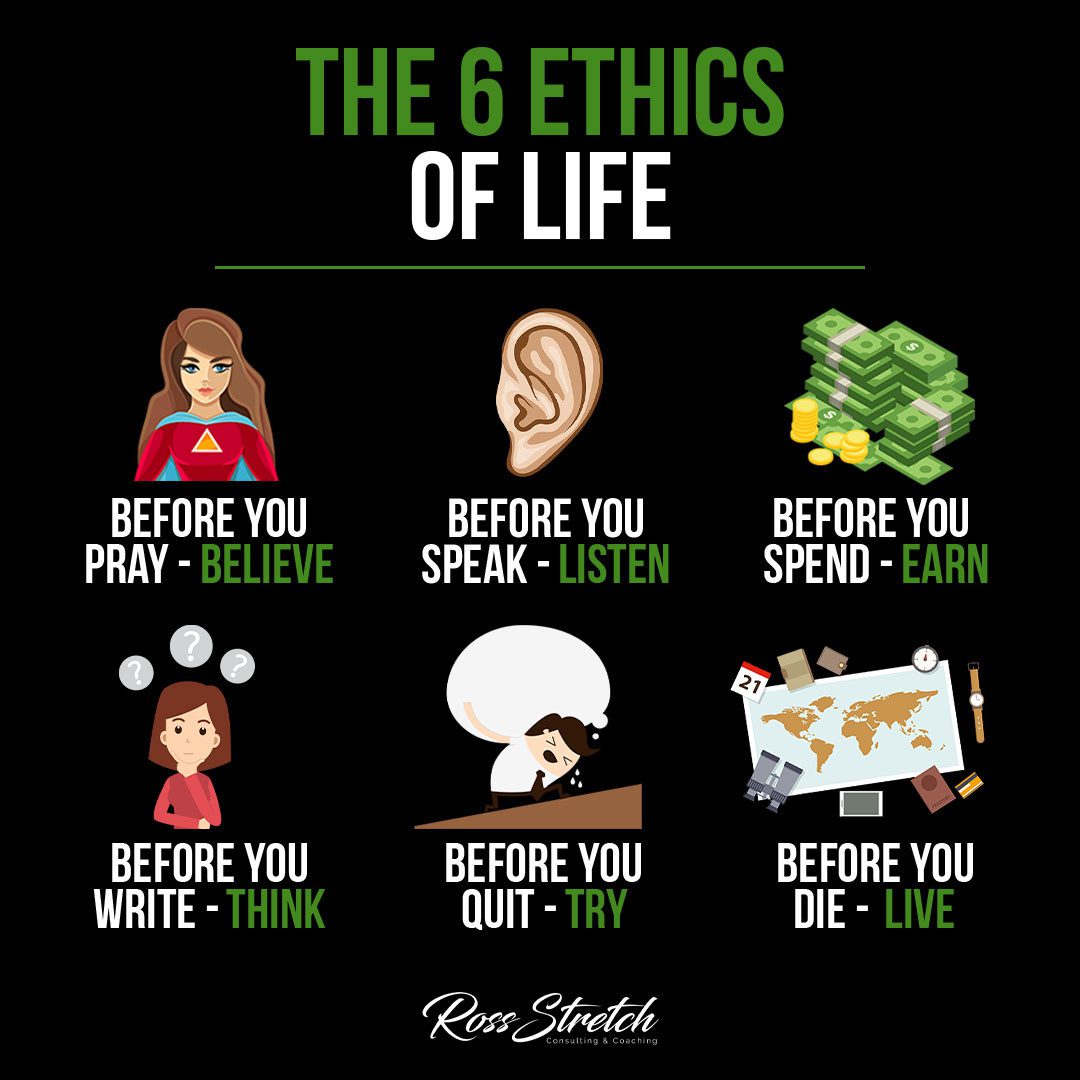
Living a fulfilling life isn’t a matter of luck — it’s the result of deliberate choices made consistently over time. The 6 ethics of life are a set of timeless, practical principles that, when applied daily, help you develop stronger relationships, clearer judgment, and a deeper sense of purpose. If you’ve been feeling stuck, reactive, or disconnected from what matters most, these six principles offer a concrete framework to reset your direction and move forward with intention and clarity.
Why This Matters
Most people wait for fulfillment to arrive — after the promotion, the relationship, the milestone. But research in positive psychology consistently shows that fulfillment is a byproduct of how you engage with daily life, not what you accumulate. The small habits you build around belief, listening, earning, and persistence shape the quality of your experience far more than any single achievement. Principles aren’t abstract ideals — they’re the operating system behind your decisions, especially when those decisions are hard.
Ethical living isn’t about being perfect — it’s about having a framework that guides you when pressure is high and clarity is low. When you know what you stand for before the difficult moment arrives, you make better decisions under pressure. These six ethics act as anchors, giving you something meaningful to return to when you feel pulled off course, overwhelmed, or tempted to take the short-term path at the expense of something more important.
How to Live by the 6 Ethics of Life
Step 1: Before You Pray — Believe
Belief is the foundation of action. Before you ask for anything — from a higher power, from others, or from yourself — you have to genuinely believe that change is possible and that you are capable of creating it. Without belief, even the most earnest request is hollow. This isn’t about blind optimism; it’s about cultivating a realistic faith in your own potential and in the process of working toward something meaningful. Belief is what sustains effort when results are slow and uncertainty is high — it’s the fuel that keeps you moving when logic alone would tell you to stop.
- Write down three specific things you believe you are capable of achieving — revisit this list when doubt takes hold
- Identify the limiting beliefs that hold you back most and challenge each one with concrete evidence to the contrary
- Surround yourself with people whose actions demonstrate what’s possible — belief is genuinely contagious
- Avoid confusing belief with passivity — real belief drives action, not waiting for circumstances to change on their own
Step 2: Before You Speak — Listen
The quality of your communication is determined far more by how well you listen than by how eloquently you speak. Most people listen not to understand, but to respond — they’re already forming their reply while the other person is still talking. Active listening means giving your full attention, suspending judgment, and seeking to understand before seeking to be understood. This single shift transforms relationships, reduces conflict, and gives you far better information to act on than you’d get by dominating the conversation with your own perspective.
- In your next conversation, commit to asking one follow-up question before sharing your own perspective
- Practice pausing for two full seconds after someone finishes speaking before you respond — use that pause to process, not to prepare your reply
- Reflect back what you heard: “What I’m hearing is…” — it shows genuine engagement and catches misunderstandings before they escalate
- Avoid listening to respond rather than to understand — it’s the most common communication error and it quietly damages every relationship it touches
Step 3: Before You Spend — Earn
Financial stability begins with the discipline of earning before spending. This sounds obvious, but consumer culture constantly pushes in the opposite direction — buy now, pay later, upgrade before you can actually afford to. The earn-before-you-spend ethic builds the habit of living within your means, valuing what you have because you know what it cost you, and making deliberate choices with money rather than reactive ones. Over time, this discipline is the practical difference between chronic financial stress and genuine financial freedom.
- Track every dollar you spend for 30 days — most people are genuinely surprised by where their money actually goes
- Build a simple budget that assigns every dollar a purpose before the month begins, not after it ends
- Build an emergency fund before investing in anything discretionary — three months of essential expenses is the baseline target
- Avoid using credit to maintain a lifestyle your income doesn’t support — the gap between what you earn and what you spend widens faster than it closes
Step 4: Before You Write — Think
Words, once sent, cannot be unsent. An email written in frustration, a social media post dashed off without thinking, a text message fired off in the heat of a moment — these can damage relationships, careers, and reputations in ways that take years to repair, if they can be repaired at all. The think-before-you-write ethic asks you to pause and ask: Is this true? Is it necessary? Is it kind? Will I stand behind this tomorrow? That brief moment of reflection before you communicate is one of the highest-leverage habits you can build.
- When writing in an emotionally charged state, draft the message and then wait 24 hours before deciding whether to send it
- Before hitting send, ask three questions: Is this accurate? Is it helpful? Could it easily be misread or misunderstood?
- For important communications, read your message from the recipient’s perspective before it leaves your hands
- Avoid treating written communication as casual or consequence-free — words carry weight regardless of whether they’re typed or spoken
Step 5: Before You Quit — Try
Quitting is sometimes exactly the right call — but most people quit too early, before they’ve given their effort enough time and genuine intensity to produce results. The try-before-you-quit ethic draws a critical distinction between strategic pivots and premature retreats. Real trying means bringing your full effort, adjusting your approach when something clearly isn’t working, and staying in the game long enough to learn what you need to learn. Most meaningful goals require more attempts, more failures, and more time than anyone expects going in.
- When you feel like quitting, ask honestly whether you’ve exhausted your real options or simply hit the first hard part
- Document what isn’t working and try at least two meaningfully different approaches before making a final decision to walk away
- Find someone who has succeeded at what you’re attempting and ask them how many times they nearly quit before they didn’t
- Avoid confusing quitting with pivoting — adjusting your approach is strategic; abandoning a goal at the first real obstacle usually isn’t
Step 6: Before You Die — Live
This final ethic is a reminder that the time for living is now — not after you’ve achieved a certain status, checked enough boxes, or received enough permission. Too many people spend their lives preparing to live — waiting for the right moment, the right circumstances, the right conditions — and never actually do the things that would make their life feel full and meaningful. Living fully means pursuing what matters to you, building relationships worth having, experiencing things that challenge and expand you, and spending your time on what you’d be proud to have spent it on.
- Write down five things you want to experience, build, or contribute before your life is over — treat this list as a concrete to-do list, not a wish list
- Identify one thing you’ve been postponing for the right time and take one concrete step toward it this week
- Audit how you spend your time each week and ask whether it actually reflects the life you want to be living
- Avoid waiting for perfect conditions to start living fully — perfect conditions don’t arrive on their own, they’re created through action
Common Mistakes to Avoid
- Believing without acting — faith without effort produces very little; belief has to be the engine of action, not a substitute for it
- Listening to respond rather than to understand — this is the most common communication failure and it quietly erodes every relationship it touches
- Spending to signal success rather than building actual financial stability — the appearance of wealth and real wealth are very different positions to be in
- Writing or posting impulsively and assuming there are no lasting consequences — there almost always are, and they tend to arrive later than expected
- Quitting at the first or second sign of difficulty rather than distinguishing clearly between a genuine dead end and a temporary obstacle
Conclusion
The 6 ethics of life aren’t complicated — but they require consistency. Believe before you ask, listen before you speak, earn before you spend, think before you write, try before you quit, and live before your time runs out. None of these principles asks you to be perfect. They ask you to be deliberate — to pause for a moment before acting and ask whether your next move aligns with the kind of person you want to be. That pause, made into a daily habit, is where fulfillment actually begins.
Start today by choosing the one ethic you know you’ve been most neglecting. Commit to applying it for the next 30 days and notice what changes in your relationships, your decisions, and your sense of direction. Lasting fulfillment is built one deliberate choice at a time.
Resources
- Greater Good Science Center — UC Berkeley — Research and practical tools on happiness, resilience, gratitude, and living a meaningful life
- Positive Psychology — Evidence-based exercises and frameworks for building well-being, purpose, and life satisfaction
- Psychology Today — Fulfillment and Happiness — Expert articles on the psychology of purpose, meaning, and personal growth
- MindTools — Personal Development — Practical resources for building the habits, mindset, and skills that support a fulfilling life

 Ross Stretch