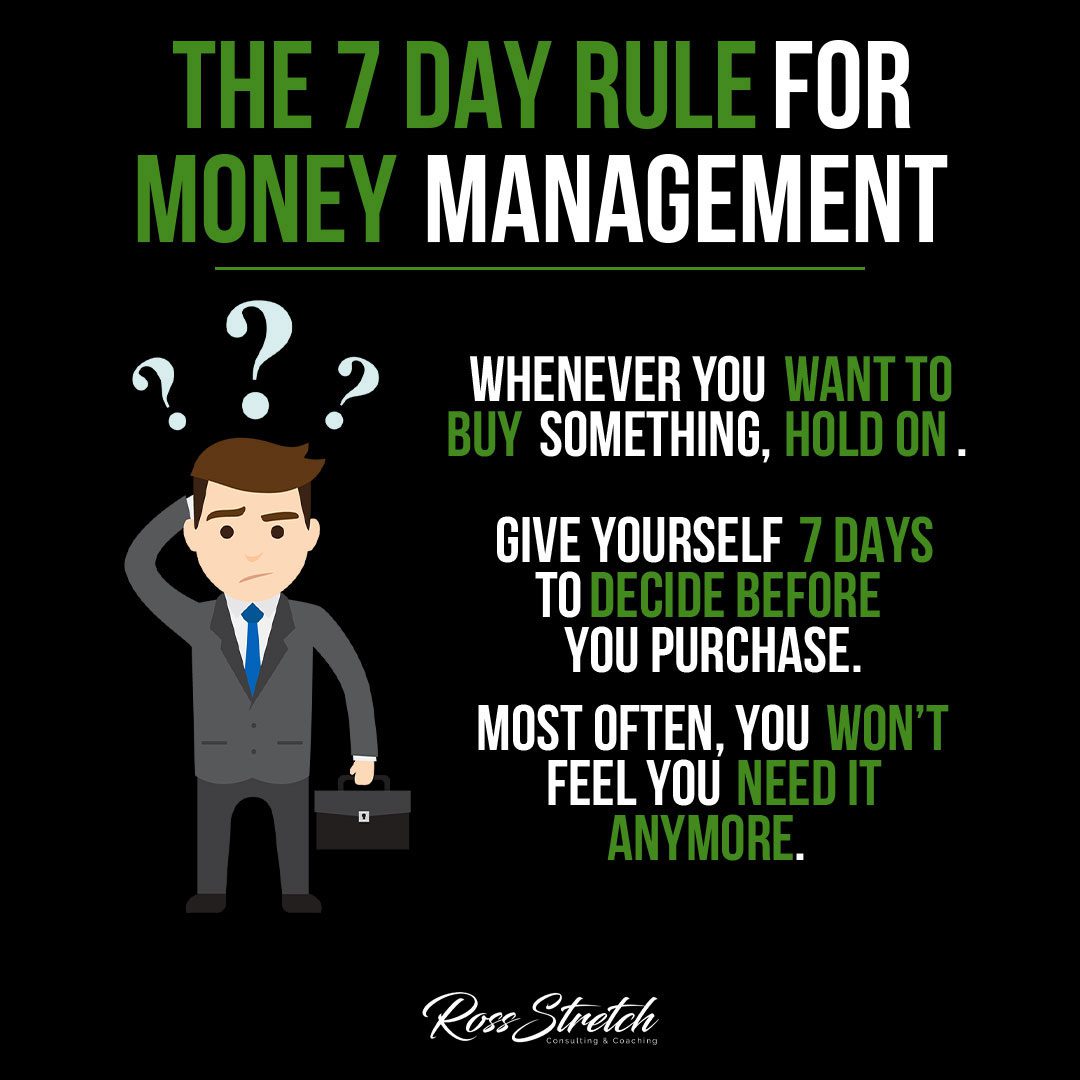
Most people are familiar with the sting of buyer’s remorse — the hollow feeling that follows an impulse purchase you didn’t need and can’t afford. In a world engineered for instant gratification, from one-click shopping to targeted ads designed to minimize the gap between desire and purchase, the default is to spend first and think later. The 7-day rule is a straightforward counterweight: before buying anything non-essential, wait seven days. What sounds almost too simple has become one of the most effective tools in personal finance — and it costs nothing to implement.
\
\
\
\
The Psychology Behind Impulse Buying
\
\
To understand why the 7-day rule works, you first need to understand what drives impulse buying. Purchasing decisions are rarely rational. Emotions — excitement, boredom, anxiety, social pressure — are far more powerful drivers than logic or need. Retailers and e-commerce platforms know this and exploit it deliberately through flash sales, limited-time offers, scarcity messaging, and one-click checkout processes designed to eliminate friction between desire and purchase.
\
\
The neurological mechanism behind impulse buying involves dopamine — the brain’s reward chemical. When you see something you want, dopamine surges in anticipation of getting it. This surge feels good. The act of buying delivers a brief reward, which then fades quickly. The result is a cycle of craving, buying, and dissatisfaction that can quietly drain thousands of dollars from your finances each year.
\
\
Recognizing this pattern is the first step toward breaking it. The second step is introducing a deliberate pause — which is exactly what the 7-day rule accomplishes.
\
\
\
\
How the 7-Day Rule Works
\
\
The mechanics are simple. When you find yourself wanting to buy something that isn’t a necessity, you write it down — in a note-taking app, a spreadsheet, or a physical notebook — and set a reminder for seven days later. During that week, you don’t buy the item. You simply let time pass.
\
\
At the end of seven days, you revisit the list. In most cases, the urgency you felt has evaporated. The item that felt indispensable on Monday feels optional by the following Monday. Research supports this: a significant portion of impulse items are never purchased when a waiting period is introduced, because the emotional spike that triggered the desire has subsided.
\
\
For items where you still feel genuine desire after seven days, you have space to make a considered decision: Can I afford this? Does it align with my priorities? Is this the best available price? Is there a better alternative? You’re no longer deciding under the influence of an emotional surge — you’re deciding with clarity and intention.
\
\
\
\
Practical Application: Making the Rule Work for You
\
\
Like any financial habit, the 7-day rule works best when you build a system around it rather than relying on willpower alone. Start by choosing a tracking method you’ll actually use. A simple notes app or a dedicated spreadsheet works well. For each item, record the date you first wanted it, the price, and a brief note on why you wanted it. This creates a paper trail that helps you spot patterns in your spending impulses over time.
\
\
You can also customize the threshold. Some people apply the rule only to purchases above a certain dollar amount — say, $50 or $100. Others apply it to any non-essential purchase regardless of cost. The right threshold depends on your income, your existing spending habits, and where you tend to leak money most. If small daily purchases are your weak point, consider applying a 24-hour rule to those and the full 7-day rule to larger items.
\
\
One important nuance: the rule isn’t about never buying things you want. It’s about making those purchases consciously rather than reactively. If an item is still on your list after a week and you genuinely want it, budgeted for it, and it aligns with your values — buy it without guilt. The goal is intentionality, not deprivation.
\
\
\
\
The Financial Impact of Waiting
\
\
The savings generated by consistently applying the 7-day rule can be substantial. Consider someone who makes three impulse purchases per week averaging $40 each — that’s roughly $6,000 per year in unplanned spending. If even half of those purchases are eliminated by the waiting period, the annual saving exceeds $3,000. Redirected to an emergency fund or invested in a low-cost index fund, that money compounds into genuine financial security over time.
\
\
The rule also has a secondary financial benefit: it creates natural distance between you and consumer debt. Many impulse purchases are funded by credit cards, which means the true cost includes interest charges. When you pause and reflect, you’re more likely to ask whether you want to carry this purchase as revolving debt — and the honest answer is usually no. Over time, fewer impulse purchases mean lower balances, lower interest payments, and a stronger credit profile.
\
\
\
\
The Mindset Shift Behind the Rule
\
\
Beyond the mechanics, the 7-day rule represents a deeper mindset shift: from reactive to intentional. Consumer culture encourages you to define yourself through what you buy. The 7-day rule encourages you to define yourself through what you actually value — and then spend accordingly.
\
\
People who practice mindful spending consistently report greater satisfaction with their purchases when they do make them. The anticipation built over a waiting week can actually enhance enjoyment of the item when it arrives. More importantly, they report less financial anxiety, fewer regrets, and a stronger sense of control over their lives. Money becomes a tool for building the life they want rather than a source of ongoing stress.
\
\
This mindset shift also aligns naturally with the broader goals of personal finance: building savings, eliminating debt, and creating real financial freedom. Every impulse resisted is a small vote for your future self over your present emotions. Over months and years, those votes add up to meaningful change.
\
\
\
\
Conclusion
\
\
The 7-day rule is one of the simplest and most effective tools in personal finance precisely because it works with human psychology rather than against it. It doesn’t require an elaborate budget system or a dramatic lifestyle overhaul. It just asks you to wait a week before spending money on things you don’t truly need. That one pause, applied consistently, can transform your financial trajectory — freeing up thousands of dollars each year for the things and goals that actually matter.
\
\
\
\
Resources
\
\
- \
- Mr. Money Mustache: Getting Rich from Zero to Hero — A foundational primer on intentional spending and financial independence
- NerdWallet: How to Stop Impulse Buying — Practical strategies for curbing reactive spending
- Your Money or Your Life by Vicki Robin — A classic on aligning spending with personal values
- Psychology Today: Impulse Control — The science behind why we buy impulsively and how to stop
\
\
\
\

 Ross Stretch