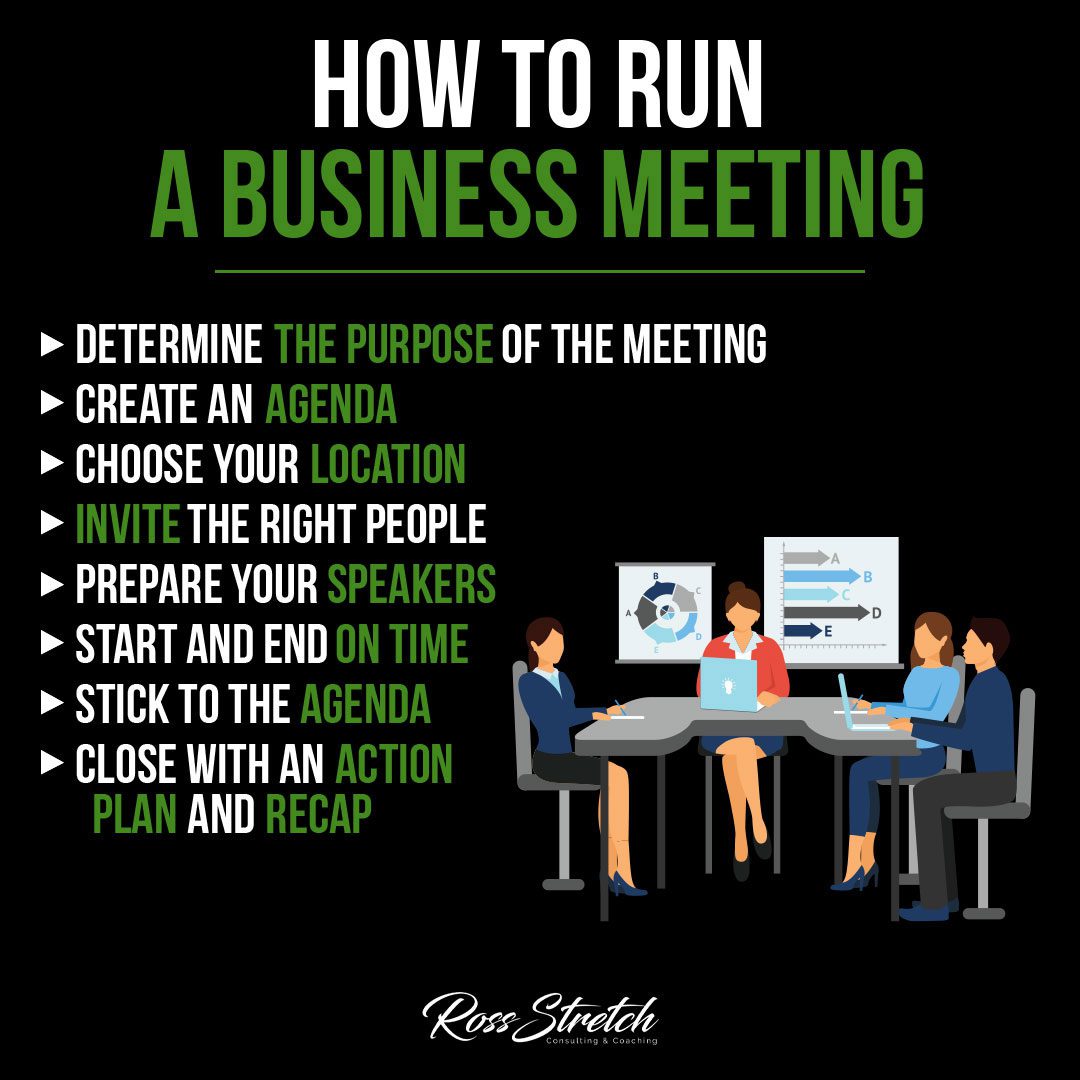

Business meetings are one of the most expensive activities in any organization — and often one of the least productive. Research consistently finds that executives spend a significant portion of their week in meetings, with many of those meetings described as unproductive by the people attending them. Effective meeting management is not just a soft skill; it’s a competitive advantage. When meetings are run with purpose, precision, and accountability, they accelerate decisions, align teams, and drive results. When they’re not, they drain time, erode morale, and create the illusion of progress without the substance.
Start with a Clear Purpose
Before scheduling any meeting, ask one question: what is the specific outcome we need from this conversation? If you can’t answer that clearly, the meeting probably shouldn’t happen. Email, a shared document, or a quick one-on-one call might be a more appropriate format. Meetings earn their place when they require real-time dialogue, collaborative problem-solving, or a decision that benefits from group input.
When you do have a genuine need for a meeting, communicate the purpose explicitly in the invitation. Not just “project update” but “decide on vendor selection for Q3 delivery” or “align on messaging before Thursday’s client presentation.” This level of specificity changes how people prepare and show up. They arrive with the right information and the right mindset rather than waiting to discover what the meeting is actually about.
A clear purpose also gives you a natural mechanism for closing the meeting: you’ve either achieved the stated goal or you haven’t. This makes it far easier to keep discussions focused and to end on time with something concrete accomplished.
Craft a Focused Agenda
A well-constructed agenda is the backbone of an effective meeting. It should list every topic to be covered, allocate a specific time block to each, identify who is responsible for leading each segment, and clarify the desired output — information share, discussion, or decision. Sharing this agenda at least 24 hours in advance allows attendees to prepare meaningfully rather than improvising on the spot.
Keep the agenda realistic. Trying to cover ten topics in 60 minutes guarantees that none of them receive the attention they deserve. If you have more topics than time, prioritize ruthlessly. Push lower-priority items to asynchronous communication or a separate meeting. The discipline of agenda management forces clarity about what actually matters most right now.
Build in five to ten minutes at the end specifically for action item review. This prevents the common failure mode of leaving a meeting energized but with no clear record of who does what by when. Decisions made in the room need to translate into real-world accountability — otherwise the meeting produced nothing durable.
Choose the Right People and Setting
The number of people in a meeting has an outsized effect on its quality. Large groups tend to produce lowest-common-denominator thinking, dilute accountability, and slow decision-making considerably. Invite only the people who genuinely need to be there — either because they have essential information, the authority to decide, or a direct stake in the outcome. Everyone else can receive a summary afterward.
The setting matters too, though it’s often underestimated. A formal conference room creates a different dynamic than a casual environment or a walking meeting. For creative brainstorming, a relaxed informal setting often produces better results. For high-stakes decision meetings, a structured setting signals seriousness and focus. For virtual meetings, investing in good audio and video quality dramatically improves engagement and reduces the fatigue that comes from a poor connection.
For remote or hybrid teams, additional care is needed to ensure that virtual attendees have equal access to the conversation. Designate a facilitator responsible for drawing out quieter participants and ensuring that technical issues don’t exclude anyone from the discussion in real time.
Facilitate the Room Effectively
A meeting is only as good as its facilitation. The facilitator’s job is to start on time, keep discussion on track, draw out diverse perspectives, and ensure the group reaches the outcomes it set out to achieve. This requires both structure and flexibility — holding the agenda firmly while allowing productive tangents enough space before redirecting.
Starting on time is non-negotiable. Waiting for latecomers punishes those who respected the meeting’s schedule and signals that punctuality doesn’t actually matter. Start anyway and let latecomers catch up. Over time, this establishes a culture of respect and discipline that improves every meeting across the organization.
Actively manage participation throughout. It’s common for one or two voices to dominate while others hold back. A skilled facilitator explicitly invites input from quieter participants and diplomatically redirects those who tend to derail discussions. The goal is a high-quality conversation that draws on the full intelligence in the room, not just the loudest opinions.
Adhere to Time and Stay on Track
Time discipline is one of the clearest signals of meeting quality. Starting and ending on time demonstrates respect for every attendee’s schedule and creates the productive pressure that keeps discussions sharp. Meetings that routinely run long signal poor planning and gradually erode the willingness of key people to attend or prepare seriously.
When tangents arise — and they will — acknowledge them briefly before redirecting: “That’s an important point, let’s add it to the parking lot and come back if we have time.” A parking lot — a shared list of items that came up but don’t belong on the current agenda — lets you honor the contribution without derailing the meeting’s primary objective.
Sticking to the agenda isn’t about rigidity; it’s about respect. The people who prepared for a specific set of topics deserve to have that preparation honored. Frequent agenda departures make preparation feel pointless, which means future meetings will feature less of it.
Close with Action and Accountability
The final minutes of a meeting are the most important and most frequently wasted. This is where intentions become commitments. Every action item should be captured with three elements: a specific task, a named owner, and a clear deadline. Vague commitments like “someone will look into this” are indistinguishable from no commitment at all.
Send a meeting summary within 24 hours documenting all decisions made and all action items assigned. This creates a written record that prevents misunderstandings, gives everyone a reference point, and creates gentle but genuine accountability through visibility. When people know their commitments have been recorded and shared, follow-through rates improve noticeably.
For recurring meetings, consider soliciting brief feedback periodically. A simple question — “Was this time well spent? What could we change?” — signals respect for attendees’ time and creates a continuous improvement loop. The best organizations treat their meeting culture as something to actively manage and refine over time.
Conclusion
Effective business meetings are not a luxury — they’re a discipline. Every minute spent in a poorly run meeting is a minute not spent on work that actually moves the needle. By bringing intention to every meeting you call or attend — clear purpose, focused agenda, the right people, strong facilitation, and concrete action items — you transform meetings from a necessary burden into one of your most powerful tools for driving results and building a high-performance culture.
Resources
- Harvard Business Review: Stop the Meeting Madness — Research on what meetings cost and how to fix them
- Death by Meeting by Patrick Lencioni — A compelling case for making meetings more engaging and effective
- MindTools: Running Effective Meetings — A practical guide to meeting facilitation and structure
- Atlassian: How to Run Effective Meetings — Team-tested advice from a company that has made meeting culture a priority

 Ross Stretch