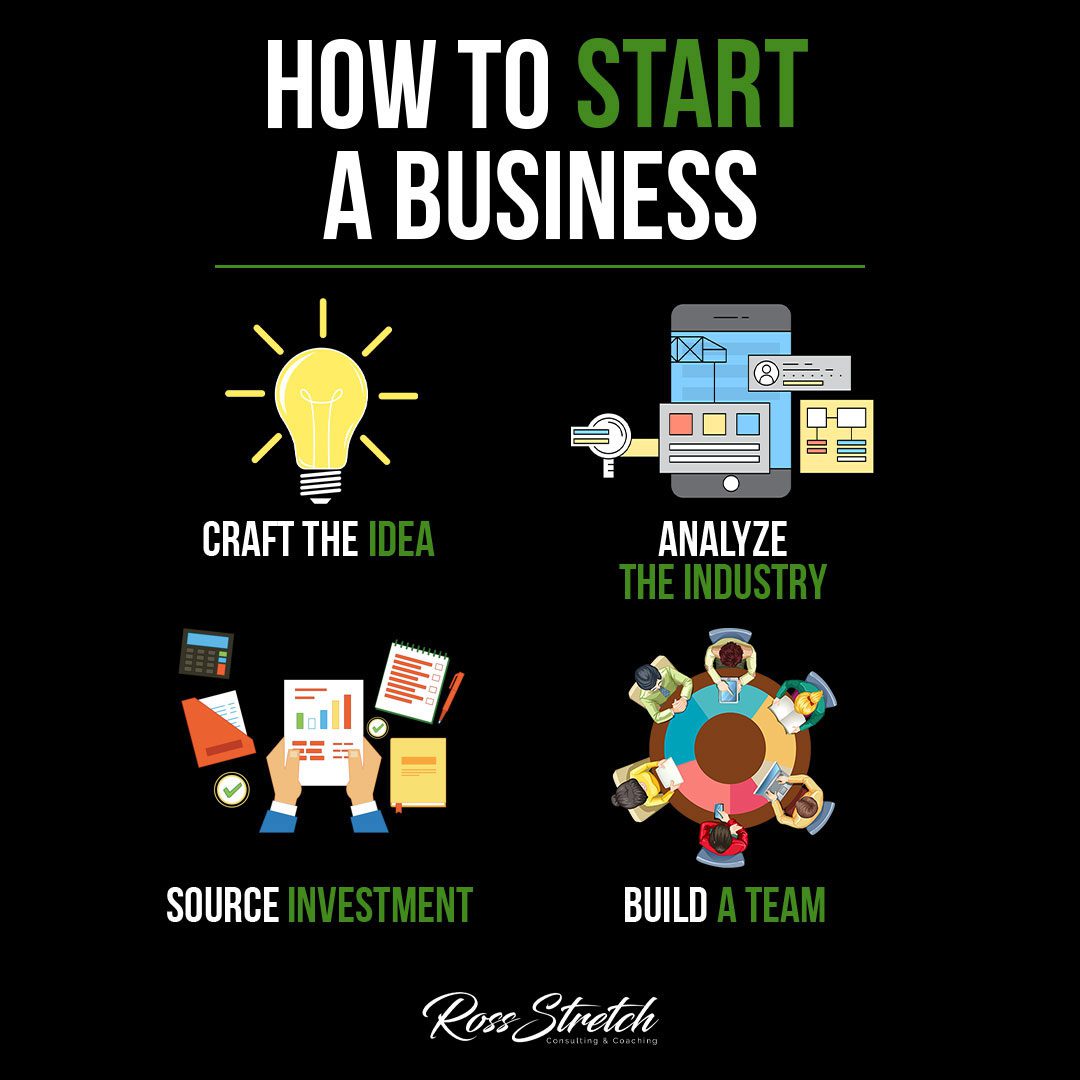

Launching a business is one of the most consequential decisions a person can make — and the difference between ventures that gain traction and those that stall within the first year often comes down to how deliberately the foundational work is done before the doors open. The entrepreneurs who build lasting companies rarely do it through a single burst of inspiration followed by improvised action. They do it by methodically working through a set of critical steps: validating their idea against real market demand, studying the competitive landscape with clear eyes, securing the right capital for their stage, and assembling a team capable of executing the vision. This guide breaks down the core pillars of business launch into four practical steps, each built around the decisions that actually determine whether a new venture survives its early years and grows into something durable. Whether you are building a product company, a service firm, or an online business, these principles apply — and the founders who internalize them give themselves a measurable structural advantage before they ever make their first sale.
1. Crafting the Idea: The Genesis of Innovation
Finding the Intersection of Passion, Skill, and Market Need
Every business begins with an idea, but not all ideas are equal — and the ability to distinguish between them is one of the most valuable skills an entrepreneur can develop early. The most durable business ideas sit at the intersection of three factors: a problem worth solving, a market of people who experience that problem and are willing to pay to have it resolved, and a founder with the knowledge or capability to build a credible solution. Ideas that are purely passion-driven without market validation often struggle to find paying customers. Ideas that are purely market-driven without genuine founder engagement tend to burn out when the work gets genuinely hard. The strongest businesses are built by founders who care deeply about the problem they are solving and have done the work to confirm that others share their pain point and are dissatisfied with existing options.
- Actionable Tip: Before committing to an idea, conduct at least fifteen conversations with potential customers who match your target profile. Do not pitch your solution — ask about their experience with the problem. The language they use, the workarounds they currently rely on, and what they say they would pay for a better solution will tell you everything your business plan needs to know.
- Why It Works: Real customer conversations reveal whether your idea solves an actual, felt problem or merely a theoretical one. The insights gathered often reshape the concept entirely — almost always for the better — before you have spent a dollar on development or marketing.
Pro Tip: Validate Demand Before Building the Full Product
One of the most powerful validation strategies available to early-stage founders is building a minimum viable version of the offer before investing in a complete product. Create a simple landing page describing the solution, run a small paid advertising campaign to drive targeted traffic, and measure how many visitors take a meaningful action — joining a waitlist, requesting more information, or attempting to purchase. Real behavioral data tells you whether demand exists at a scale that justifies full development, without the cost of building something the market does not actually want.
2. Analyzing the Industry: Knowledge Is Power
Understanding the Competitive Landscape Before You Enter It
A strong idea tested against real customer demand is only half the equation. The other half is a clear-eyed understanding of the market you are entering — who the existing players are, what they do well and where they fall short, where the genuine gaps in the competitive landscape exist, and what macro trends are shaping the industry’s direction. Entrepreneurs who skip this step often discover their competitive disadvantages the hard way, after launching into a market they did not fully understand. Those who invest in thorough industry analysis before launching arrive with a sharper value proposition, a clearer picture of their most defensible market position, and the ability to anticipate challenges that would otherwise catch them entirely off guard.
- Actionable Tip: Build a simple competitive matrix mapping your top five to eight competitors across the dimensions that matter most to your target customer — price, quality, speed, customer service, and specialization. Identify where every existing player is consistently weak. Your strongest competitive position will almost always be found at the overlap between an unmet customer need and a place where competitors have systematically underinvested.
- Why It Works: A competitive matrix makes the market structure visible and concrete, replacing vague awareness of competitors with a specific understanding of where opportunity exists. It also clarifies what would need to be true for your business to occupy a valuable position in that landscape credibly.
Pro Tip: Read Industry Trade Publications and Investor Reports
Free industry data is available to any entrepreneur willing to seek it out. Trade association publications, venture capital firm market reports, and industry analyst research regularly publish detailed data on market size, growth trajectories, competitive dynamics, and emerging trends. Government databases provide granular market sizing information that most entrepreneurs never use — creating a genuine informational advantage for the founders who do. Knowing the size and direction of your market before you enter it is not a luxury; it is the foundation of a credible strategy.
3. Sourcing Investment: Fueling the Dream
Matching Your Capital Strategy to Your Business Model
The question of how to fund a new business is inseparable from the question of what kind of business you are building. Different models require different amounts of capital and are suited to different funding structures. A service business or consulting firm can often be started and grown using personal savings and early client revenue, with no external investment required. A product business requiring manufacturing and inventory may benefit from a business loan or angel investment. A high-growth technology platform targeting a large market may need venture capital to move fast enough to establish a dominant position before competitors can respond. Understanding which funding path fits your model — and what each path demands in terms of equity, control, reporting obligations, and timeline expectations — is essential before approaching any investor or lender.
- Actionable Tip: Before seeking any external funding, calculate your minimum viable budget — the smallest amount of capital you need to reach your next meaningful proof point, whether that is your first paying customer, first ten thousand dollars in revenue, or first product launch. Raising only what you need to reach the next milestone preserves equity and keeps you focused on progress rather than the capital-raising process itself.
- Why It Works: Many founders raise more money than they need for their current stage, diluting equity unnecessarily and creating obligations they are not yet positioned to meet. A milestone-based approach to capital keeps the business lean, the founder in control, and investors properly aligned with genuine measurable progress.
Pro Tip: Revenue Is the Best Source of Early Capital
Before approaching any investor, pursue your first paying customers. Revenue is the cleanest, most founder-friendly capital available — it comes with no equity dilution, no interest payments, and immediate proof that your market exists and your offer is viable. Early paying customers also make you a significantly more attractive investment target when you do eventually seek funding: investors price risk first, and a business with revenue carries dramatically lower risk than one operating entirely on vision and a pitch deck.
4. Building a Team: Strength in Unity
Assembling the People Who Will Execute the Vision
A compelling idea, validated by the market and funded appropriately, is still only as strong as the team executing it. The history of failed businesses is full of companies with great concepts that could not build the operational capacity to deliver on them at scale. Building your founding team — or making your first key hires — is one of the most high-stakes decisions a new business faces, and one of the most commonly rushed. The temptation to hire quickly to relieve pressure is understandable, but the cost of a poor early hire is disproportionate: misaligned values undermine culture, skill gaps create bottlenecks, and poor fits consume time and resources that could be directed toward growth. The best early teams are not the largest — they are the ones where every person is genuinely excellent at their function and fully committed to the shared direction.
- Actionable Tip: Before hiring for any role, write a clear definition that specifies not just what the position will do but what success looks like after 30, 60, and 90 days in the seat. Share this document with candidates at the start of the process. People who engage deeply with the success criteria tend to be stronger candidates than those who focus primarily on compensation and benefits from the outset.
- Why It Works: A clear definition of success creates shared expectations before the hire is made — dramatically reducing the misalignment that causes most early performance problems. It also signals to candidates that your company operates with structure and intentionality, which consistently attracts stronger talent than a vague job description.
Pro Tip: Hire for Values Before Skills
Skills can be learned on the job. Values and character are far more durable and resistant to change under pressure. In the early days of a business, when culture is actively being established and every hire has an outsized impact on team dynamics, prioritize candidates who demonstrate the values your company is built on — curiosity, ownership, integrity, and collaborative drive — over those with impressive credentials but a poor cultural fit. A technically excellent hire who does not share the team’s values will almost always create more problems than the skills are worth.
Conclusion
Building a successful business is a process that rewards deliberate action over improvised hustle. The founders who validate their ideas against real market data, understand the competitive landscape before entering it, secure the right capital for their current stage, and build a team aligned around shared values give themselves a structural advantage that hustle and enthusiasm alone cannot manufacture. None of these steps eliminate the inherent uncertainty of entrepreneurship — but each one meaningfully improves the odds that the business you build will find its market, retain its customers, and grow into something that lasts well beyond the first difficult year.
Resources


 Ross Stretch