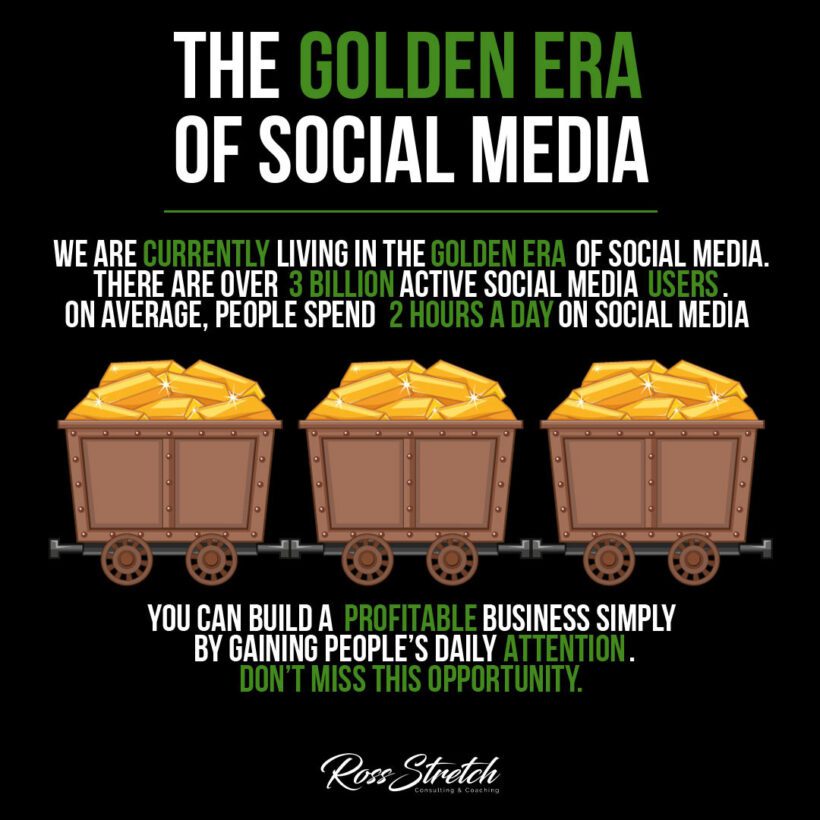

Social media has fundamentally transformed how we connect, build businesses, and reach customers. With roughly 5 billion active users worldwide, platforms like Instagram, TikTok, LinkedIn, and YouTube represent something unprecedented in commercial history: scalable, direct access to virtually any audience on earth. For entrepreneurs and business owners who understand how to operate within this ecosystem, the opportunity is extraordinary. This is the golden era of social media — a period where attention is the ultimate currency and digital platforms have become the most powerful marketplaces ever created.
Understanding the Social Media Landscape
Social media has evolved far beyond personal updates and viral entertainment. It now forms a multi-trillion-dollar commercial infrastructure that shapes purchasing decisions, hiring practices, investment trends, and cultural norms. According to DataReportal’s 2024 Global Digital Overview, the average internet user spends approximately 2 hours and 23 minutes daily on social platforms — a figure that has remained remarkably consistent as platforms compete aggressively for user time.
Each platform occupies a distinct niche in this ecosystem. LinkedIn dominates professional networking and B2B marketing. Instagram and TikTok drive consumer brands, particularly in fashion, beauty, food, and lifestyle. YouTube functions as the world’s second-largest search engine, with users actively seeking information and entertainment. X (formerly Twitter) continues to influence news cycles and real-time conversation. Understanding which platform carries your specific audience — and how that audience behaves there — is the foundational strategic decision any brand must make before investing significant time or money.
The algorithm is the gatekeeper on every major platform. Organic reach is filtered through recommendation systems that prioritize engagement signals: likes, comments, shares, saves, and watch time. This means content quality and format have direct financial consequences. A well-structured, genuinely valuable post can reach thousands of people at zero cost. A poorly constructed one disappears into the feed within minutes of going live.
The Currency of Attention
In the digital economy, attention is the scarce resource that everything else is built on. Advertising revenue, influencer partnerships, product sales, brand deals — all of it flows downstream from a single metric: eyeballs on content. This is why media companies, consumer brands, and individual creators are locked in a relentless battle for user attention, and why the most valuable skill in this environment is the ability to capture and hold it.
For businesses, capturing attention means understanding what compels people to stop scrolling and engage. Research from HubSpot consistently shows that short-form video, authentic storytelling, and genuinely educational content significantly outperform promotional messaging. The brands that thrive on social media are those that lead with value — teaching something useful, entertaining genuinely, or solving a real problem — before asking for anything in return.
This principle runs counter to the logic of traditional advertising, where the goal was to interrupt an audience with a message and push them toward a purchase. The attention economy demands a fundamentally different approach: earn trust first, convert later. The marketing funnel still exists, but it now begins with a piece of content that genuinely serves the viewer — not an ad that interrupts them.
Turning Attention into Profit
Capturing attention is step one. Converting that attention into measurable business outcomes requires a clear, systematic strategy. The most effective social media-driven revenue models follow a consistent sequence: audience building, trust development, offer introduction, and conversion. Skipping or rushing any of these stages produces weak results and frustrates both the brand and the audience.
For direct-to-consumer brands, social media has enabled an entirely new kind of sales channel. Companies like Gymshark and Glossier built massive businesses almost entirely through social media before committing significant budgets to traditional advertising. The common factor in both cases was community — building genuine audiences who felt emotionally connected to the brand’s identity and values, not just its products. When customers feel they belong to something, they buy repeatedly and refer others.
For service providers, consultants, and B2B companies, LinkedIn and YouTube offer particularly powerful lead generation funnels. A consistent presence of well-produced thought leadership content builds credibility over months and generates warm inbound inquiries — prospects who have already consumed hours of your content and arrive pre-sold on your expertise. This dramatically reduces the cost and friction of the sales process compared to cold outreach.
Social Media Strategies That Drive Real Growth
Content creation is the foundation of every successful social media strategy. Without a consistent stream of valuable, well-produced content, no tactical approach can succeed. This doesn’t require expensive production equipment — it requires a deep understanding of your audience’s questions, concerns, and interests, and a commitment to creating content that genuinely addresses them. One well-researched post that answers a common audience question will consistently outperform five promotional posts.
Community engagement separates accounts that grow sustainably from those that plateau. Responding to comments, engaging with followers’ content, and participating in relevant industry conversations signals to both the algorithm and the audience that there’s a real human behind the brand. Brands that treat social media purely as a broadcast channel — posting and then disappearing — consistently underperform those that invest in two-way interaction.
Analytics create the feedback loop that makes improvement systematic. Tools like Meta Business Suite, LinkedIn Analytics, and TikTok Creator Center provide detailed data on what content resonates, when audiences are most active, and which posts drive measurable traffic or conversions. Paid advertising works best when it amplifies content that’s already performing well organically — you’re putting money behind something proven to resonate, rather than hoping an underperforming post will somehow work better with a budget behind it.
Navigating Challenges and Staying Ahead
The opportunities in social media are significant, but the risks are real. Algorithms change without warning. Organic reach has declined systematically on Facebook and Instagram as ad inventory has expanded. Content formats that drove growth last year may underperform this year. Building your entire audience on platforms you don’t own or control carries inherent strategic risk — a policy change or algorithm update can eliminate years of organic reach overnight.
The smartest long-term approach is to use social media as the top of a funnel that drives people toward channels you own: email lists, newsletters, private communities, and owned websites. Building your email list in parallel with your social following provides a fallback that no algorithm can eliminate. The relationship you’ve built transfers to owned channels; the platform’s willingness to show your content to your followers may not.
Trends like AI-generated content, live commerce, and short-form video dominance continue reshaping the landscape continuously. The creators and brands that thrive over the coming years will be those who adapt quickly, stay close to platform changes, and never lose sight of the core fundamentals: genuine value delivered consistently to a clearly defined audience.
Conclusion
The golden era of social media is a window of opportunity unlike anything in the history of marketing. The barriers to building a global audience have never been lower — a single individual with a smartphone and a clear point of view can reach millions of people. A small business with a genuine story and a consistent content strategy can compete with corporations fifty times its size for customer attention and loyalty. The brands and entrepreneurs who approach social media with strategy, patience, and a genuine commitment to serving their audience will be writing the success stories of the next decade. The platform is set. The question is whether you’re ready to step onto it with intention.
Resources

 Ross Stretch