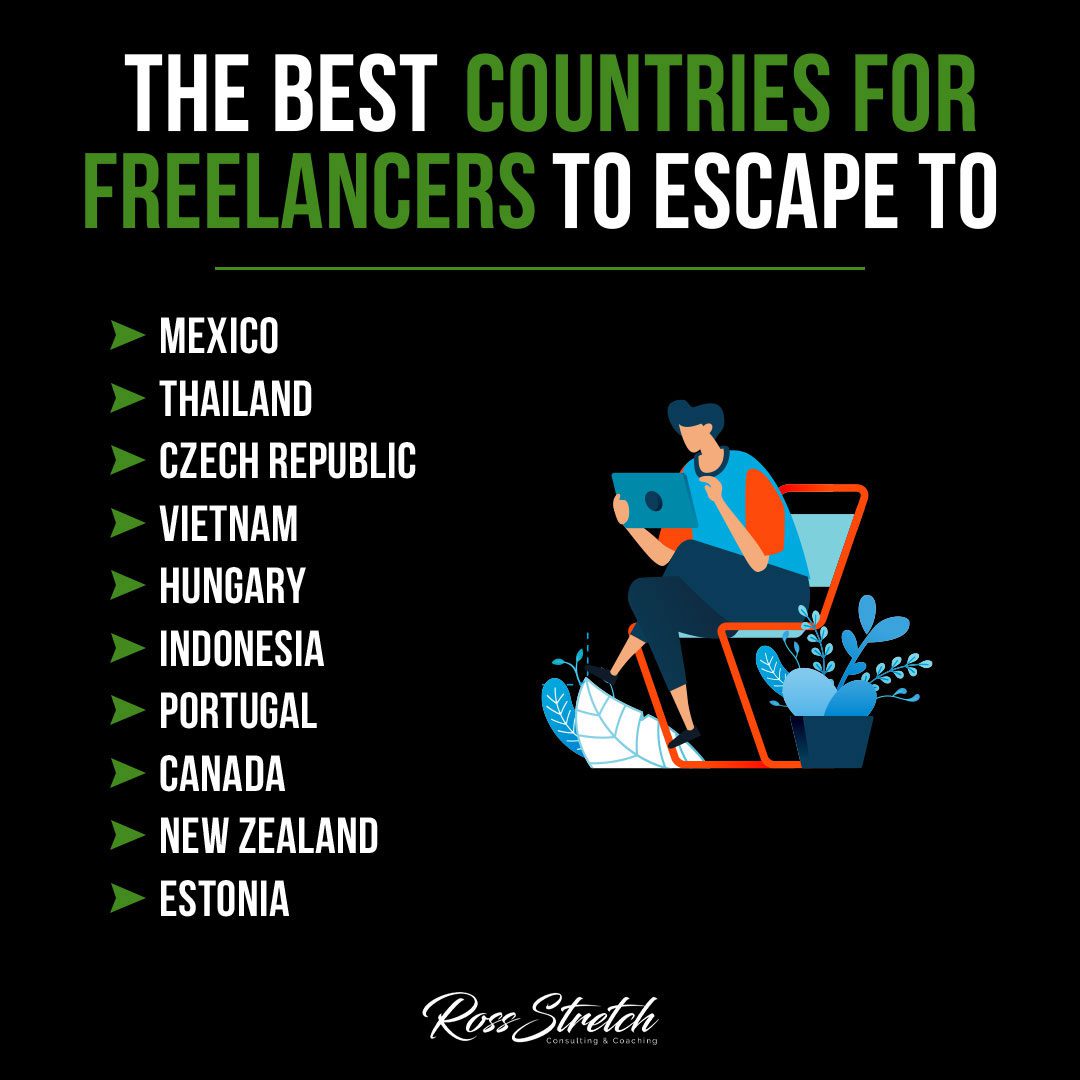
The rise of remote work has fundamentally changed where people choose to live and build their careers. For freelancers and digital nomads, the entire world becomes a potential office — but not every destination delivers equally on cost, connectivity, and quality of life. Choosing the right base can mean the difference between thriving and treading water. The destinations below have earned their reputations through consistently delivering what independent professionals need most: fast internet, affordable living, a vibrant community, and an environment that keeps creative energy high.
Southeast Asia: Affordable, Connected, and Culturally Rich
Thailand remains one of the most popular freelancer destinations in the world, and for good reason. Chiang Mai in particular has built a mature digital nomad infrastructure — co-working spaces offer day passes starting around $5 USD, while a comfortable one-bedroom apartment runs between $300 and $600 per month. Fiber internet is widely available, the food scene is exceptional, and the northern mountain setting provides a welcome contrast to the frenetic pace of Bangkok. The Thai government introduced a Long-Term Resident visa program that offers five-year visas for remote workers earning above a defined income threshold, making longer-term stays increasingly practical.
Vietnam is rapidly emerging as a serious contender. Ho Chi Minh City’s District 1 and Da Nang’s beachside districts offer fast internet, excellent street food, and a startup culture gaining real momentum. A full month of comfortable living — including rent, food, and transport — can come in under $1,000. The country’s investment in fiber infrastructure means urban connection speeds rival those found in Western cities. Vietnam’s youthful, entrepreneurial energy makes it especially magnetic for freelancers in tech, design, and content creation.
Eastern Europe: History, Culture, and a Thriving Tech Scene
Prague has long attracted freelancers and remote workers seeking the intellectual atmosphere of a European capital without London or Paris price tags. The Czech Republic’s capital offers fast public transit, world-class architecture, and a startup ecosystem that has produced notable companies in fintech and software. Co-working spaces are scattered throughout the city’s neighborhoods, and a full-time desk rental typically costs between $150 and $300 per month. The city’s central location within Europe also makes weekend travel effortless — Paris, Berlin, and Vienna are all within a two-hour flight.
Budapest, Hungary offers a similar value proposition with arguably more creative energy. The city has a dense concentration of independent coffee shops, art galleries, and co-working spaces in districts like the 7th and 8th. Monthly living costs for a freelancer hover around $1,200 to $1,800 depending on lifestyle, and the city’s architectural grandeur — thermal baths, the Danube promenade, ornate market halls — makes it one of Europe’s most livable cities for those working remotely.
Estonia stands apart from every other destination on this list because of its pioneering approach to digital governance. As the first country to offer e-Residency, Estonia allows non-residents to register and manage an EU-based company entirely online. This makes it more than a lifestyle destination — it’s a legitimate business infrastructure decision. Tallinn’s medieval old town and excellent fiber internet have also made it a popular base for tech entrepreneurs, and the city regularly ranks among Europe’s top digital innovation hubs.
Western Europe: Portugal Leads the Pack
Portugal has become Europe’s premier destination for English-speaking freelancers, and its popularity shows no signs of slowing. Lisbon and Porto both combine warm weather, affordable café culture, and growing tech communities with relative proximity to the rest of Europe. Portugal introduced a Digital Nomad Visa that allows remote workers earning above a minimum threshold to live legally in the country for extended periods, with a pathway to longer-term residency. Average monthly living costs in Lisbon — including rent — range from $1,800 to $2,800, which represents strong value by Western European standards. The country’s Atlantic coastline, over 300 sunny days per year, and welcoming local culture round out its appeal.
Latin America: Mexico’s Unbeatable Value
Mexico City has evolved into one of the world’s most compelling destinations for North American freelancers. The Condesa, Roma Norte, and Polanco neighborhoods offer a density of co-working spaces, strong fiber internet, and a restaurant and coffee scene that rivals any major global city. Living costs are dramatically lower than comparable US or Canadian cities, with one-bedroom apartments in desirable neighborhoods renting for $700 to $1,200 per month. Mexico’s time zone overlap with North American clients is a practical advantage often overlooked by freelancers considering Asia-Pacific bases — scheduling calls and real-time collaboration is simply easier when you share a working day.
Oaxaca and Mérida have also emerged as lower-cost alternatives for freelancers seeking a slower pace. Both cities have invested in their co-working infrastructure, and their cultural richness — Oaxacan food culture in particular is globally celebrated — makes them appealing for longer-term stays away from the capital’s bustle.
The Pacific and Beyond: Bali, Canada, and New Zealand
Bali remains the quintessential freelancer destination. Canggu and Ubud are home to dozens of dedicated co-working spaces, many offering day passes, monthly memberships, and community events that make meeting other remote professionals nearly effortless. Indonesia introduced a Digital Nomad Visa allowing stays of up to six months. While Bali’s costs have risen with its global profile, a comfortable lifestyle — including rent, food, and transport — can still be maintained for under $1,500 per month for a solo traveler.
Canada’s major cities — Toronto, Vancouver, and Montreal — appeal to freelancers who want the infrastructure, multiculturalism, and quality of life of a world-class city with clearer pathways to long-term residency. New Zealand similarly draws professionals with its strong entrepreneurial ecosystem, ease of doing business, and stunning natural environment. Both countries carry higher costs but offer stability, rule of law, and institutional support that can be invaluable for location-independent professionals building serious businesses rather than simply seeking short-term lifestyle arbitrage.
Conclusion
The best freelancer destination is ultimately the one that aligns with your income, your clients’ time zones, and the type of lifestyle you’re building. Southeast Asia delivers unbeatable cost-to-quality ratios for those starting out. Eastern Europe and Portugal offer European sophistication at a meaningful discount. Mexico City provides North American time zone compatibility with dramatic cost savings. Whatever your priorities, the infrastructure supporting remote work has never been more developed — the question is no longer whether you can work from anywhere, but which anywhere best serves your goals.
Resources
- Nomad List — Real-time data on cost of living, internet speed, and quality of life for hundreds of cities worldwide
- Numbeo Cost of Living — Compare living costs across cities with crowd-sourced data
- Estonia e-Residency Program — Official portal for applying for EU-based digital business registration
- Portugal Digital Nomad Visa Guide — Requirements and application details for Portugal’s remote work visa


 Ross Stretch