The entrepreneurship narrative sold through social media is deliberately incomplete. Highlight reels show the exits, the freedom, and the “from nothing to millions” timelines. What they edit out is the two years of missed family dinners, the personal savings that evaporated, or the three-in-the-morning moments of genuine doubt about whether any of it was worth pursuing.
That filtered version of reality sets new entrepreneurs up for unnecessary shock when the actual experience arrives. And it arrives for everyone — there are no exceptions. The founders who succeed are not those who avoided hardship; they are those who understood it was coming and built the capacity to endure it without breaking down or giving up.
This is not meant to discourage entrepreneurship. The rewards, for those who persist long enough to see them, are real and meaningful. But they belong to those who enter the game with both eyes open, a realistic understanding of what they are walking into, and the habits to sustain themselves through the difficulty that inevitably follows.
The Non-Stop Grind: Hard Work as a Staple
In the early stages of any business, the founder is the business. There are no weekends, no sick days, and no one else to absorb the tasks that fall through the cracks. This is not romanticized hustle culture — it is the structural reality of building something with limited resources and no institutional safety net beneath you.
The grind is not just about hours; it is about intensity. Every email carries stakes. Every client call matters. Every decision creates downstream consequences that would not exist in a salaried role where someone else absorbs organizational risk. The cognitive load of entrepreneurship is exhausting even before accounting for the physical toll of sustained stress and unpredictable income.
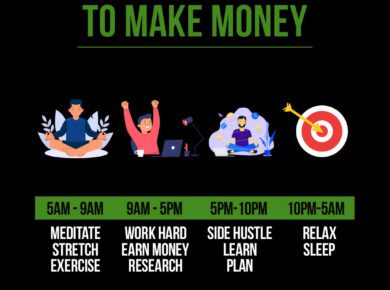
The entrepreneurs who endure are not those who love working constantly — they are those who develop the discipline to work with intention. They build routines that protect their energy, maximize output during peak hours, and prevent the kind of burnout that ends ventures prematurely. Sustainability of effort matters as much as intensity of effort over a multi-year build.
- Prepare for the early years to require more from you than any job ever has
- Build operating routines that protect your energy, not just maximize your output
- Understand that hard work is a constant, not a temporary sacrifice with a clear end date
Facing the Specter of Failure
Statistics on startup failure vary depending on the source and methodology, but every honest version is sobering. The majority of new businesses do not survive their first five years. This is not a reason to avoid starting — but it is a reason to take failure seriously as a planning input rather than treating it as something that only happens to less capable people.
Failure in entrepreneurship rarely arrives as one dramatic moment. It accumulates: a product launch that underperforms, a key client who does not renew, a hiring decision that sets the team back months. The ability to detect these early warning signals, adapt without ego, and pivot before small problems compound into fatal ones is among the most valuable skills an entrepreneur can develop.
The founders who succeed long-term share a counterintuitive relationship with failure: they fail quickly, learn precisely, and recalibrate without wallowing. Resilience is not about feeling no pain — it is about recovery speed. The question is not whether you will face failure, but how long it will take you to extract the lesson and move forward.
- Treat failure as a learning mechanism, not a verdict on your ability
- Develop the habit of analyzing setbacks honestly and without defensiveness
- Build recovery speed — the interval between failure and forward motion determines outcomes
The Loneliness of Late Nights
One of the least-discussed realities of entrepreneurship is the isolation. Employees leave the office and mentally leave work behind. Founders carry it everywhere — to dinner, to the gym, to bed. Unlike in corporate environments, there is no peer group who fully understands the weight of the decisions being made or the stakes attached to each one.
Entrepreneurial isolation compounds when things go wrong. A founder navigating a cash flow crisis or a founding team conflict has limited options for candid conversation. Friends and family offer sympathy but rarely actionable insight. Vulnerability with investors or key employees often feels like a liability that could undermine confidence in the company. So the founder absorbs it alone.
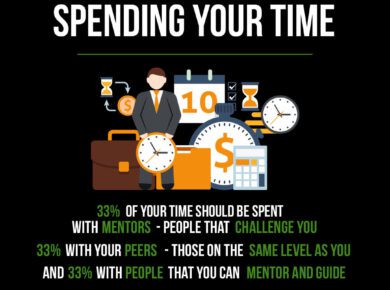
The solution is not to pretend the isolation does not exist — it is to proactively build a support network of people who have navigated similar terrain. Founder peer groups, mentorship relationships, and well-run mastermind groups provide the candid, experienced perspective that is nearly impossible to get elsewhere. This is not a luxury; it is a performance requirement for anyone building something serious over a sustained period.
- Actively seek out peer groups of other founders at similar stages
- Build mentorship relationships with people who have navigated what you are facing
- Protect your mental health with the same rigor you apply to business metrics
Navigating Through Uncertainty
Every entrepreneur operates under persistent uncertainty: about market demand, about competition, about capital availability, about timing. Unlike corporate roles where organizational structure absorbs much of this uncertainty, founders sit at the center of it with no buffer. Every plan has gaps, and the market fills those gaps in ways that cannot be fully anticipated in advance.
The capacity to move decisively without complete information is among the most critical entrepreneurial skills. Waiting for certainty in an uncertain environment is itself a decision — usually a costly one. The best founders develop high-quality judgment frameworks that allow them to act on imperfect data while continuously gathering and integrating new information as it becomes available.
Practically, managing uncertainty means building financial buffers, stress-testing business assumptions, maintaining optionality wherever possible, and treating plans as working hypotheses rather than commitments carved in stone. The goal is not to eliminate uncertainty — that is impossible — but to build an organization capable of adapting to it faster than competitors can.
- Develop flexible plans that can adapt as market conditions change
- Maintain a financial buffer to absorb unexpected challenges without crisis
- Treat uncertainty as a permanent operating condition, not a temporary obstacle
Risk-Taking: Calculated, Not Reckless
Popular media often portrays entrepreneurs as reckless gamblers who bet everything on gut instinct. The reality of the most durable founders is almost the opposite: they take large risks, but they study them carefully first. The romantic version of risk-taking produces occasional lottery winners. The systematic version produces sustained businesses.
Calculated risk means understanding the probability-weighted downside before taking an action. It means never committing resources you cannot absorb losing. It means staging risk — testing a hypothesis at small scale before committing to full execution. And it means continuously re-evaluating risk posture as the business evolves and new information becomes available.
The most successful entrepreneurs are not those who took the biggest risks — they are those who identified asymmetric opportunities where the potential upside vastly exceeded the downside. Finding those asymmetries requires research, honest self-assessment, and the discipline to pass on risks that look exciting but do not meet that standard.
- Assess potential payoff against realistic probability of loss before committing
- Stage investments by testing assumptions small before scaling resources behind them
- Look for asymmetric opportunities where upside potential is disproportionate to downside risk
The Weight of Pressure
The pressure an entrepreneur faces is qualitatively different from the pressure in most jobs. It is not just about personal performance — it is about people who depend on the business functioning. Employees have mortgages. Clients have dependencies. Investors have stakes. The founder is accountable to all of them simultaneously, with no organizational hierarchy to distribute that responsibility.
This pressure can be a powerful motivator when managed well. It sharpens focus, drives creative problem-solving, and creates urgency that employees in stable roles rarely experience. But unmanaged, it becomes corrosive — impairing judgment, damaging relationships, and accelerating the kind of burnout that ends ventures prematurely and permanently.
Effective founders build pressure management into their operating rhythm: regular physical exercise, deliberate recovery time, sleep treated as a non-negotiable performance input, and honest conversations about capacity with their support system. These are not luxuries. They are the operating conditions under which good decisions get made — and bad decisions under sustained, unmanaged pressure are how businesses fail.
- Develop stress management practices before you need them, not after burnout arrives
- Set realistic milestones to create a sense of progress without becoming overwhelmed
- Protect sleep and recovery as performance requirements, not indulgences
Conclusion
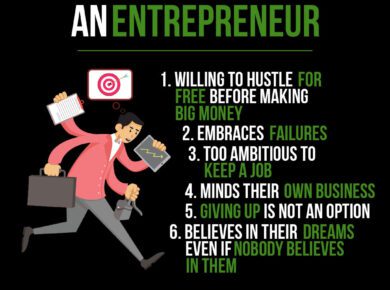
The grit behind entrepreneurship’s glory is real and relentless. Hard work, failure, isolation, uncertainty, risk, and sustained pressure are not occasional features of the entrepreneurial path — they are its constants. The founders who thrive are those who accepted these realities before they started, built habits and support systems capable of sustaining them through difficulty, and committed to learning faster than the business can break them.
Entrepreneurship remains one of the most powerful vehicles for building wealth and meaningful work available to ambitious people. But it demands something most careers do not: the willingness to face its hardest realities without flinching, and to keep going anyway. That willingness, more than any skill or idea, is what separates those who build something lasting from those who only talk about it.
Resources

 Ross Stretch