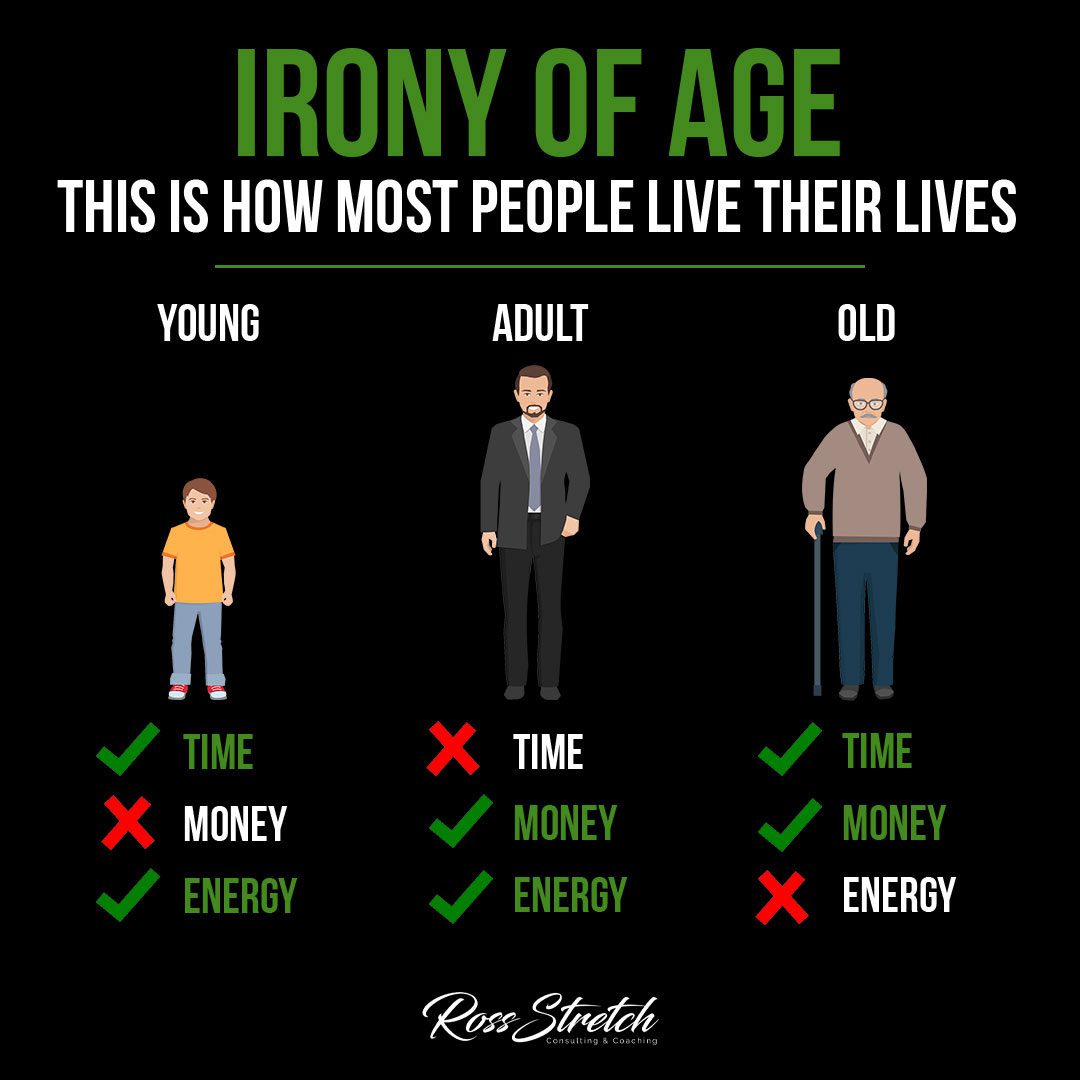

Life distributes its most essential resources — time, money, and energy — in a cruelly unequal way across its different stages. When you are young, you have time and energy but rarely the capital to use them fully. In middle age, income grows but time shrinks and energy is perpetually mortgaged against competing demands. By retirement, time reopens and financial stability may finally be within reach — but the physical capacity to do everything you once imagined has quietly diminished. This is the central paradox of a human life, and understanding it early is one of the most valuable things you can do for your future self.
Youth: Abundant Energy and Time, Limited Capital
The earliest decades of adult life are characterized by a kind of raw potential that most young people fail to fully recognize at the time. The body is at or near its physical peak, curiosity tends to be high, and the future stretches out in every direction with apparent flexibility. There is time to try things, fail, pivot, and try again without the same weight of consequence that accumulates with age.
The limiting factor in youth is almost universally money. Entry-level salaries, student loan payments, the cost of establishing independent housing, and the general expense of building a life from scratch keep most young adults in a state of financial constraint. This creates a frustrating mismatch: the energy and time to do almost anything, with insufficient resources to pursue most of it at the level you would choose.
What youth does have — and what often goes unrecognized — is the most valuable financial asset of all: time in the market. Money invested in your twenties has decades to compound before it is needed. The investments you make in your health, your skills, and your financial foundations during this phase — even when modest — disproportionately shape the options available to you in every phase that follows. This is the compounding that most people only fully appreciate in hindsight.
Adulthood: Money Arrives, Time Disappears
The middle years of professional and family life represent a peak income period for most people, but they rarely feel like abundance. Careers demand more: leadership responsibilities, longer hours, the complexity of organizational life. Families demand more: children, aging parents, household management, relationship maintenance. Income rises, but so does the number of things competing for every available hour.
This is the phase where time becomes the scarce resource. The luxury of an unscheduled Saturday, the freedom to take a spontaneous trip, the ability to simply sit and think without a to-do list pressing in from all sides — these feel like distant memories from youth or distant aspirations toward retirement. For many adults in this phase, the chronic undercurrent is a sense of being perpetually behind, no matter how efficiently they operate.
The risk of this phase is that it becomes purely transactional: working to fund a lifestyle, spending to relieve the stress of the work, and saving just enough to reach the next stage. The antidote is intentionality — identifying the handful of things that genuinely matter and protecting time for them, even imperfectly, rather than waiting for a future phase of life when circumstances will presumably align better. That alignment rarely arrives on its own.
Retirement: Freedom Returns, Energy Wanes
The retirement years bring a return of unstructured time that can feel both liberating and disorienting. For people who planned well financially, this phase offers real comfort — the mortgage is paid, income pressure has eased, and there is finally no one claiming the majority of your waking hours. The things you put off for decades — extended travel, creative pursuits, time with grandchildren, community involvement — are now theoretically available.
The complication is that the body does not wait for the schedule to clear. Health challenges that were manageable in midlife can become more limiting in later decades. The energy levels that made a 14-hour travel day in your thirties feel like an adventure can make the same trip feel genuinely demanding at 72. Physical and cognitive vitality, while highly variable and partially within your control through lifestyle choices, are generally on a declining trajectory from midlife onward.
This does not mean the retirement years are a diminished version of life — they can be extraordinarily rich, especially for people who have invested in their health and relationships across all prior phases. But it does mean that deferring experiences and priorities to retirement, without honestly accounting for the physical dimension of that delay, is a risk worth taking seriously before the window narrows.
The Window of Maximum Leverage
If every life phase has a limitation, the obvious question is: when do all three resources — time, money, and energy — align well enough to take full advantage of them simultaneously? The honest answer is that they rarely do in perfect balance. But there is a window, typically somewhere between the mid-thirties and mid-forties, where the alignment is as close as it tends to get for most people.
By this point, careers have usually progressed enough to generate meaningful income. Physical energy, while beginning to require more deliberate maintenance than in youth, is generally still strong. And there is enough life experience to make better decisions about where time and resources should actually go — rather than learning through expensive trial and error. This window is when the compounding effects of financial and personal investment are most powerful, and when intentionality about how you spend it pays the greatest dividends.
Recognizing this window does not mean manufacturing urgency or anxiety about your current phase. It means understanding that different periods of life call for different priorities, and that the decisions you make in each phase have consequences that ripple forward in ways that are not always visible until you are already living with them.
Making Better Decisions Across All Three Phases
The most useful response to this paradox is not to chase a perfect balance that does not exist, but to be deliberate about what you optimize for in each phase. In youth, the priority should be building skills, financial foundations, and health habits — even when money is tight and the returns feel abstract. In adulthood, the priority should be protecting time for the most important relationships and pursuits, even when demands from work and family make that genuinely difficult. In later life, the priority should be staying physically and mentally active while being generous with the wisdom and resources accumulated along the way.
Across all three phases, the habits that pay dividends regardless of which resource is most constrained are the same: consistent investment in your health, consistent saving and investing in financial assets, and consistent cultivation of relationships that matter. These are not glamorous strategies, but they are the ones that create options when options are most needed — and reduce regret when there is finally time to reflect.
Conclusion
The paradox of time, money, and energy across a human life is not a problem to be solved — it is a reality to be understood and navigated with increasing wisdom. Each phase has gifts and constraints. The goal is not to wait for the phase when everything aligns perfectly, but to make the most of what is available in the phase you are actually in. The people who do this well tend to find that their later years are less about regret over what they missed and more about satisfaction with how they used what they had.
Resources

 Ross Stretch