
In the crowded marketplace of modern business, most startups fail not because their product is bad — they fail because nobody remembers them. Corporate identity is the system that makes your business recognizable, trustworthy, and worth choosing over the competition. It is not your logo alone. It is the entire experience a person has when they encounter your brand, from the colors on your website to the language in your emails to the promise embedded in your mission statement.
Entrepreneurs often sprint toward revenue and overlook the foundational work that makes revenue sustainable. A business without a coherent corporate identity is like a storefront with no signage — people may wander in once, but they have nothing to remember you by. Building that identity intentionally, from the earliest stages, is one of the highest-leverage decisions a founder can make.
What Corporate Identity Actually Means
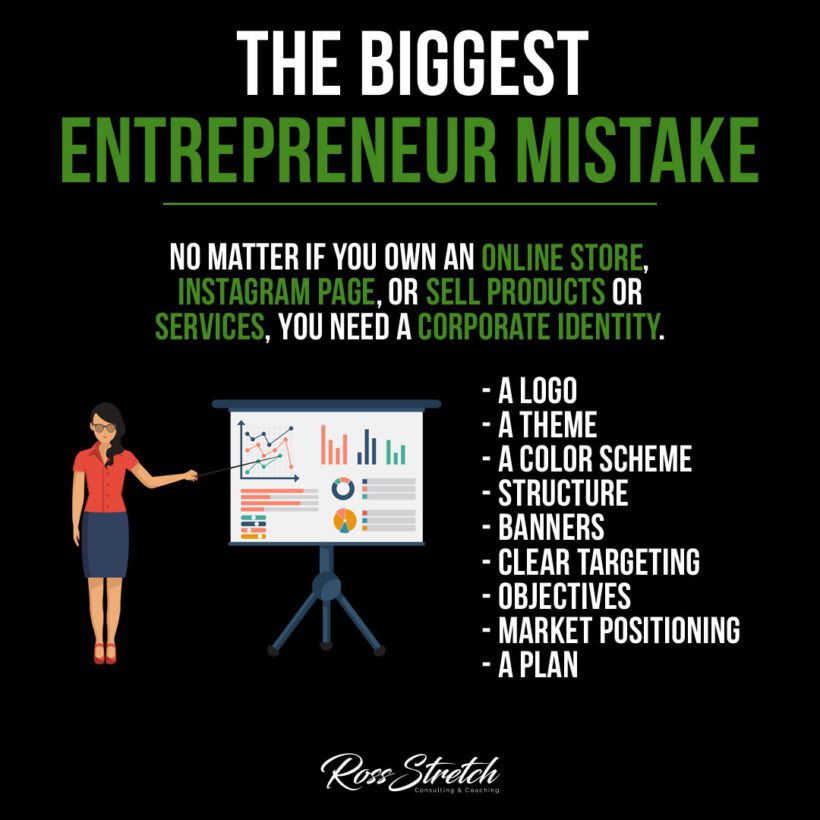
Corporate identity is the sum of how your business presents itself to the world — visually, verbally, and philosophically. It bridges the internal (your mission, values, and culture) with the external (your design, messaging, and customer experience). When these elements align, you create something more powerful than any single advertisement: a brand that people instinctively recognize and trust.
This is not the same as brand awareness, which is simply how many people have heard of you. Corporate identity is deeper — it shapes what people feel and think when they encounter your business. Companies like Apple, Patagonia, and Mailchimp have radically different products, but each has a distinct identity so consistent that you can often recognize their content without seeing the logo. That level of coherence is built deliberately, not accidentally.
For entrepreneurs working with limited resources, a strong corporate identity actually saves money over time. Consistent brand presentation across all channels can increase revenue by an average of 23 percent, according to research published by Lucidpress. When your messaging, visuals, and values align, your marketing becomes more effective and your customer acquisition costs drop.
The Core Elements That Make It Work
A robust corporate identity is built from several interlocking components. Miss one and the entire system weakens. Get all of them right and you have a brand that works for you around the clock.
Your visual system — logo, color palette, typography, and imagery style — forms the first impression. Colors carry psychological weight: blue signals trust, red drives urgency, green suggests growth. Choose deliberately, not because you personally like a particular shade. Your typography should be readable and consistent across digital and print. A good test of logo strength: it should work in black and white before it works in color.
Beyond visuals, your brand voice is equally defining. How does your brand sound? Formal or casual? Analytical or energetic? The language in your website copy, social media posts, and customer emails should feel like it comes from a single, coherent brand personality. Document this in a simple brand guide that anyone creating content for your business can reference.
Market Positioning and Strategic Clarity
Knowing your visual identity only matters if you are clear on your position in the market. Market positioning answers the question: why should someone choose you instead of the next option? It defines the narrow territory your brand owns. The mistake most entrepreneurs make is trying to be everything to everyone — which results in being memorable to no one.
A sharp positioning statement combines your target customer, the category you operate in, and the specific benefit that sets you apart. It does not need to appear on your website verbatim — in fact, it rarely should. Instead, it serves as the internal compass that guides every external decision, from your pricing strategy to the partnerships you pursue.
Your market position should also account for where you stand in the competitive landscape. Are you the premium option that charges more and delivers more? The accessible alternative that democratizes a category? The specialist who solves one problem better than anyone else? Each position has different implications for your visual identity, pricing, and customer experience. Pick one and commit.
The Cost of Getting It Wrong
Ambiguous branding does not just fail to attract customers — it actively confuses them. When your website looks like one type of business but your social media sounds like another and your pricing signals a third, customers feel the inconsistency even if they cannot articulate it. That friction reduces conversion and erodes trust before a single conversation takes place.
Rebranding after the fact is expensive and disruptive. It requires updating every touchpoint — website, packaging, email templates, social profiles, signage, pitch decks — while managing the confusion of existing customers who may not immediately recognize the updated brand. The cost of getting corporate identity right from the beginning is a fraction of the cost of correcting it mid-stride.
Building Your Corporate Identity: A Practical Framework
Building corporate identity does not require an expensive agency, especially in the early stages. What it requires is deliberate thinking, documented decisions, and consistent execution. Start by answering three questions: Who are you serving? What do you uniquely offer? What should people feel when they interact with your brand?
From those answers, develop your core brand elements. Create a simple one-page brand guide documenting your logo usage, color codes, typography choices, and voice guidelines. Tools like Canva, Figma, and Adobe Express make this accessible at low cost. Then audit every public-facing touchpoint — website, social profiles, email signatures, proposals — and enforce consistency across all of them.
- Define your target customer with specific demographic and psychographic detail
- Develop a positioning statement that identifies your unique market territory
- Build a visual system: logo, color palette, typography, and imagery style
- Document your brand voice with example phrases and words to avoid
- Audit all touchpoints and enforce visual and verbal consistency
- Revisit and refine annually as your business evolves
Conclusion
A strong corporate identity is not a vanity project — it is infrastructure. It shapes how customers perceive you, how employees represent you, and how investors evaluate you. For entrepreneurs navigating competitive markets, it is often the difference between a business that blends into the background and one that claims meaningful ground. Build it deliberately, document it clearly, and apply it consistently. That is how brands are made.
Resources
- Canva: How to Build a Brand Identity
- Harvard Business Review: Why Brand Building Is Important
- Entrepreneur: The Basics of Branding
- Nielsen Norman Group: Brand Consistency


 Ross Stretch