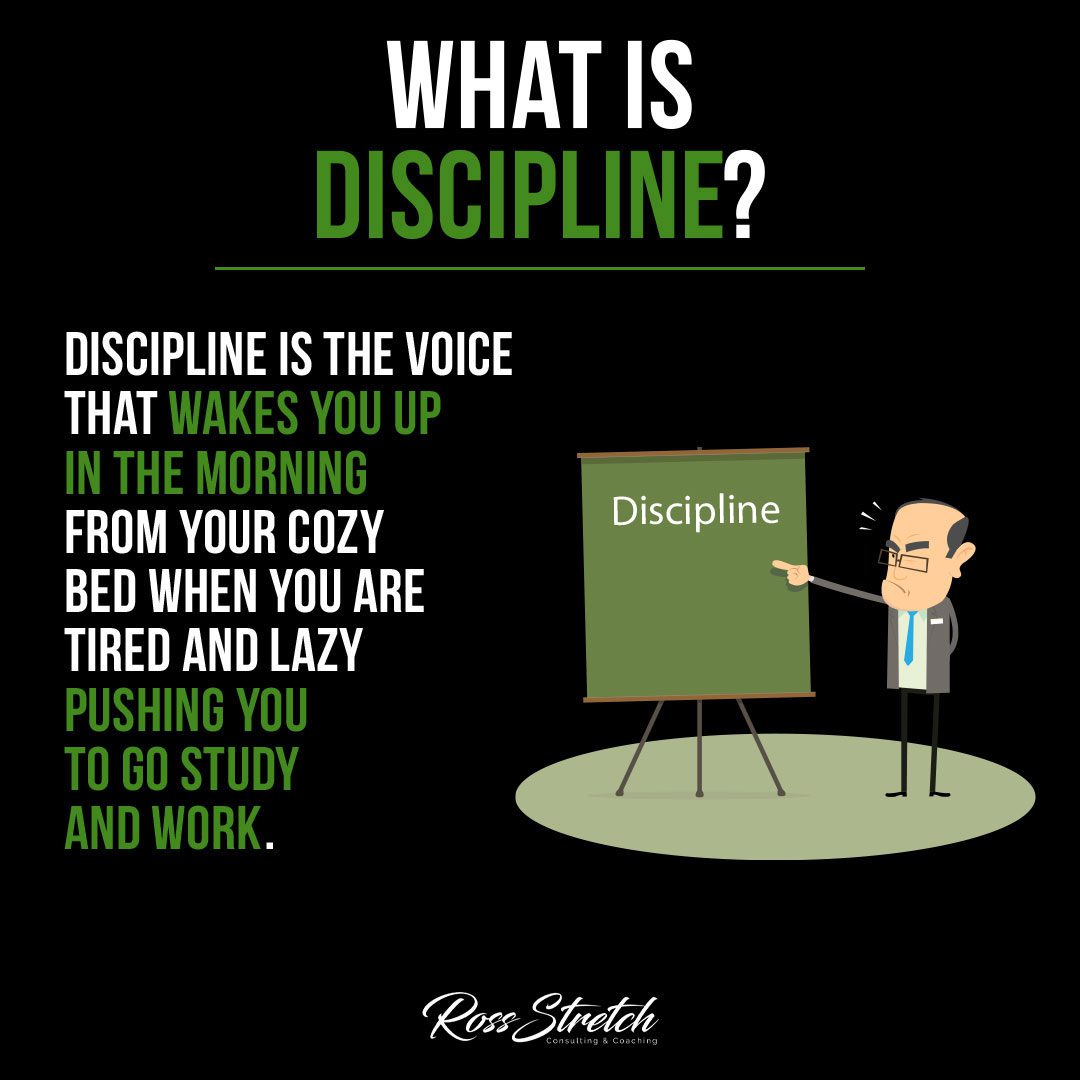
Every high performer arrives at the same realization eventually: motivation is a wave, and discipline is the current underneath it. Motivation spikes in response to excitement about new goals, social pressure, or the emotional high of early progress — then it recedes. Discipline, by contrast, is the practice of doing what needs to be done regardless of how you feel about it in the moment. For ambitious professionals building businesses, growing wealth, or pursuing any meaningful long-term goal, this distinction is not abstract. It determines outcomes.
Discipline vs. Motivation: A Critical Distinction
The cultural emphasis on motivation has created a misleading framework for how achievement actually works. Motivation is reactive — it responds to external triggers: an inspiring video, the energy of a new goal, or the social accountability of a public commitment. It is valuable as a spark but unreliable as sustained fuel. Almost every person who has started a gym routine in January and abandoned it by March has experienced this gap between motivation and discipline firsthand.
Discipline is proactive. It does not wait for the right feeling or the right conditions. A disciplined person shows up to the work on the day they are tired, works on the business when returns are not yet visible, and saves and invests when spending would feel more satisfying in the short term. This is why the most consistently productive people are rarely the most visibly motivated — they have built systems and habits that do not depend on motivation to function. Motivation may have started the engine, but discipline keeps it running.
The practical implication of this distinction: if you are waiting to feel motivated before taking action on an important goal, you have misidentified the mechanism. Action creates motivation far more reliably than motivation creates action.
The Science Behind Self-Control and Habit Formation
Research in behavioral psychology offers a clear picture of how self-control works in practice. Work by psychologist Roy Baumeister on ego depletion suggested that willpower draws on a finite cognitive resource that depletes with use throughout the day. While the scientific community continues to refine this model, the practical implication holds: schedule your most demanding disciplined behaviors early in the day when cognitive resources are highest, rather than relying on willpower that has already been spent on dozens of smaller decisions.
Habit formation research — particularly the framework popularized by James Clear in “Atomic Habits” — shows that behaviors become automatic through repeated execution in consistent contexts. The habit loop of cue, routine, and reward fires automatically once established, which is precisely why disciplined people appear effortless from the outside. The effort was front-loaded into building the habit; the ongoing execution is comparatively automatic. This points to a key strategic approach: reduce friction for disciplined behaviors and increase friction for undisciplined ones. Lay out workout clothes the night before. Keep your phone in another room during focused work. Set up automatic investment transfers that remove the daily decision to save.
Building Discipline Through Daily Routines
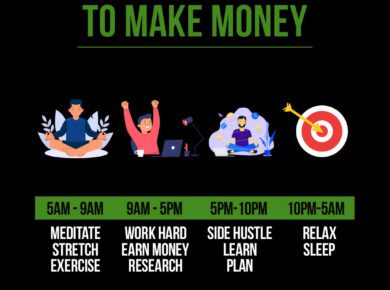
Routines are the infrastructure of discipline. A well-designed morning or evening routine removes the need for decisions about when and how to do important things — those decisions are already made. The cognitive load of choosing is eliminated, leaving only execution. This is why so many high performers, from athletes to entrepreneurs to creative professionals, protect their daily routines with unusual intentionality.
Effective routines do not need to be elaborate or time-consuming. What they need to be is consistent. A simple routine executed every day produces dramatically better results than a sophisticated routine executed sporadically. If you are building discipline from scratch, start with one anchor behavior — something you commit to doing every day regardless of circumstances. Exercise is the classic entry point because the physical practice of showing up when you do not want to translates directly into the psychological capacity for doing the same in professional and financial contexts.
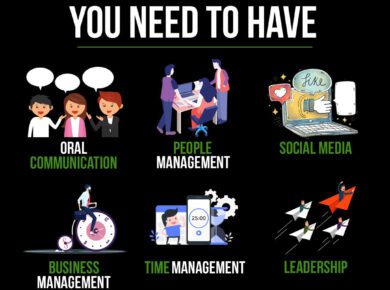
Time-blocking is a complementary tool. Rather than operating from an open-ended to-do list, assign specific tasks to specific time windows and treat those blocks with the same non-negotiability you would give an external meeting. This creates structure that does not depend on in-the-moment decision-making about what to work on next, eliminating a significant source of procrastination and wasted time.
Overcoming Resistance: The Internal Battle
Author Steven Pressfield described resistance in “The War of Art” as the internal force that opposes any act of meaningful work — creative, entrepreneurial, or otherwise disciplined. Resistance shows up as procrastination, distraction, perfectionism, and self-doubt. It is, Pressfield argues, proportional to the importance of the work: the more meaningful the goal, the stronger the resistance you will face. Recognizing resistance as a predictable feature of pursuing anything significant — rather than a sign that something is wrong — changes your relationship to it.
The most effective counter to resistance is beginning. Psychologists describe this through the Zeigarnik effect: once you start a task, your brain generates tension that drives you toward completion. The hardest part of almost any disciplined behavior is the first two minutes. Getting started — even with a smaller version of the task than you intended — bypasses resistance more reliably than waiting to feel ready. Breaking large goals into daily minimums makes this easier: rather than committing to writing a book, commit to 300 words per day. Rather than committing to building a business, commit to one hour of focused business development each morning. Daily minimums are achievable on difficult days and easily exceeded on good ones.
Discipline, Productivity, and Financial Results
The connection between discipline and financial outcomes is direct and well-supported by research. Individuals who score high on conscientiousness — the personality trait most closely linked to discipline and self-regulation — consistently earn more over their careers, accumulate greater savings, and report higher job satisfaction. This is not primarily because disciplined people are smarter or more talented. It is because they follow through on what they commit to doing, which is the actual driver of results in most professional and financial domains.
In personal finance, discipline closes the gap between knowing what to do and actually doing it. The barrier to building wealth is almost never information. Most people understand that they should save a percentage of income, avoid high-interest consumer debt, and invest consistently in diversified assets. The barrier is consistent execution of behaviors that are not immediately rewarding. Discipline is what bridges that gap, particularly during periods when the results of disciplined behavior are not yet visible.
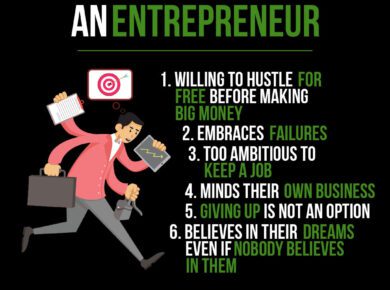
In business, discipline determines whether good ideas become functional operations or remain permanently at the planning stage. The entrepreneur with average ideas and extraordinary follow-through consistently outperforms the entrepreneur with brilliant ideas and inconsistent execution. Markets reward output, not potential — and output is, ultimately, a function of discipline applied over time.
Conclusion
Discipline is not a fixed personality trait you either have or don’t. It is a skill, and like all skills, it develops through deliberate practice applied consistently over time. You build it by showing up to small commitments, then progressively larger ones. Every time you do what you said you would do — especially when you did not feel like it — you strengthen the behavioral patterns and self-concept that make disciplined action increasingly automatic. The gap between where you are and where you want to be is bridged by the actions taken between motivation peaks. That bridge is discipline.
Resources

 Ross Stretch