Walk into any store and you’ll see it immediately: two nearly identical products sitting side by side, one priced at $20 and the other at $200. The difference isn’t the materials or the engineering — it’s the brand. Branding is the single most powerful lever a business can pull to justify premium pricing, inspire loyalty, and transform commodities into cultural icons. Understanding how branding works — and how to build it deliberately — is one of the highest-leverage skills available to any entrepreneur or marketer operating in today’s market.
Understanding Branding Beyond the Logo
Most people think of branding as the visual identity of a business: the logo, the color palette, the typography. These elements matter, but they are merely the surface expression of something much deeper. A brand is the total impression a company creates in the minds of its audience — the emotions it evokes, the promises it makes, and the identity it helps customers project to the world around them.
Apple doesn’t sell computers — it sells the idea that you’re a creative, forward-thinking person. Nike doesn’t sell shoes — it sells the belief that athletic greatness is within your reach. These companies have built brands so powerful that their logos alone communicate entire value systems. That’s the real goal of branding: to make your product or service inseparable from a set of values and emotions that your target customer wants to be associated with.
This distinction has enormous practical implications. Businesses that compete on product features alone are playing a race to the bottom — there will always be someone willing to make something cheaper. Businesses that compete on brand equity operate in a different market entirely, one where the rules of commoditization don’t apply in the same way and where price becomes a secondary consideration to perception and identity.
The Psychology Behind Brand Value
Why are consumers willing to pay significantly more for a branded product than a functionally identical generic one? The answer lies in psychology, not economics. Strong brands tap into some of the most fundamental human needs: the need for belonging, for status signaling, for identity expression, and for trust reduction in an overwhelmingly crowded marketplace.
The halo effect plays a central role in brand value. When a brand is associated with one positive attribute — quality, innovation, luxury, or authenticity — that perception extends to everything the brand touches. This is why Apple can launch a pair of headphones at a premium price and sell millions immediately, even without an established track record in audio hardware. The brand’s existing reputation does the selling before the product even arrives.
Trust is another critical component of brand psychology. In a market flooded with options, a recognized brand dramatically reduces cognitive load. Choosing a familiar brand feels safer than gambling on an unknown alternative, even when the data might not fully support that feeling. This trust premium translates directly to revenue — and it’s built through consistency, transparency, and reliably delivered promises over time.
The Branding Price Premium in Action
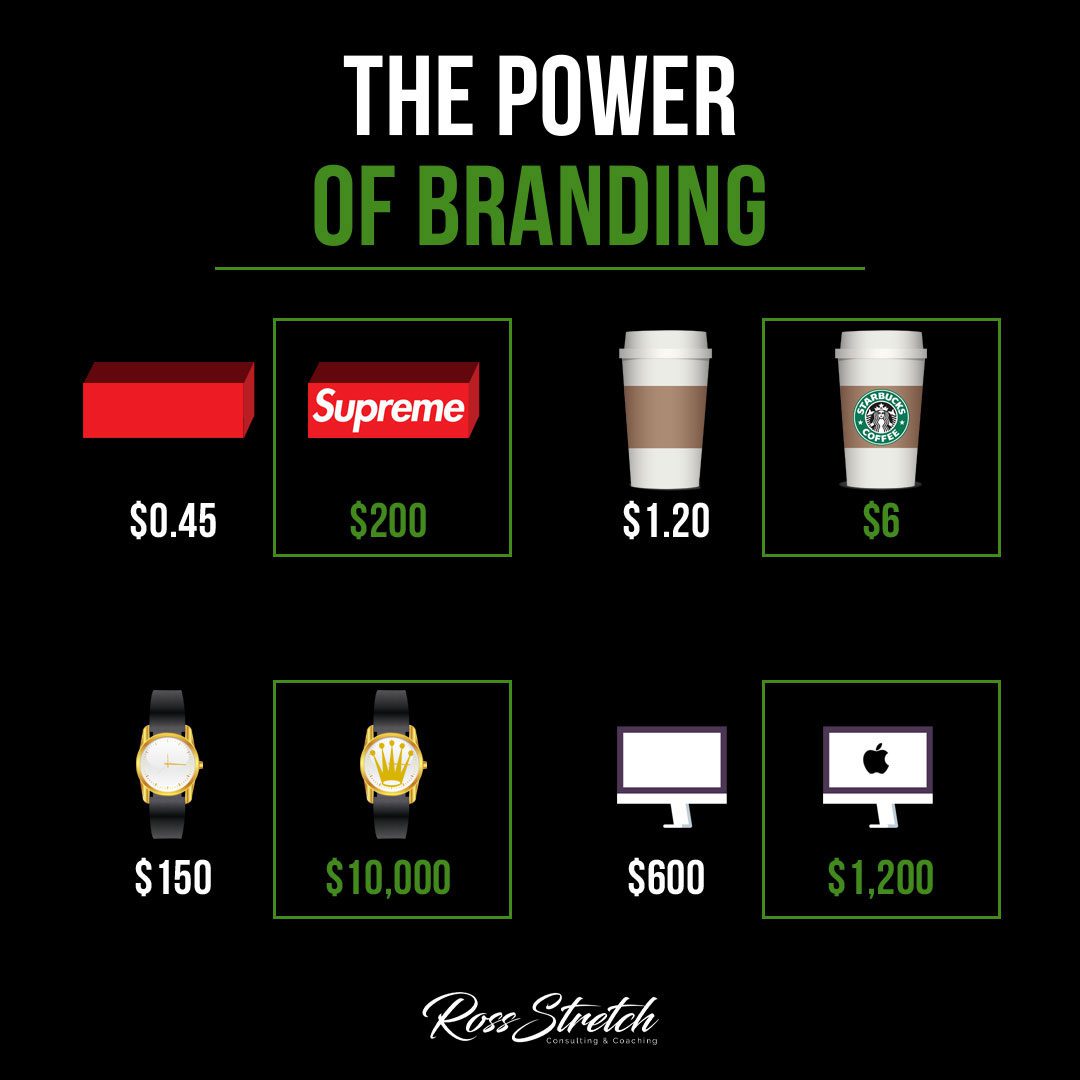
The pricing power that strong brands command is staggering when examined directly. A plain white t-shirt from a generic manufacturer retails for a few dollars. The same t-shirt with a recognizable streetwear logo can sell for hundreds — sometimes thousands — based on brand cachet alone. A cup of drip coffee costs under two dollars. The same volume of specialty coffee, sourced from a specific farm and served in a carefully designed environment, commands ten times that amount.
This isn’t irrational consumer behavior — it’s a rational response to the genuine value that strong branding creates. When you buy the more expensive option, you’re not just buying the physical product. You’re buying the experience, the identity association, the social signal, and the trust that the brand has spent years or decades building. Each of those elements has real psychological value to the consumer.
For entrepreneurs, the commercial implication is direct: the revenue ceiling of your business is closely tied to the strength of your brand. A business with weak branding competes primarily on price. A business with strong branding competes on value — and that’s a game with much more attractive long-term economics.
Building a Brand That Commands a Premium
The good news is that powerful branding isn’t reserved for large corporations with massive marketing budgets. Some of the strongest brands in the world were built by small teams with clear thinking, authentic stories, and consistent execution. The principles are accessible to any business willing to apply them deliberately and patiently.
- Define your core values: What does your brand stand for beyond the product? What are your non-negotiables? These values should inform every decision the company makes, from product design to customer service to hiring.
- Consistency across every touchpoint: Your brand lives in every email, every social post, every packaging decision, and every customer interaction. Inconsistency erodes trust faster than almost anything else, and trust is the bedrock of brand equity.
- Build emotional connections: People make purchasing decisions emotionally and justify them rationally afterward. The brands that dominate their categories make customers feel something — belonging, aspiration, confidence, or joy.
- Deliver on your promises: Brand equity is built through kept promises. Every time your product or service exceeds expectations, you make a deposit into your brand’s trust account. Every time you fall short, you make a withdrawal.
The most effective brand builders treat their brand as a living entity that requires ongoing attention, not a campaign that launches and runs itself. The brands with the most durable pricing power are those that have remained consistent in their values and messaging for years while continuing to deliver on their core promise at every interaction.
Branding as a Long-Term Competitive Moat
In competitive strategy, a moat is a durable advantage that makes it difficult for competitors to displace you. Brand equity is one of the most powerful moats that exists, because it lives in the minds of consumers rather than in physical or financial assets that can be replicated with capital. You can copy a product feature, undercut a price, or replicate a supply chain — but you cannot copy the emotional connection a brand has built with its audience over years of consistent delivery.
This is why Warren Buffett has consistently favored businesses with strong brand moats — Coca-Cola, American Express, See’s Candies. These businesses command pricing power that persists through economic cycles, competitive pressure, and technological change. The brand is the competitive advantage, and it grows stronger with every year that the company continues to deliver on it.
For entrepreneurs building businesses today, the implication is clear: treat brand building as infrastructure investment, not as discretionary marketing spend. Every dollar and hour invested in creating a clear, consistent, and emotionally resonant brand pays dividends for years in the form of customer loyalty, word-of-mouth referrals, and pricing power that competitors simply cannot match.
Conclusion: Harnessing Branding for Business Success
Branding is not a luxury reserved for companies with deep pockets — it’s a fundamental business strategy that determines whether you compete on price or on value. The businesses that build genuine brand equity don’t just charge more; they retain customers longer, attract stronger talent, weather recessions more effectively, and ultimately build more durable and transferable wealth. Start with your values, stay consistent, and make every customer interaction a contribution to the brand you’re deliberately building.
Resources
- Building a StoryBrand by Donald Miller — a practical framework for clarifying your brand message so customers can understand and act on it
- The Brand Gap by Marty Neumeier — the definitive guide to brand strategy for business leaders and marketers
- Harvard Business Review: Branding Articles — research-backed insights on brand strategy, consumer psychology, and competitive positioning
- Investopedia: Brand Equity Explained — how to measure and grow the financial value embedded in your brand


 Ross Stretch