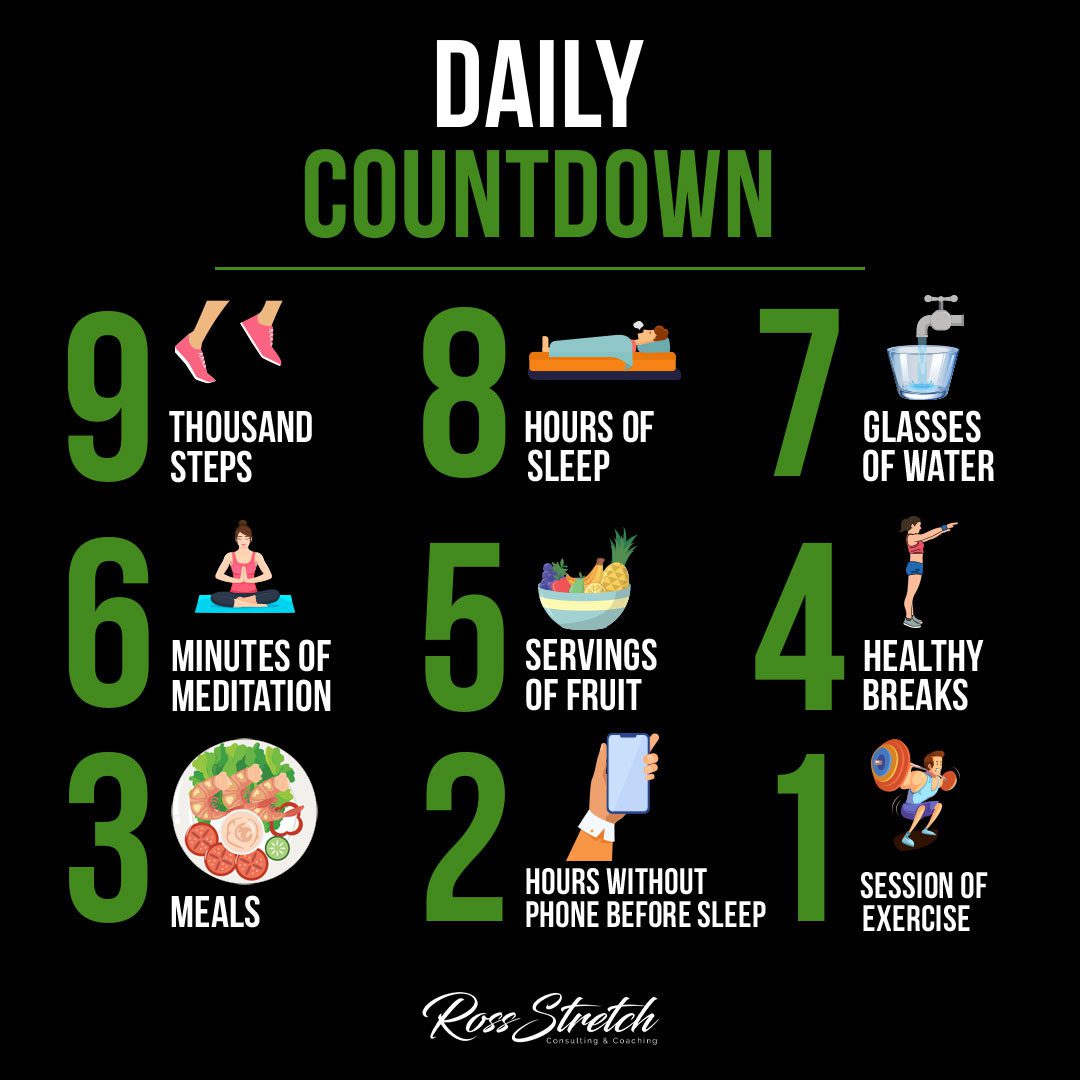
In today’s world, where the lines between work and life often blur, maintaining a balanced routine is harder than ever. Most wellness advice is either overwhelming or too vague to act on. The “Daily Countdown” cuts through the noise — nine specific, measurable habits that together form a complete framework for physical and mental well-being. Each element is grounded in research and designed to be achievable without a complete lifestyle overhaul. Start with the ones that feel most attainable and build from there.
9. 9,000 Steps: The Power of Daily Movement
Walking Is Underrated Medicine
Walking 9,000 steps daily supports weight management, improves cardiovascular health, and enhances mood through the release of endorphins. Unlike structured exercise, steps accumulate naturally throughout the day — making this one of the most accessible health targets available.
- Actionable Tip: Set a phone reminder at 2pm to check your step count and take a short walk if you are behind pace.
- Why It Works: Breaking the sedentary cycle that desk-based work creates reduces the metabolic and cardiovascular risks associated with prolonged sitting.
8. 8 Hours of Sleep: The Non-Negotiable Reset
Sleep Is a Performance Input, Not a Luxury
Eight hours of quality sleep rejuvenates the body, sharpens cognitive function, and regulates emotional resilience. Sleep deprivation impairs decision-making in ways that closely resemble alcohol intoxication, according to the American Academy of Sleep Medicine. For ambitious professionals, chronically shortchanging sleep undermines the performance they are trying to optimize for.
- Actionable Tip: Set a consistent bedtime alarm — not just a wake alarm — and treat it as seriously as a morning meeting.
- Why It Works: Consistent timing regulates your circadian rhythm, making both sleep onset and morning alertness significantly easier over time.
7. 7 Glasses of Water: Consistent Hydration
Dehydration Disguises Itself as Many Other Problems
Even mild dehydration — as little as one to two percent below optimal — impairs concentration, working memory, and mood. Many people who reach for a second coffee mid-afternoon are actually responding to dehydration, not caffeine deficiency. Seven glasses daily supports digestion, regulates body temperature, and keeps cognitive performance sharp.
- Actionable Tip: Keep a one-liter water bottle on your desk and refill it at least twice before the end of the workday.
- Why It Works: Starting the day with a full glass of water before coffee rehydrates your body after the overnight fast and reduces the mid-morning energy dip.
6. 6 Minutes of Meditation: Clearing Mental Noise
Small Doses Compound Over Time
Six minutes of daily meditation produces measurable reductions in cortisol and strengthens the prefrontal cortex — the region responsible for attention, planning, and emotional regulation. For high-performers, this is a direct investment in decision-making quality. No dedicated meditation space or long sessions required.
- Actionable Tip: Use a guided app like Headspace or Calm and schedule your session for the same time each day — morning works best for most people.
- Why It Works: Consistency matters more than duration. Six minutes daily for thirty days produces more lasting change than a single long session each week.
5. 5 Servings of Fruits and Vegetables: Nutrition That Protects
Whole Food Remains the Best Supplement
Five daily servings of fruit and vegetables ensure a consistent intake of vitamins, minerals, and antioxidants that no supplement stack fully replicates. They also provide dietary fiber that supports gut health — and emerging research continues to link gut microbiome health to both immune function and mental well-being.
- Actionable Tip: Add one serving to breakfast (berries in yogurt), one to lunch (leafy greens or raw vegetables), and build dinner around at least two vegetable components.
- Why It Works: Meeting this target consistently reduces the risk of cardiovascular disease, type 2 diabetes, and several cancers according to decades of epidemiological research.
4. 4 Healthy Breaks: Managing the Cost of Sustained Focus
Rest Is Part of the Work
Four intentional breaks during the workday counteract the physical and cognitive costs of prolonged sitting and sustained concentration. Brief pauses — even five to ten minutes — restore attentional resources, reduce eye strain, and prevent the diminishing returns that come from extended uninterrupted focus sessions.
- Actionable Tip: Set a timer for 90-minute work blocks and use each break to stand, stretch, or step outside. Avoid social media during breaks — it creates cognitive load rather than reducing it.
- Why It Works: The brain’s default mode network, active during rest, is critical for creative thinking and problem-solving. Breaks allow it to consolidate information and generate insight.
3. 3 Meals: Structure That Stabilizes Energy
Consistent Fueling Prevents Reactive Eating
Three balanced meals a day provide the structural anchor your metabolism needs to maintain stable blood glucose levels. Skipping meals — especially breakfast — leads to reactive overeating later and impairs cognitive performance during the skipped window. Each meal should include protein, healthy fats, and complex carbohydrates to sustain energy without producing the spike-and-crash pattern that refined foods create.
- Actionable Tip: Plan each meal the evening before rather than deciding when you are already hungry. Hunger impairs decision-making and reliably leads to worse food choices.
- Why It Works: Consistent meal timing supports circadian metabolic rhythms and reduces the likelihood of high-calorie, low-nutrient snacking throughout the day.
2. 2 Hours Screen-Free Before Bed: Protecting Sleep Quality
The Wind-Down Window Matters More Than You Think
Reducing screen exposure in the two hours before sleep is one of the most evidence-backed interventions for improving sleep quality. Blue light from screens suppresses melatonin production — the hormone that signals your body it is time to sleep. Social media and news consumption also activate the stress response, creating a vigilant mental state that delays sleep onset.
- Actionable Tip: Set devices to automatic Do Not Disturb mode at a fixed time each evening and replace screen time with reading, light stretching, or conversation.
- Why It Works: Melatonin suppression from evening blue light can delay sleep onset by up to 90 minutes, reducing total sleep time even when you get into bed at a reasonable hour.
1. 1 Session of Exercise: The Master Habit
Nothing Replaces Structured Physical Activity
One daily session of intentional exercise — whether strength training, cardio, yoga, or sport — is the single most well-documented intervention for both physical and mental health. Exercise improves cardiovascular function, increases muscle mass and bone density, reduces inflammation, and triggers the release of BDNF, which supports neuroplasticity and cognitive performance. It also remains the most effective long-term treatment for anxiety and depression available.
- Actionable Tip: Schedule exercise the same way you schedule meetings — in your calendar, with a specific time and duration. Treat it as non-negotiable unless something of equal importance takes priority.
- Why It Works: Regular exercisers report higher energy levels, better focus, and more stable moods throughout the day — making every other item on this countdown easier to maintain.
Conclusion
The Daily Countdown is not about doing everything perfectly — it is about building a system where healthy defaults are the path of least resistance. Each of these nine habits reinforces the others: better sleep improves your workouts, regular exercise reduces stress, consistent hydration sharpens your thinking. Start with two or three you can maintain immediately, add others gradually, and trust the compounding effect. Small daily actions sustained over months and years separate people who talk about their health from those who actually have it.
Resources

 Ross Stretch