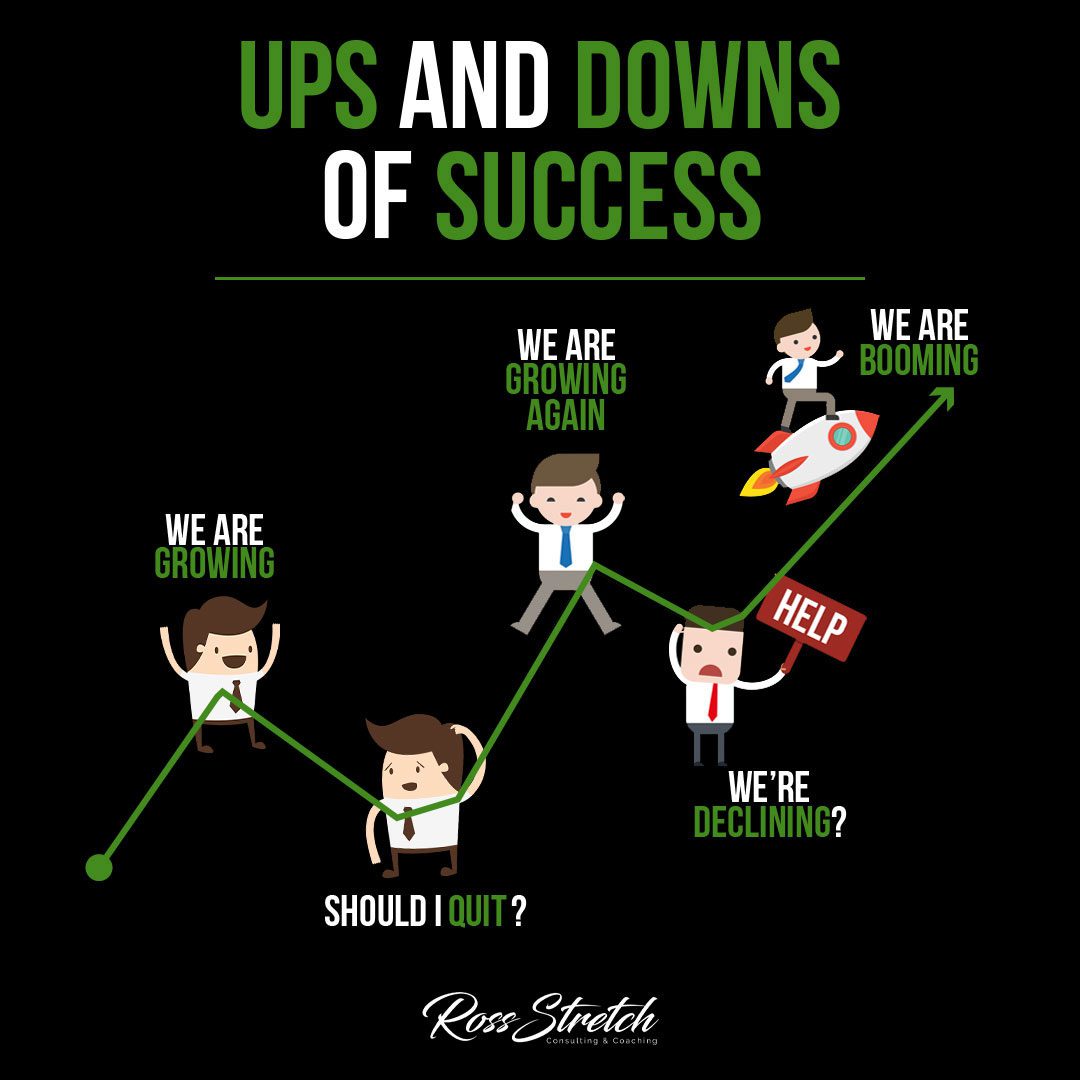
Every person who has built something meaningful — a business, a career, a financial foundation, a creative body of work — has navigated a journey that looked nothing like they expected when they started. The trajectory of real success is not a smooth upward curve. It is a series of growth phases, setbacks, periods of stagnation, unexpected breakthroughs, and further challenges that require a different response at every stage. Understanding this reality in advance changes how you navigate it.
The professionals and entrepreneurs who achieve lasting results are not those who avoided difficulty. They are those who developed the ability to respond constructively at every phase of the journey — growing during growth, persisting during doubt, learning during decline, and staying grounded during booms. That capacity is a skill, and like all skills, it can be developed deliberately.
Success Is Not a Straight Line
One of the most persistent myths about achievement is that people who succeed follow a clear, consistent upward trajectory. In reality, the journeys of nearly every successful professional, entrepreneur, or investor include extended periods of stagnation, significant reversals, and moments where the outcome was genuinely uncertain. The clean narratives we hear about other people’s success are curated retrospectively — they leave out the months of zero growth, the failed strategies, and the serious doubts.
This matters because many people abandon promising efforts during the difficult phases, believing that struggle means they have taken the wrong path. In most cases, they have not. They have simply reached the part of the journey that sorts those who persist from those who do not. The difficulty of a phase does not indicate the quality of the direction — it indicates that you are doing something worth doing, which is inherently demanding.
The Growth Phase: Building Without a Guarantee
Early growth phases are energizing precisely because everything feels possible. You are learning rapidly, seeing early results, and building momentum. This is also the phase where the most important habits and systems are established — and where the most common mistakes are made. Early success can create overconfidence, leading to premature scaling, under-investment in fundamentals, or the illusion that the initial approach will continue working indefinitely without refinement.
Use the growth phases to build infrastructure, not just results. When income is growing, use the excess to build reserves and invest in systems rather than simply increasing personal spending. When skills are developing rapidly, document and standardize what you are learning so it becomes replicable rather than dependent entirely on your individual presence. The decisions you make during growth phases determine how well you will handle the inevitable challenges that follow.
The Doubt Phase: When Quitting Feels Rational
Every sustained effort eventually reaches a point where the initial energy has worn off, results have plateaued or declined, and the gap between current reality and original vision feels vast. This is the doubt phase — and it is where most people stop. The doubt phase is not a signal that the endeavor was wrong. It is a signal that the initial approach has reached its limit and something needs to evolve. The people who navigate it successfully are those who distinguish between “this specific strategy is not working” and “this goal is not achievable.”
In the doubt phase, the most valuable action is honest diagnosis rather than emotional reaction. What specifically has changed? What assumptions are you operating from that may no longer be accurate? What have you learned since you started that should inform how you proceed? These are strategic questions, not existential ones. Answering them objectively — ideally with input from a mentor or trusted peer who can see your situation more clearly — provides a path forward that simply waiting for motivation cannot.
The Decline Phase: What Downturns Actually Tell You
Declines are uncomfortable in proportion to how attached you are to a particular outcome or identity. A business owner whose identity is entirely tied to revenue growth will experience a revenue decline very differently from one who views decline as diagnostic information about a market or approach. The latter can respond strategically. The former is managing an identity crisis while also trying to solve a business problem — a combination that rarely produces good decisions under pressure.
When decline occurs, the most important response is to separate meaningful signal from short-term noise. Not every decline is structurally significant. Markets fluctuate, seasons change, and short-term metrics often mislead. But some declines indicate genuine problems — a value proposition that has become less relevant, a cost structure that does not scale, or a skill gap that has become a bottleneck. Protecting your perspective during decline — maintaining the clarity needed to diagnose and respond rather than simply react — is as important as any tactical adjustment you make.
The Boom Phase: Managing Success Without Losing Perspective
Boom phases create their own set of challenges. When results are strong, demand is high, and growth feels effortless, the natural response is to accelerate — to take on more, invest more aggressively, and expand in every direction simultaneously. This can be exactly right. It can also be the source of the next major setback, if the boom phase produces overextension, neglect of fundamentals, or the assumption that current conditions will persist indefinitely without continued effort.
The professionals who sustain success over long periods treat boom phases as preparation for the next challenge rather than as evidence that challenges are behind them. They use strong periods to build cash reserves, deepen capabilities, and stress-test the systems that produced the results. They celebrate genuinely — strong results deserve acknowledgment — but they do not confuse a favorable period with permanent security. The discipline to remain strategically grounded during boom phases is what makes those phases last longer and produce more durable outcomes.
How to Stay Grounded Through Every Phase
The common thread across all phases of the success journey is the need for a clear, stable sense of direction that is not entirely dependent on current results. When you know why you are pursuing what you are pursuing — when the goal is connected to genuine values rather than external validation — the emotional intensity of each phase becomes more manageable. Growth is satisfying without being intoxicating. Doubt is uncomfortable without being definitive. Decline is serious without being devastating. Booms are celebrated without producing complacency.
- Review your goals and their underlying purpose regularly, not just when results are disappointing and you are searching for motivation.
- Track leading indicators — the inputs and behaviors you control — rather than fixating on lagging outcomes you cannot directly manage day to day.
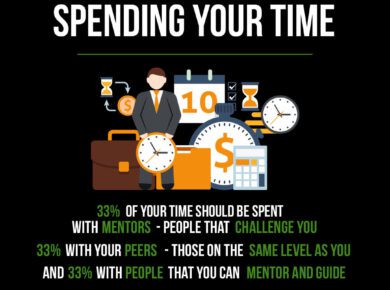
- Build relationships with people who have navigated similar journeys. Their perspective during difficult phases is genuinely irreplaceable.
- Maintain a consistent baseline of physical health, sleep, and recovery. Your ability to think clearly during challenging phases depends heavily on these foundations.
Conclusion
The journey to meaningful achievement is not a problem to be solved — it is a terrain to be navigated. Growth, doubt, decline, and boom are not obstacles interrupting the path to success; they are the path. Developing the capacity to respond constructively at each phase, rather than simply hoping for growth and dreading everything else, is what separates those who build lasting results from those who have strong starts and difficult finishes. Embrace the full journey. The phases that feel like setbacks are often where the most important growth happens.
Resources

 Ross Stretch