Anger is one of the most powerful and destructive forces in human decision-making. In the heat of the moment, it narrows our thinking, impairs our judgment, and drives us toward actions we would never take in a calm state. The words spoken in anger, the emails sent without reflection, the relationships fractured by impulsive reactions — these consequences do not disappear when the emotion passes. Emotional intelligence, particularly the ability to manage anger before it manages you, is one of the most practical and high-value skills you can develop. It protects your relationships, your reputation, and your ability to make sound choices under pressure when it matters most.
Why Anger Distorts Decision-Making
When anger is triggered, the brain’s amygdala — the region responsible for processing threat responses — activates rapidly and floods the system with stress hormones, including cortisol and adrenaline. This physiological response is designed for survival situations, not nuanced social and professional challenges. The prefrontal cortex, which governs rational thinking, planning, and impulse control, becomes effectively suppressed during this stress response. You are left with a biological system optimized for immediate physical threat, being applied to a situation that requires careful thought and measured response.
The result is predictable: we say things we do not mean, make decisions without considering consequences, and prioritize winning the moment over preserving what actually matters. The destructive power of anger is not its intensity — it is the speed at which it moves us to action before our higher reasoning can intervene. Understanding this mechanism is the first step toward breaking the cycle, because it reframes anger not as a character flaw, but as a biological process that can be interrupted with the right strategies and a modest amount of practice.
The Irreversibility Problem: Why Timing Is Everything
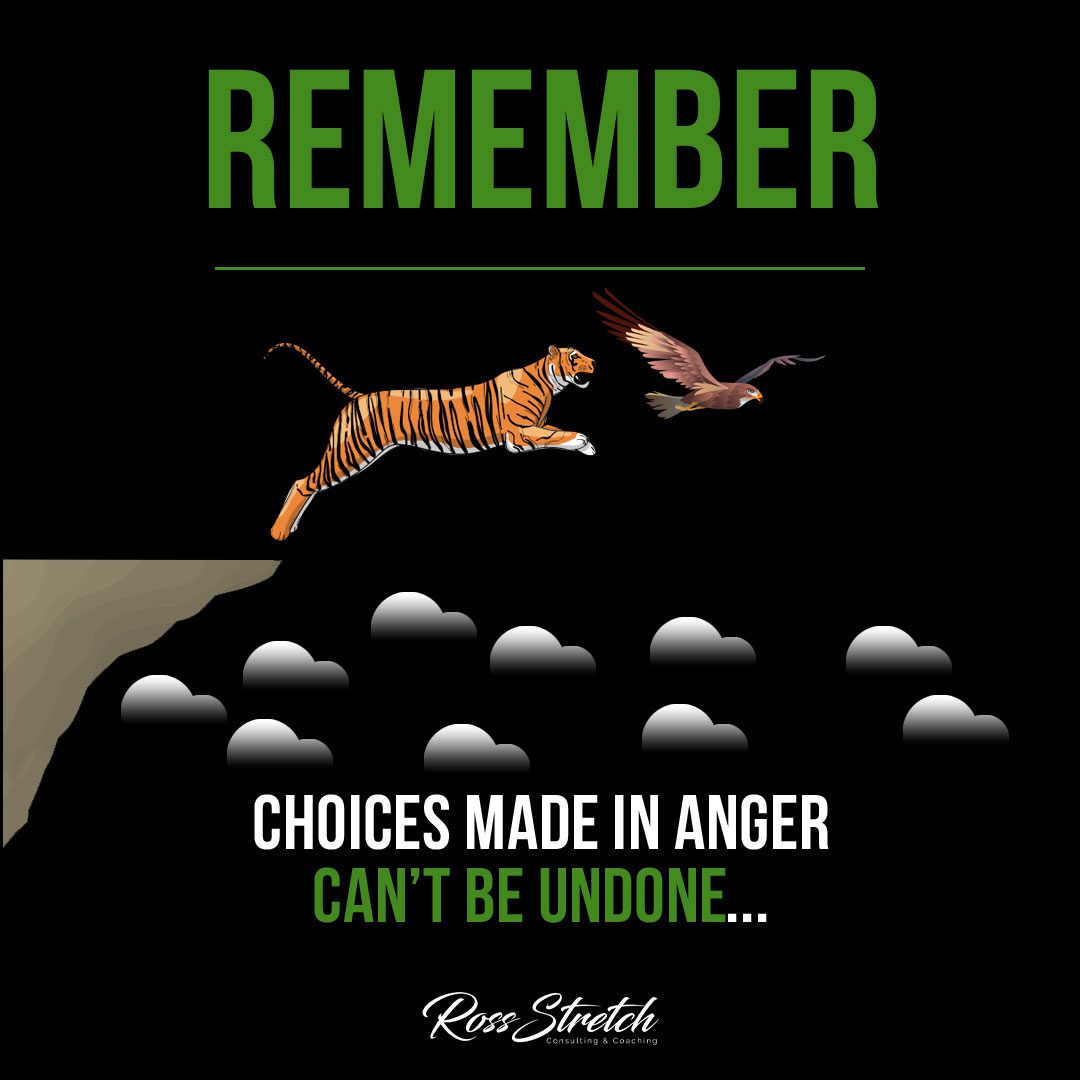
Words cannot be unsaid. Actions cannot be untaken. One of the most sobering realities of acting in anger is that the damage often outlasts the emotion itself. A relationship can be permanently altered by a single outburst. A professional reputation built over years can be undermined by one poorly timed response. A decision made in fury can set off a chain of consequences that takes years to untangle — and in some cases, never fully resolves.
This is why the pause between stimulus and response is so powerful. Viktor Frankl wrote about the space between stimulus and response as the place where human freedom lives — where we have the ability to choose our reaction rather than simply execute our instinct. The challenge is that anger compresses that space, often eliminating it entirely. Building the habit of creating even a brief pause before responding gives your rational mind time to re-engage and prevents the irreversible from becoming the inevitable. That brief window is where thoughtful choices are made.
Practical Strategies for Pausing Before You React
The most effective anger management strategies are not about suppressing the emotion — they are about creating the conditions for a better response. The simplest and most evidence-backed technique is a controlled breathing practice. Slow, deliberate exhales activate the parasympathetic nervous system, which directly counteracts the stress response triggered by anger. Three to five slow, extended exhales can measurably reduce physiological arousal within 60 to 90 seconds, creating enough space for rational thought to return and for a considered response to become possible.
Physical distance from the trigger is equally powerful. Removing yourself from the situation — leaving the room, stepping outside, or even simply turning away — reduces the intensity of the emotional response by eliminating sensory reinforcement. Many people find that the anger that felt overwhelming inside the triggering context dissipates significantly once they have changed their physical environment. From that calmer state, they can evaluate the situation clearly and choose a response they will not later regret or need to apologize for.
Building Emotional Intelligence as a Long-Term Practice
Emotional intelligence — the ability to recognize, understand, and manage your emotions, and to recognize emotions in others — is not a fixed trait. It is a set of skills that can be developed with consistent practice. Research by psychologist Daniel Goleman has shown that emotional intelligence is a stronger predictor of professional success and relationship quality than IQ in most contexts. The self-regulation component — the ability to manage disruptive emotions and impulses — is particularly valuable in high-stakes professional and personal situations.
Developing emotional intelligence around anger begins with self-awareness. Keeping a journal of situations that trigger anger, noting the physical sensations that precede an outburst, and identifying patterns in what specifically provokes strong reactions gives you early-warning data about your emotional system. Over time, you recognize the signs of escalating anger earlier, which extends the window for intervention and gives you more time to choose a considered response. This is not about becoming emotionally flat — it is about becoming emotionally skilled.
Healthy Outlets for Processing Anger Constructively
Anger is a natural emotion that carries real information — it often signals a perceived injustice, a violated boundary, or a threat to something you value. The goal is not to eliminate it, but to channel it constructively rather than discharging it destructively. Regular physical exercise is one of the most effective anger-management tools available. The physical exertion metabolizes stress hormones, improves mood through endorphin release, and provides a structured outlet for the energy that anger generates, leaving you calmer and more capable of addressing the underlying issue.
Journaling is another powerful tool for processing anger without causing harm. Writing out what you are feeling — uncensored and without editing — allows you to discharge the emotional charge and examine the situation more objectively once the initial intensity fades. Many people discover, after writing out their anger in full, that the underlying concern is simpler and more addressable than the emotional experience suggested. Talking to a trusted friend, coach, or therapist provides similar benefits with the added dimension of an outside perspective that can help you evaluate your reaction more clearly and identify patterns you might not see on your own.
Choosing the Thoughtful Path
Controlling anger is not weakness — it is a sophisticated form of strength. It takes more discipline to pause and think than it does to react. The people who are most respected in high-pressure environments are not those who never feel anger; they are those who have learned to act from clarity rather than impulse. Each time you choose reflection over reaction, you build a stronger habit of thoughtful decision-making that protects what matters most — your relationships, your reputation, and your ability to show up as your best self when it counts. The cycle of anger can be broken, one pause at a time.
Resources

 Ross Stretch