Self-mastery is not a single skill — it’s the compound result of dozens of daily decisions about how you manage your money, regulate your emotions, structure your environment, and direct your energy. Most people understand in theory what it takes to succeed. The gap between knowing and doing is where personal discipline lives, and closing that gap is the real work. These principles won’t make you unbeatable by accident, but applied consistently over time, they build a foundation that is genuinely difficult for circumstances to crack.
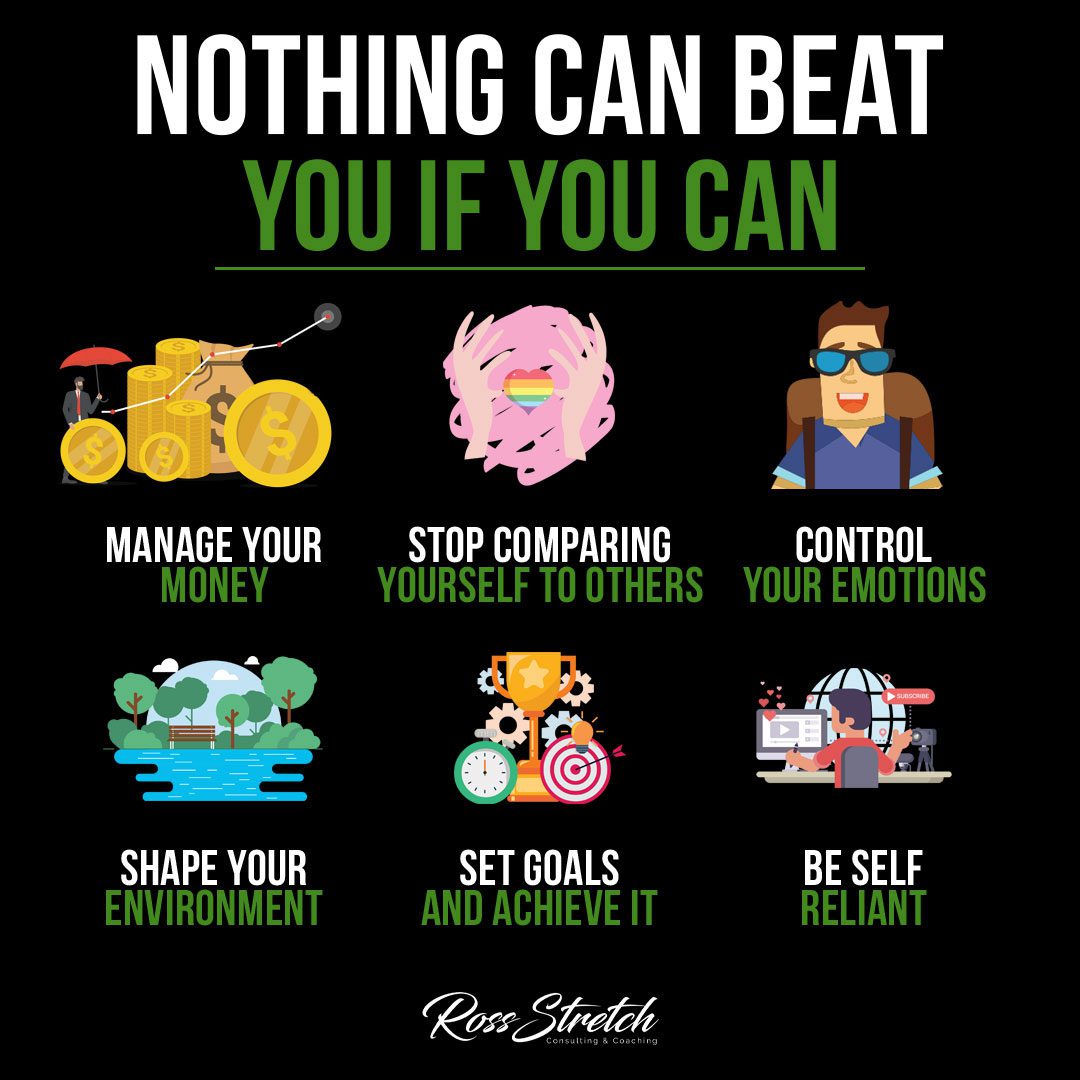
Manage Your Money Like Your Future Depends on It
Financial control is one of the clearest expressions of self-mastery. When you can’t manage money, every other area of life feels less stable — relationships come under pressure, career decisions become reactive, and long-term thinking becomes nearly impossible when you’re constantly responding to short-term cash flow problems. Financial discipline doesn’t require a high income to start practicing.
The mechanics are less important than the philosophy: spend less than you earn, invest the difference in things that grow, and avoid debt that doesn’t generate a return. A simple budget and a basic investment account are the tools. The hard part is building the habit and maintaining it when it feels inconvenient, which is most of the time in the beginning.
People who master this area give themselves options. They can take career risks, weather unexpected expenses, and make decisions based on what’s best for them rather than what pays fastest. People who don’t master it spend their working lives reacting to financial pressure instead of pursuing meaningful goals. The difference compounds over decades in ways that are difficult to overstate.
Stop Measuring Your Progress Against Someone Else’s Ruler
Social comparison is one of the most persistent threats to both happiness and productive effort. When you’re constantly evaluating your success relative to other people — their income, their lifestyle, their apparent confidence — you’re using a metric that has nothing to do with where you’re actually trying to go. Someone else’s highlight reel is not a useful benchmark for your real-world progress.
The alternative isn’t to become indifferent to what’s possible — ambitious people benefit from seeing what others have achieved. The key is to treat other people’s success as evidence of what’s achievable, not as a verdict on your own worth. Inspiration used strategically is valuable. Comparison used as a measuring stick is corrosive. The only benchmark that consistently produces growth is who you were last month versus who you are today.
Emotional Control: The Skill No One Teaches You
Emotional intelligence rarely makes it into formal education, but it may be the most practically valuable skill a person can develop. The ability to recognize what you’re feeling, understand why, and choose a deliberate response rather than a reactive one is what separates effective people from those who consistently undermine their own efforts with poor decisions made in the heat of the moment.
This doesn’t mean suppressing emotions or pretending difficult situations don’t affect you. It means building enough self-awareness to notice the emotional signal without letting it dictate your behavior. Anger, fear, frustration, and anxiety are data — they tell you something is happening that requires your attention. Acting on that data thoughtfully rather than impulsively is where emotional control shows up in real outcomes: better decisions, stronger relationships, and more consistent progress.
Design Your Environment for the Behavior You Want
Willpower is finite and unreliable. Relying on motivation alone to produce good habits is a strategy that works inconsistently at best. The more effective approach is to design your physical and social environment so that the behaviors you want are easy and the behaviors you want to avoid are difficult. The environment is a lever — small changes to your surroundings produce durable shifts in behavior that no amount of motivational content can replicate.
This applies everywhere. If you want to read more, keep a book on your desk instead of your phone. If you want to exercise consistently, lay out your gear the night before. If you want to focus more deeply at work, eliminate the visual and digital distractions from your workspace before you sit down. The goal is to make the right behavior the path of least resistance, so that it happens by default rather than by effort.
Set Goals, Then Build Systems to Achieve Them
Goals give you direction, but systems deliver results. A goal tells you where you want to go. A system tells you what you’ll do every day to get there. The people who consistently achieve what they set out to do are rarely more talented or motivated than average — they’re more systematic. They’ve turned the behaviors that lead to their goals into routines that don’t require daily willpower to execute.
Effective goal-setting is specific, time-bound, and broken into milestones that provide feedback along the way. But the real work happens after the goal is set, when you map out the daily and weekly actions that will accumulate into the result you want. Track progress, adjust when the evidence says something isn’t working, and stay committed to the process even when results feel slow. Consistency over time always outperforms intensity in bursts.
Build True Self-Reliance
Self-reliance isn’t about refusing help or pretending you don’t need other people. It’s about developing enough competence and confidence that you’re not dependent on external validation or rescue when things get difficult. When you trust yourself to figure things out, make decisions under uncertainty, and recover from setbacks, you operate with a freedom that people who haven’t built that internal trust simply don’t have access to.
Self-reliance is built through repeated exposure to difficulty. Every time you face a hard situation and handle it — even imperfectly — you accumulate evidence that you can handle hard things. Over time, that evidence becomes the foundation of genuine confidence. Not the kind that requires constant reassurance, but the quiet, durable kind that shows up most clearly when circumstances are at their most demanding.
Conclusion
Self-mastery isn’t a destination you arrive at — it’s a practice you maintain. None of these principles work in isolation, and none produce overnight results. But applied together, consistently, over months and years, they build a life that is genuinely yours: financially grounded, emotionally stable, purposeful, and resilient. The version of you that has developed these capacities isn’t unbeatable by accident — it’s unbeatable because it was built deliberately, one decision at a time.
Resources

 Ross Stretch