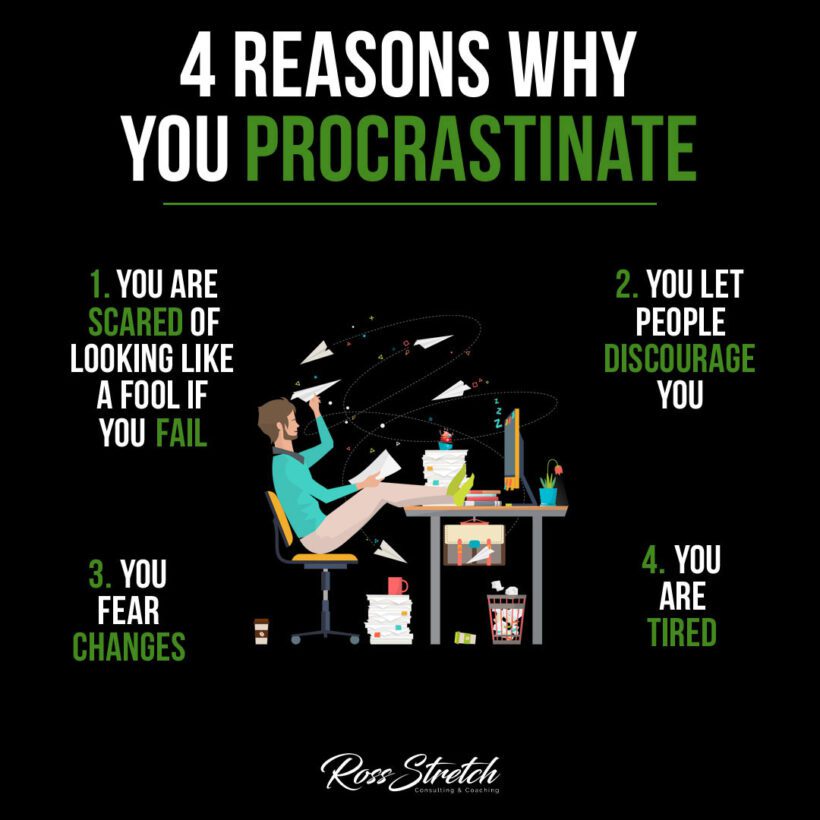

Procrastination is not a time management problem. It is an emotional regulation problem. People do not put off tasks because they lack discipline or a good calendar system — they put off tasks because those tasks trigger uncomfortable feelings: anxiety about the outcome, uncertainty about where to begin, fear of what success or failure might mean, or simple exhaustion that makes action feel impossible. Understanding the actual mechanics of procrastination is the first step toward overcoming it, because the solutions depend entirely on the cause.
\
\
\
\
Fear of Failure
\
\
The most common driver of procrastination is fear — specifically, the fear of producing work that falls short and the shame or embarrassment that follows. This fear is particularly intense for people who tie their self-worth to their performance. If you believe that a failed project reflects your fundamental value as a person, starting that project becomes an existential risk rather than a practical task. Procrastination becomes a protective strategy: if you never fully commit, you can never fully fail.
\
\
The cognitive distortion at the root of this pattern is the belief that failure is permanent and defining. In reality, most failures in professional and financial contexts are temporary, recoverable, and instructive. The entrepreneurs and professionals who build the most meaningful careers are not the ones who fail least — they are the ones who move through failure fastest. Fear of failure does not diminish through motivation; it diminishes through repeated experience of surviving failure and emerging with new knowledge intact.
\
\
Practically, this means deliberately taking small, low-stakes risks on a regular basis. Start a project you are uncertain about. Pitch a client you think is slightly out of your league. Apply for a role that seems just beyond your current qualifications. Each of these actions — regardless of outcome — builds the evidence base that failure is manageable. That accumulated evidence is what eventually quiets the fear response that triggers procrastination.
\
\
\
\
External Discouragement
\
\
Other people’s opinions shape behavior more powerfully than most people acknowledge. When the people around you — family, peers, colleagues — express skepticism about your goals, suggest that you are being unrealistic, or have a history of criticizing your efforts, the psychological weight of that environment accumulates. Pursuing an ambitious goal against a backdrop of discouragement requires you to carry both the difficulty of the task and the weight of anticipated judgment simultaneously.
\
\
The challenge is distinguishing constructive feedback from general discouragement. Constructive feedback identifies specific risks or gaps and points toward improvement. Discouragement is broader — it questions the entire endeavor or your capacity to succeed. Learning to receive the former while filtering the latter is a core skill for anyone pursuing goals that deviate from the expectations of their immediate environment.
\
\
One practical response is to deliberately build a support network of people who are pursuing similarly ambitious goals. Environmental influence works in both directions — surrounding yourself with people who normalize effort and ambition shifts your own sense of what is achievable. Mastermind groups, online communities, and mentors who have already done what you are attempting all serve this function. The people you spend the most time with set the invisible ceiling on what you believe is possible for yourself.
\
\
\
\
Resistance to Change
\
\
The human nervous system is wired to conserve energy and avoid perceived threats. Change — even positive change — registers as a potential threat because it introduces uncertainty, demands new skills, and disrupts established routines that feel safe. This is not a character flaw; it is a deeply ingrained feature that served humans well in environments where the unfamiliar was genuinely dangerous. In modern professional contexts, however, this resistance creates a significant drag on growth and opportunity.
\
\
Procrastination driven by resistance to change often masks itself as practical delay. “I will start the new system once the current quarter is finished.” “I will launch the business when I have more savings.” “I will address that issue after the project wraps up.” The stated reasons are not entirely false, but they are rarely the actual reason for the delay. The actual reason is that change requires temporarily becoming a beginner, and being a beginner feels uncomfortable for people who have built their identity around competence in a different area.
\
\
The most effective countermeasure is to reduce the size of the first step until it no longer triggers the threat response. Instead of “start the new business,” the action is “spend 30 minutes this week researching the market.” Instead of “fix my finances,” the action is “open a spreadsheet and list every monthly expense.” Small enough actions bypass the resistance and build momentum that makes the next step easier to take.
\
\
\
\
Physical and Mental Exhaustion
\
\
Decision fatigue is a well-documented phenomenon: the quality of decisions and the willingness to make them degrades as cognitive resources are depleted throughout the day. By the time many professionals reach the tasks on their list that require the most initiative — the business plan, the difficult conversation, the creative project — they have already spent their best mental energy on lower-priority demands. Mental exhaustion is not laziness. It is a physiological state that makes starting anything new feel disproportionately difficult relative to the actual effort required.
\
\
The practical implication is task sequencing. Your most important and most difficult tasks — the ones you are most likely to procrastinate on — should be scheduled during your peak energy hours, which for most people means the first two to three hours after waking. Lower-cognitive work — email, administrative tasks, routine meetings — should be relegated to the later parts of the day when decision-making capacity has diminished and the cost of that diminishment is lower.
\
\
Physical factors compound the problem. Inadequate sleep, poor nutrition, sedentary behavior, and dehydration all measurably impair cognitive performance and reduce the mental resilience required to start difficult tasks. If chronic procrastination is a persistent issue, a baseline audit of sleep quality, exercise habits, and daily nutrition is warranted before adding more productivity systems. You cannot override a depleted system simply by building better systems on top of it.
\
\
\
\
Practical Strategies for Breaking the Pattern
\
\
Understanding why you procrastinate matters, but it is not sufficient on its own. Action requires structure. The two-minute rule — if a task will take less than two minutes, do it immediately — eliminates a large category of low-stakes procrastination that clogs to-do lists and creates psychological overhead. Implementation intentions — a specific commitment to when, where, and how you will complete a task — have been shown in multiple research studies to significantly increase follow-through compared to vague intentions alone.
\
\
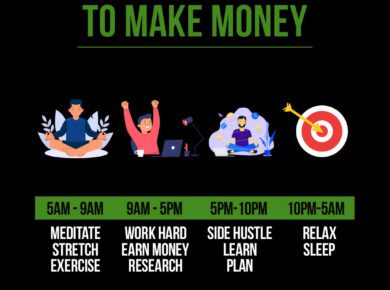
Time-blocking, where specific tasks are assigned to specific calendar windows rather than held on a general to-do list, reduces the decision load at the moment of action. When your calendar says you will work on the business plan from 8:00 to 9:30 on Tuesday morning, the decision has already been made in advance. You do not need willpower at 8:00 Tuesday — you need only to follow the plan you made when you were thinking clearly and strategically.
\
\
Finally, track your completion rate honestly. Most chronic procrastinators underestimate how often they defer tasks and how much that deferral costs them in aggregate. A simple weekly review — what did I plan to complete this week, and what did I actually complete — creates the feedback loop that makes meaningful improvement possible. Without measurement, the pattern continues without consequence. With measurement, the gap between intention and action becomes visible, and visible problems generate solutions that invisible ones never will.
\
\
\
\
Conclusion
\
\
Procrastination is not a personality trait — it is a set of patterns with identifiable causes and practical countermeasures. Whether yours is driven by fear of failure, environmental discouragement, resistance to change, or physical depletion, the path forward begins with accurate diagnosis. Once you understand which mechanism is operating, the appropriate response becomes clear. Addressing procrastination at its root — rather than layering more productivity tools on top of unresolved emotional and physiological drivers — is the difference between temporary improvement and lasting behavioral change.
\
\
\
\
Resources
\
\
- \
- Procrastination Research Group — Academic research on the psychology of procrastination from Dr. Timothy Pychyl
- James Clear: How to Stop Procrastinating — Practical frameworks for taking consistent action
- Solving the Procrastination Puzzle by Timothy Pychyl — Concise, research-based strategies
- Harvard Business Review: Why You Procrastinate and How to Stop
\
\
\
\

 Ross Stretch