The global fitness wearable market is one of the fastest-growing segments in consumer electronics — valued at $61.3 billion in 2023 and projected to exceed $150 billion by 2032, according to Grand View Research. That growth represents a substantial opportunity for entrepreneurs who understand how to source and sell fitness watches profitably. By leveraging Alibaba.com for bulk sourcing, Amazon for distribution, and social media for targeted marketing, ambitious entrepreneurs can build a real income stream with low startup costs and achievable profit potential that scales with effort and reinvestment.
Why Fitness Watches Are a Smart Product to Sell
Fitness watches occupy a unique position in the consumer market: they function simultaneously as a health tool, a lifestyle accessory, and a technology product. This multi-faceted appeal broadens their potential customer base well beyond hardcore fitness enthusiasts. Heart rate monitoring, step counting, sleep tracking, calorie estimation, and smartphone notifications have become features that appeal to anyone seeking a more health-conscious daily routine — not just athletes training for specific performance goals.
The entry-level fitness watch segment — products priced between $20 and $50 — represents the highest volume opportunity for bulk sellers. Premium brands like Fitbit, Garmin, and Apple Watch dominate the high end of the market, but price-conscious consumers, impulse buyers, and gift-givers represent an enormous and underserved segment that quality generic watches from trusted manufacturers can address effectively. This is precisely the market gap where the Alibaba-to-Amazon sourcing model generates its strongest returns and clearest competitive positioning.
Sourcing Fitness Watches from Alibaba
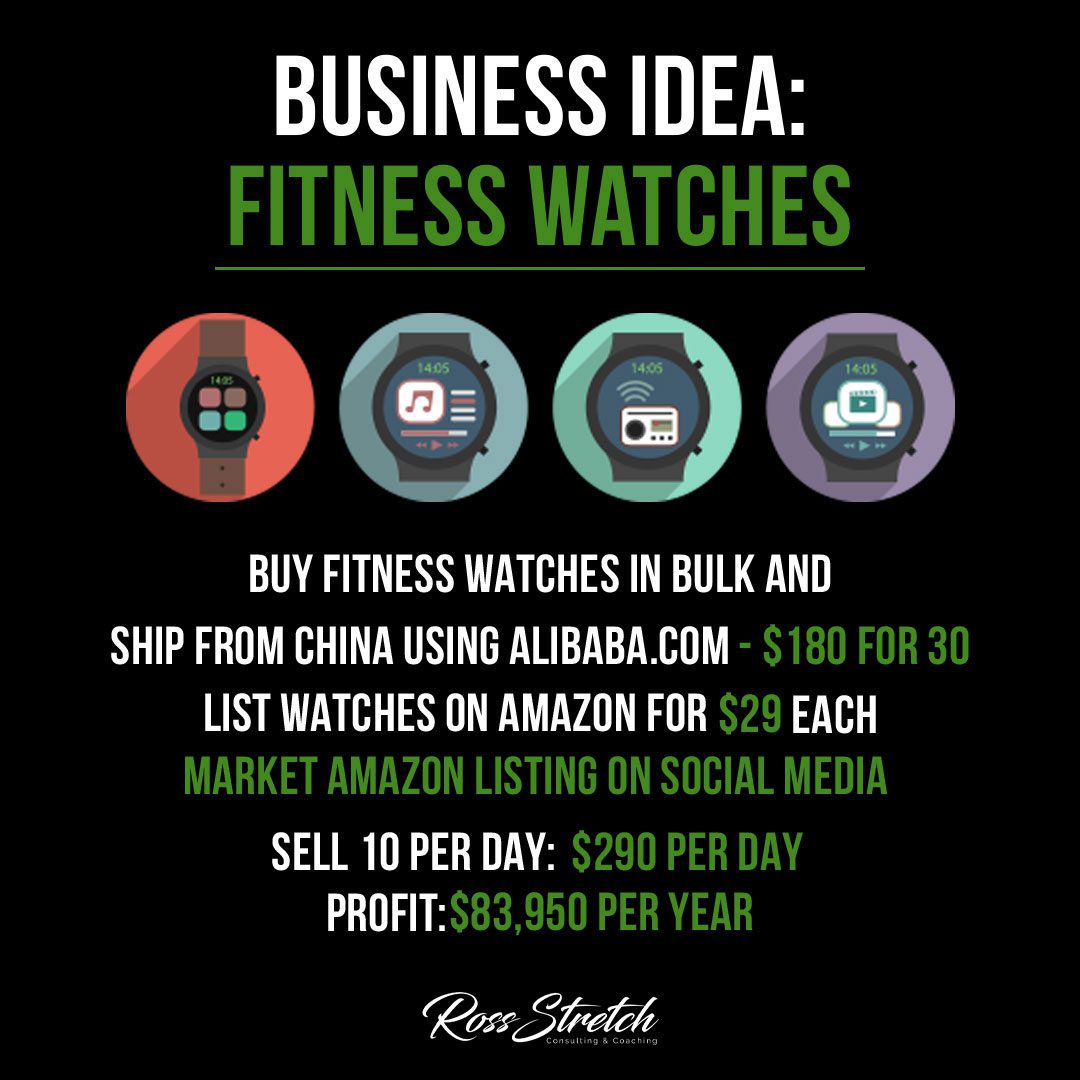
Alibaba.com connects Western buyers directly with Chinese manufacturers who produce consumer electronics at a fraction of the retail cost. Many products available on Alibaba are manufactured in the same factories that produce for well-known consumer brands — the primary differences are branding, distribution channel, and retail markup. For fitness watches, typical sourcing prices range from $5 to $12 per unit when ordering quantities of 100 to 500 units, creating significant margin potential at a $25 to $35 retail price point.
Evaluating Alibaba suppliers requires disciplined due diligence before committing any capital. Look for suppliers with “Gold Supplier” badges and “Trade Assurance” coverage — these designations indicate verified sellers whose buyer payments are protected by Alibaba’s platform guarantee. Always request product samples before placing any bulk order. Test the watch personally for accuracy across tracked metrics, battery life under real conditions, app connectivity, and physical build quality. A product that fails to impress you personally will not retain customers or generate the positive reviews that sustain an Amazon listing.
Shipping terms significantly impact your total landed cost and require careful negotiation. For initial test orders under 50 units, express shipping via DHL or FedEx from China typically delivers in 5 to 10 business days and keeps costs manageable while you validate product quality. Once you have confirmed your product selection and are placing larger volume orders, sea freight becomes substantially more cost-effective — though transit times extend to 20 to 40 days. Factor these lead times into your inventory planning to avoid stockouts during high-demand periods like the holiday season.
Setting Up and Optimizing Your Amazon Listings
Amazon’s marketplace provides immediate access to hundreds of millions of active buyers, making it the most powerful distribution channel available to independent product sellers. The key to sustained success is listing optimization — your product page must convert browsers into buyers efficiently. Begin with your product title: lead with the primary search keywords buyers use (such as “fitness watch heart rate monitor step counter waterproof”), then follow with the key differentiating features of your specific product. Amazon’s A9 algorithm weights keyword relevance heavily in determining search ranking positions.
High-quality product photography is non-negotiable and worth investing in seriously. Your primary image must show the product on a white background per Amazon’s policy, but secondary images should demonstrate the product in authentic use contexts — on a wrist during a morning run, paired with a smartphone showing the companion app, or worn during a gym session. Consider enrolling in Amazon’s Brand Registry to access A+ Content, which allows enhanced imagery and comparison charts that measurably improve conversion rates on competitive product pages.
The financial math behind selling fitness watches at $29 per unit is genuinely compelling when worked through carefully. With a sourcing cost of $7 to $10 per unit including shipping, your gross margin runs $19 to $22 before Amazon fees. Amazon charges referral fees of approximately 15% on consumer electronics, plus FBA fulfillment fees of $3 to $5 per unit. Your net profit per unit using FBA typically runs $8 to $12. Selling 10 units per day generates daily net profit of $80 to $120 — an annualized figure of $29,000 to $44,000 from this channel alone, with real potential to scale through additional marketing investment and expanded inventory.
Marketing Through Social Media
While Amazon provides organic discovery through its internal search engine, social media marketing significantly accelerates sales velocity — which in turn improves your Amazon search ranking in a virtuous cycle. Instagram and TikTok are the highest-impact platforms for fitness products because their audiences skew toward health-conscious consumers already interested in the lifestyle your product supports. Create content demonstrating the watch in authentic fitness contexts: morning workout tracking, daily step goal completion, sleep quality insights, and visible progress over weeks of consistent use.
Influencer partnerships in the fitness niche offer exceptional return on investment for physical products with a clear value proposition. Micro-influencers — accounts with 5,000 to 50,000 engaged followers in the fitness, wellness, or active lifestyle space — typically charge $50 to $300 per post and frequently deliver higher engagement rates than much larger accounts whose audiences are less targeted. Negotiate product-for-post arrangements with rising fitness creators, providing free product in exchange for honest reviews and content linking directly to your Amazon listing. A single video from the right creator that resonates with their audience can drive thousands of clicks to your product page within days of posting.
Building Customer Satisfaction and Long-Term Profitability
Sustainable profitability in this business model depends heavily on Amazon review quality and consistency. A product rating above 4.0 stars is what separates consistently ranking listings from those that fade after an initial sales spike. Focus on setting accurate expectations in your listing — descriptions that oversell relative to actual product performance generate disappointed customers and negative reviews that are difficult to recover from. Prioritize fast FBA shipping, accurate product descriptions, and genuinely responsive customer service for any buyer who contacts you with a concern or question.
The fitness watch opportunity compounds most powerfully when treated as a brand-building exercise rather than a single-product arbitrage play. Over time, expand your product line to complementary items: replacement watch bands in multiple colors, wireless earbuds, resistance bands, yoga accessories, or other fitness tools that appeal to the same buyer demographic. Customers who trusted your brand for their fitness watch purchase become your highest-probability buyers for every subsequent product you add — reducing customer acquisition cost and increasing lifetime customer value with each catalog expansion.
Conclusion
Selling fitness watches through the Alibaba-to-Amazon model is a legitimate, repeatable business opportunity with genuinely achievable profit potential at multiple scales. The fundamentals are sound: a growing market with strong demographic tailwinds, an accessible sourcing platform, the world’s largest e-commerce marketplace for distribution, and social media channels capable of reaching millions of potential customers at low or no cost. Entrepreneurs who treat this as a real business — with disciplined supplier evaluation, optimized listings, and consistent marketing — build meaningful income streams that fund further expansion.
Start with a test order of 50 to 100 units, validate that your listing converts on Amazon at a profitable rate, then scale your inventory and marketing investment proportionally with your results. At 10 sales per day, this business produces meaningful income that directly funds the next phase of growth. The fitness industry is not slowing down — and there has never been a better time to build something real within it.
Resources


 Ross Stretch