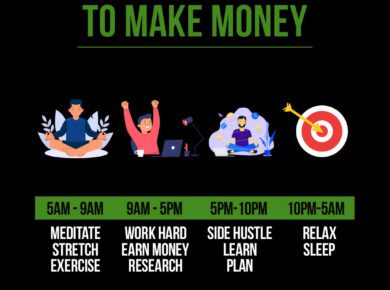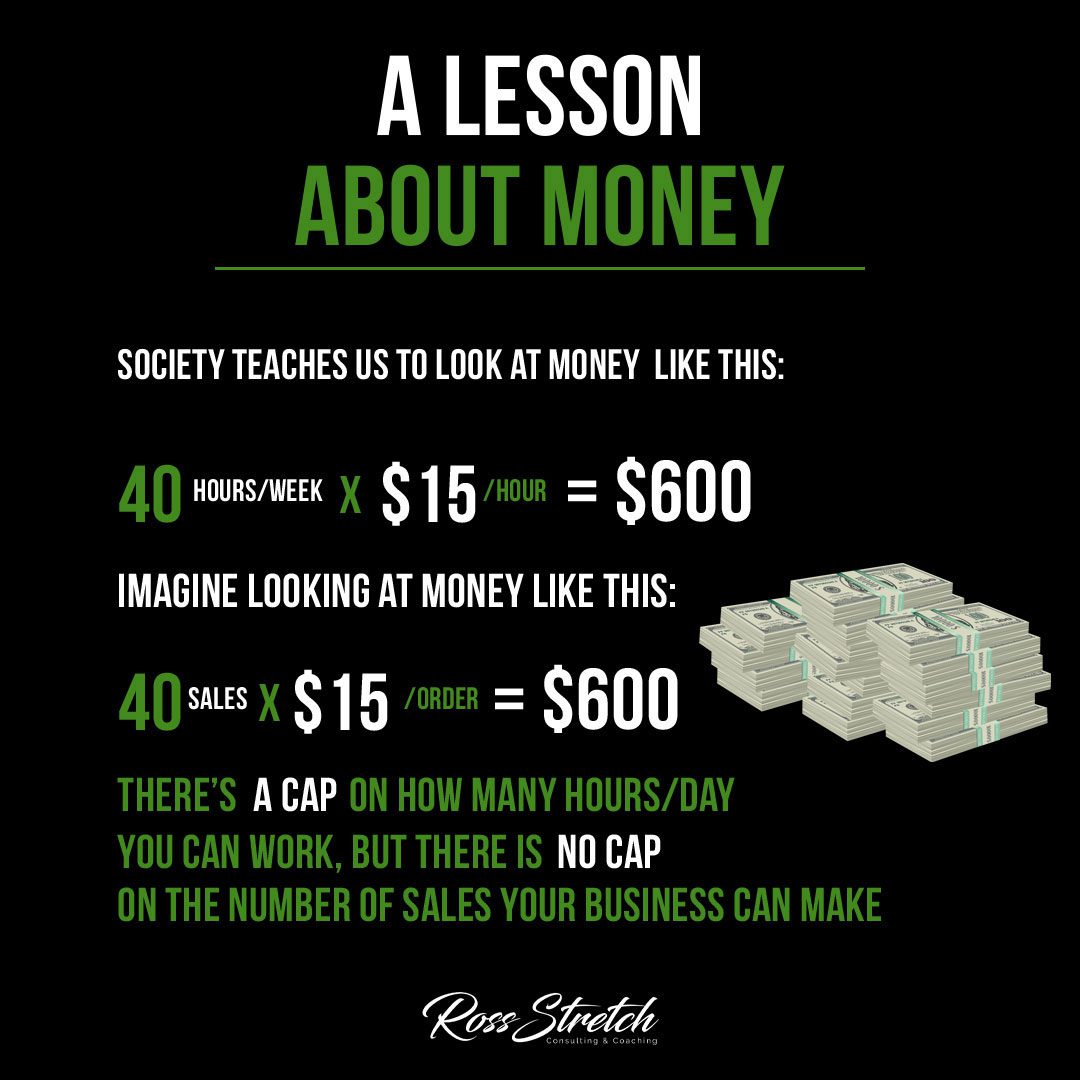
Most people are taught to think about money in exactly one way: hours worked multiplied by an hourly rate equals income. This model — trading time for money — is the foundation of how most of us are introduced to earning. It is familiar, predictable, and deeply limiting. The moment you begin to see money as something that can be generated through systems, value creation, and scale rather than personal labor hours, your entire financial ceiling shifts. Entrepreneurial thinking does not require abandoning your job tomorrow. It requires changing how you measure opportunity and where you direct your attention outside of employment.
The Hourly Wage Mindset and Its Hidden Ceiling
The hourly wage model makes practical sense when you are starting out. It is clear, immediate, and requires minimal risk. Show up, work the hours, collect the pay. But the structure of this model contains a hard ceiling: there are only so many hours in a day, and your rate has a practical upper limit within any given market or profession.
Even highly paid professionals who operate on hourly or salaried models hit this ceiling eventually. A consultant charging $300 per hour can only work so many engagements. A specialist billing at a premium rate is still fundamentally limited by their personal capacity. Their income, however impressive, is tied directly to personal time. Illness, vacation, burnout, or simple capacity constraints put a hard cap on what is possible. Understanding this is not about dismissing employment — steady income has real value in predictability and reduced risk. The insight is that if you want income that can grow beyond what your personal hours allow, you need a structurally different model.
How Entrepreneurship Breaks the Ceiling
Entrepreneurship, at its core, is the act of building systems that generate value at scale. When you sell a product, that product can be purchased a thousand times without a thousand additional hours of your labor. When you build a service business with a team, each team member’s output contributes to revenue beyond what you alone could produce. When you create digital products — courses, software, templates, content — they can generate income indefinitely without proportional additional work from you.
This is not theoretical. Countless businesses generate revenue while the founder sleeps, travels, or focuses on strategy. The early stages require intense effort and often produce little income — that is the honest reality of building something from scratch. But the structure is fundamentally different from employment: the goal is to create something that earns independently of your direct hourly involvement. Even modest entrepreneurial income streams — a small e-commerce store, a consulting practice with recurring clients, a digital product — shift your relationship with money by exposing you to the mechanics of value creation at scale.
Recognizing Opportunities in the Market
One of the practical differences between an employee mindset and an entrepreneurial one is how you scan the world around you. Employees look for job openings. Entrepreneurs look for problems that enough people have and are willing to pay to solve. This shift in attention is trainable and does not require special talent — it requires practice and intention.
Start by paying attention to friction in your own life and work. Where do you or others repeatedly lose time, money, or energy to something that could be handled better? Where are existing solutions too expensive, too slow, or too generic for a specific audience? These gaps are the raw material of viable business ideas. Not every idea becomes a business — most do not. But developing the habit of seeing problems as potential opportunities, rather than simply inconveniences, is the first practical step toward entrepreneurial thinking.
Starting Without Quitting Your Job
One of the most practical arguments for entrepreneurship is that exploring it does not require abandoning financial security. The best first businesses are built alongside existing income — small enough to manage part-time, focused enough to test a specific idea, and low enough in startup cost that early failures are affordable lessons rather than catastrophes.
A freelance service, a small product business, a local service offering, or a content platform can all be started with a few hours per week and minimal upfront investment. These side projects serve two functions simultaneously: they generate supplementary income, and they teach you the fundamentals of running a business in a low-stakes environment. The goal in the early stages is not to immediately replace employment income. It is to prove that you can generate income outside of employment — even a small amount. That proof reshapes your belief in what is financially possible for you, which is often the most important shift of all.
Building Toward Asset-Based Income
Financial freedom is not a number in a bank account — it is a condition in which income from investments, businesses, or other assets exceeds your expenses without requiring your constant direct labor. Getting there from a standing start takes years, not months. But the direction of movement matters more than the speed.
Redirecting a portion of earned income into assets — index funds, real estate, a growing business — is how the gap between labor-dependent income and asset-based income closes over time. Each year that a business or investment portfolio grows is a year in which your financial future depends a little less on trading time for money. The mindset shift described in this article is the beginning. The financial shift follows the behavioral changes that mindset enables: spending deliberately, investing consistently, building systems, and maintaining a longer time horizon than most people are willing to hold.
Conclusion
The most important financial decision most people can make is not which stock to buy or which house to purchase — it is deciding to stop treating their income as fixed. The hourly wage model is a starting point, not a destination. Entrepreneurship, in whatever form fits your skills, circumstances, and risk tolerance, is the practical mechanism for moving beyond it. Start small, stay consistent, and give compounding the time it needs to work in your favor.
Resources
- The E-Myth Revisited by Michael Gerber — essential reading on building businesses that work without you
- Rich Dad Poor Dad by Robert Kiyosaki — a foundational book on assets, liabilities, and financial mindset
- Indie Hackers — community and case studies from bootstrapped entrepreneurs building income beyond employment
- Acquire.com — marketplace to buy, sell, and study small online businesses

 Ross Stretch