
Motivation isn’t a personality trait — it’s a skill you can build with the right systems and habits. Whether you’re struggling to stay on track with a big goal or simply losing steam mid-week, the solution is rarely about trying harder. This guide covers the practical tools behind sustained motivation, goal-setting frameworks, and daily habits that keep momentum going long after the initial excitement fades.
Why This Matters
Motivation is the engine behind every goal you set and every result you achieve. Without it, even the best strategies collapse. But motivation is also volatile — it spikes when something is new, then fades as the novelty wears off and the difficulty becomes real. Research in behavioral psychology consistently shows that people who rely on motivation alone as their primary driver fail more often than those who build environment, habit, and accountability structures to support their goals.
The stakes extend beyond productivity. Chronic low motivation is linked to higher rates of stress, disengagement, and burnout. Building sustainable motivation isn’t just about getting more done — it’s about maintaining a sense of purpose and progress in your daily life. The steps below are grounded in behavioral science and practical strategy, not motivational clichés. They work because they change the conditions that make motivation possible, not just the feelings in the moment.
How to Boost Your Motivation
Step 1: Set Goals That Are Specific and Meaningful
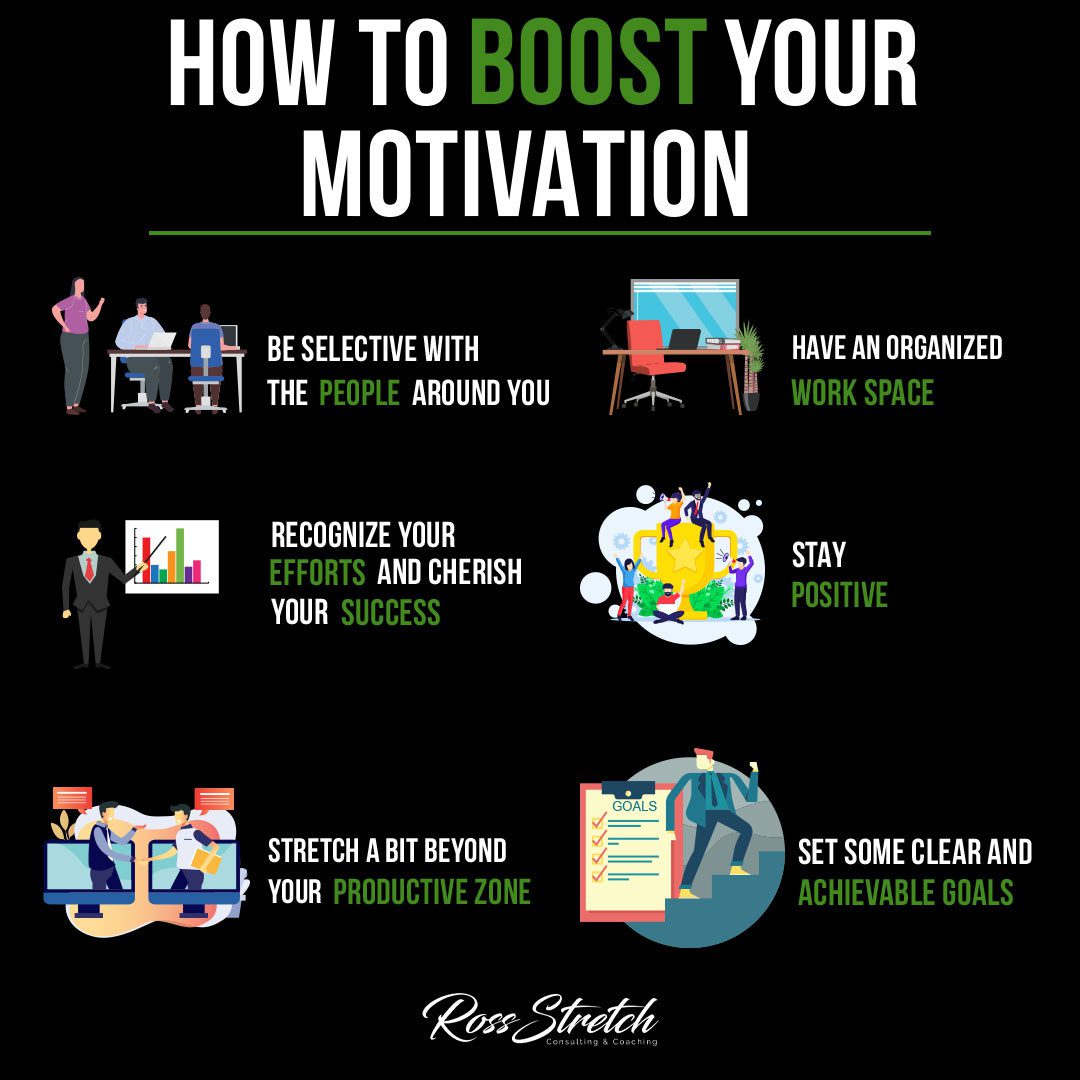
Vague goals kill motivation fast. “Get fit” gives your brain nothing to aim at. “Run 5K three times per week by October” gives you a clear target, a measurable standard, and a deadline. But specificity alone isn’t enough — your goals also need to connect to something you genuinely value. When the reason behind a goal is clear and personal, motivation becomes self-sustaining rather than something you have to manufacture. Before setting any goal, ask yourself: why does this actually matter to me, and what does life look like when I’ve achieved it?
- Do: Write goals using the SMART framework — Specific, Measurable, Achievable, Relevant, Time-bound
- Do: Connect each goal to a core personal value so the motivation is intrinsic, not purely external
- Avoid: Setting too many goals at once — three well-chosen goals outperform ten scattered ones
- Avoid: Setting goals purely based on what others expect of you rather than what you actually want
Step 2: Design Your Environment for Success
Your environment shapes your behavior far more than your willpower does. Making the desired behavior easier and the unwanted behavior harder produces results without relying on self-discipline. If your workspace is cluttered, your phone is always in reach, and your goals are out of sight, staying motivated will always feel like a battle. Redesign your physical and digital environment so that doing the right thing is the path of least resistance — a tidy desk, visible reminders of your goals, and distractions physically removed from your workspace.
- Do: Clear your workspace of distractions before starting focused work — a tidy environment lowers friction and sharpens focus
- Do: Place visual reminders of your goals where you’ll see them daily, such as a whiteboard or sticky note at eye level
- Avoid: Keeping your phone visible during deep work — even a face-down phone measurably reduces cognitive performance
- Avoid: Relying on willpower alone when a simple environmental change would eliminate the temptation entirely
Step 3: Build Momentum With Small Wins
Motivation follows action — not the other way around. Waiting until you feel motivated to start is a trap. Instead, start small enough that beginning is easy, then let momentum build from there. For larger goals, identify the smallest possible action that moves the needle and commit to that action daily. Progress — even tiny progress — triggers a dopamine response that makes you want to continue. Tracking your streak visually reinforces this effect and makes stopping feel like a loss you want to avoid.
- Do: Track your daily progress in a journal or app so you can see the streak building over time
- Do: Celebrate completing small milestones — even briefly acknowledging a win reinforces the behavior
- Avoid: Setting your starting bar so high that beginning feels daunting enough to avoid entirely
- Avoid: Dismissing small wins as insignificant — compound progress adds up faster than most people expect
Step 4: Curate Your Social Environment
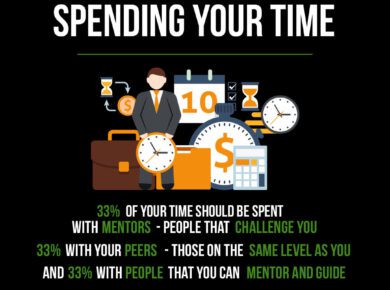
The people you spend the most time with shape what you believe is possible and normal. People who regularly spend time with motivated, growth-oriented individuals tend to adopt similar behaviors — not through pressure, but through normalization. Conversely, spending most of your time with people who complain, dismiss ambition, or undermine effort makes staying motivated significantly harder. This doesn’t mean cutting people off — it means being intentional about whose perspective and energy you absorb most.
- Do: Seek out an accountability partner — someone working toward their own goals who will check in on your progress regularly
- Do: Join a community (online or in-person) of people pursuing similar goals
- Avoid: Sharing your goals indiscriminately with people who consistently respond with skepticism or discouragement
- Avoid: Isolating yourself entirely — motivation sustained alone is much harder than motivation sustained with support
Step 5: Manage Your Energy, Not Just Your Time
Motivation collapses when you’re exhausted. No goal-setting system can overcome chronic sleep deprivation, poor nutrition, or a complete absence of recovery time. High performers don’t have more willpower — they manage their energy through physical recovery, strategic rest, and protecting the hours when they work at their best. Identify when your energy is naturally highest during the day and schedule your most important work during that window. Treat sleep, movement, and genuine downtime as performance strategies, not rewards you have to earn.
- Do: Prioritize 7–9 hours of sleep consistently — sleep deprivation has a direct, measurable negative effect on motivation and decision-making
- Do: Schedule regular physical activity; even 20–30 minutes of exercise significantly improves mood and mental focus
- Avoid: Working through exhaustion and calling it dedication — it produces diminishing returns and accelerates burnout
- Avoid: Skipping breaks; short breaks every 90 minutes improve sustained cognitive performance
Common Mistakes to Avoid
- Waiting to feel motivated before starting: Action creates motivation — start before you feel ready, and the feeling follows the behavior, not the other way around.
- Relying on inspiration alone: Inspiration is temporary. Systems and habits sustain performance when inspiration disappears, which it always eventually does.
- Comparing your progress to others: Comparison breeds discouragement. Measure yourself against your own previous performance instead of someone else’s highlight reel.
- Ignoring the physical foundation: Poor sleep, sedentary habits, and poor nutrition directly undermine the neurochemistry that makes motivation possible.
- All-or-nothing thinking: Missing one day doesn’t erase your progress. The biggest motivation killer is deciding a single slip means total failure — recover and continue.
Conclusion
Motivation isn’t something you either have or you don’t — it’s something you build through the quality of your goals, the design of your environment, the consistency of your habits, and the people you choose to spend time with. The steps in this guide work not because they’re inspiring, but because they change the actual conditions that make motivated behavior easier and more sustainable over time.
Start with Step 1 this week. Write down one specific, meaningful goal and identify the smallest daily action that moves you toward it. That single shift — from vague ambition to clear, daily action — is where lasting motivation begins. The systems you build today will carry you much further than motivation alone ever could.
Resources
- James Clear — Atomic Habits: The definitive practical guide to building habits that stick, including the science behind motivation and sustained behavior change.
- American Psychological Association — Motivation: Research-backed overview of motivational psychology, covering intrinsic vs. extrinsic motivation and how each affects long-term performance.
- TED Talk — Dan Pink: The Puzzle of Motivation: A compelling breakdown of what actually drives human motivation, with evidence that challenges widely held assumptions about rewards.
- Harvard Business Review — Managing Energy, Not Time: Foundational research on why energy management outperforms time management for sustaining high performance.

 Ross Stretch