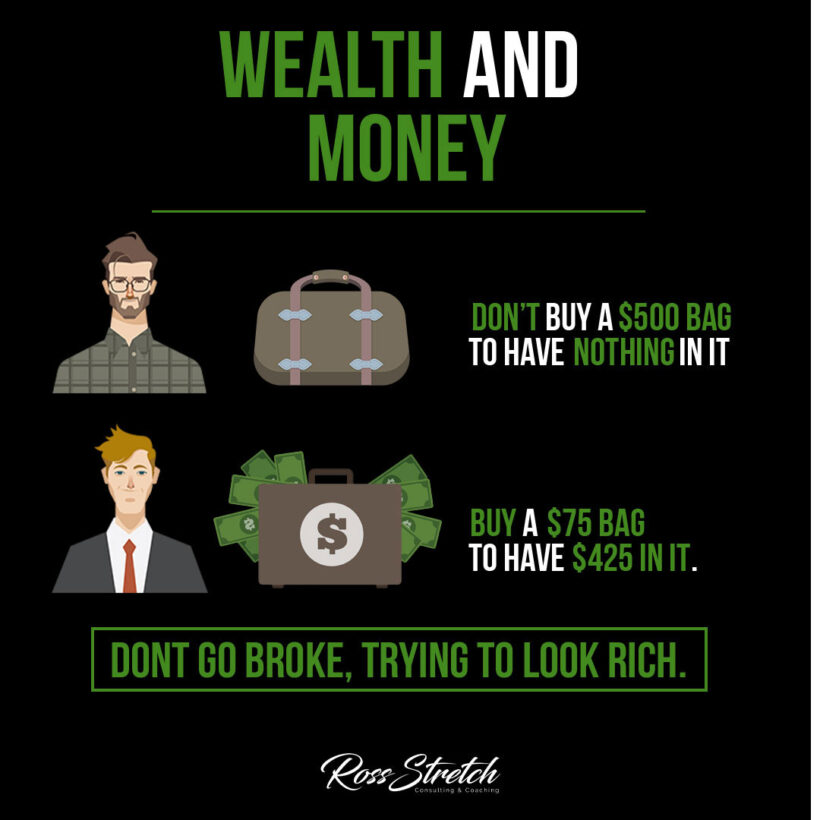

Most people confuse looking wealthy with actually being wealthy — and the difference is costing them a fortune. Every year, millions of people lease cars they cannot afford, carry designer bags on credit, and dine at restaurants that eat into next month’s rent, all to project an image of financial success. This is not wealth. This is performance. Understanding the distinction between genuine financial security and the appearance of it is the single most important shift anyone can make on the road to real money.
\
\
\
\
The High Cost of Looking Wealthy
\
\
When you finance a lifestyle you cannot afford, you are not just spending money — you are paying interest on things that depreciate the moment they leave the store. New cars lose 15 to 20 percent of their value in the first year. Designer clothing is worth a fraction of retail the day after purchase. A premium watch bought on credit means you are paying compound interest on something that contributes nothing to your net worth.
\
\
The real cost goes beyond dollars. The psychological toll of maintaining an expensive image while quietly struggling financially is significant. Financial stress is one of the leading causes of anxiety, relationship breakdown, and chronic sleep problems. The very things people buy to project confidence and success often create the opposite reality behind closed doors.
\
\
High consumer debt also eliminates options. When your monthly obligations are maxed out trying to maintain a lifestyle, you cannot take calculated career risks, seize investment opportunities, or weather a financial disruption without crisis. The appearance of wealth is bought with the currency of actual freedom.
\
\
\
\
Why Status Spending Is So Seductive
\
\
Social comparison is hardwired into human psychology. When we see peers, neighbors, or social media profiles displaying luxury — travel, cars, restaurants, clothes — our brains register it as a signal of status and success. The drive to match or exceed that signal is powerful and often unconscious. This is exactly what advertising exploits: luxury brands do not sell products, they sell transformation, belonging, and identity.
\
\
What rarely gets discussed is that most of what we see is performance too. Research on millionaires — including the work behind The Millionaire Next Door by Thomas J. Stanley — consistently finds that most genuinely wealthy people live modestly. They drive used cars, shop for value, and avoid conspicuous consumption. They are wealthy precisely because they never prioritized looking wealthy over being wealthy.
\
\
Social media has intensified this problem by making lifestyle performance constant and curated. The highlight reel of someone else’s vacation or wardrobe tells you nothing about their credit card balance. Comparing your financial reality to someone else’s curated image is a guaranteed way to make poor decisions with your money.
\
\
\
\
How Lifestyle Inflation Quietly Drains Wealth
\
\
Lifestyle inflation is one of the most common and least discussed wealth destroyers. It is the pattern of increasing spending every time income rises: a promotion leads to a bigger apartment, a bonus justifies a new car, a raise becomes a reason to upgrade everything. The result is that despite earning more over time, people save no more than before.
\
\
A person earning $200,000 per year but spending $198,000 is not wealthy — they are one missed paycheck away from financial stress. A person earning $60,000 and consistently saving and investing $12,000 per year is building something real. The gap between income and expenses, and what you do with that gap, is where wealth is actually created.
\
\
The solution is to automate the decision before you are tempted to spend. When income rises, immediately increase automated savings contributions by a set percentage. Spend the rest how you like. This strategy ensures that each income increase builds net worth rather than funding a more expensive lifestyle.
\
\
\
\
What Real Wealth Actually Looks Like
\
\
Genuine wealth is measured by net worth — assets minus liabilities. It is not measured by what you drive or wear. A growing net worth means you own more than you owe, and that the gap is widening over time. That is financial security. That is what provides real options.
\
\
Real wealth gives you choices. It means you can take a career risk without panic, handle a large unexpected expense without going into debt, or step away from a toxic job because you have a financial cushion. These are the actual benefits of money — not the clothes, but the freedom. That freedom is only available to people who chose to build it instead of perform it.
\
\
Building net worth requires consistency over time: saving regularly, investing in assets that appreciate, eliminating high-interest debt, and resisting the urge to signal status through spending. None of this is exciting. All of it works. The people who grasp this early have a compounding advantage that grows for decades.
\
\
\
\
Smart Habits That Build Genuine Wealth
\
\
Automating savings is one of the most effective wealth-building habits available to anyone. Set up an automatic transfer to a savings or investment account on every payday, before you have access to that money. Most people save whatever remains at the end of the month — which is usually very little. Automated saving reverses that equation: spend what is left after saving, not the other way around.
\
\
Invest in assets that grow. Index funds, retirement accounts, and real estate have decades of data behind them as reliable wealth-building vehicles. Consumer goods do not. Redirecting even a portion of money previously spent on depreciating status items into appreciating assets creates a dramatically different financial trajectory over ten to twenty years.
\
\
Build an emergency fund first. Three to six months of essential expenses in a liquid, accessible account protects every other financial goal from unraveling under pressure. Without it, any unexpected expense forces borrowing at high interest — a cycle that keeps people locked in financial insecurity regardless of income level.
\
\
\
\
Spending Decisions That Actually Matter
\
\
Not all spending is equal. Some spending enhances your ability to earn, creates lasting value, or genuinely improves quality of life. Other spending simply signals status to people who do not particularly care about you. Before major purchases, ask three honest questions: Does this increase my net worth? Does this meaningfully improve my life or health? Can I afford this without going into debt? If the answers are no, no, and no — that is a clear signal to pause.
\
\
Spending on education, health, experiences with people you care about, and tools that help you earn more are generally defensible. Spending on prestige for its own sake is expensive theater that typically leaves you poorer and no happier. A reliable used car serves the same function as a luxury car payment and keeps hundreds of dollars per month in your pocket. A well-made $60 coat is indistinguishable from a $600 one in nearly every practical context.
\
\
\
\
Conclusion: Build Wealth, Not an Image
\
\
The choice between looking wealthy and being wealthy is made in small decisions every day. True wealth is quiet, patient, and compounding. The people who understand this stop performing financial success and start building it — and the gap between where they end up and where everyone else does is enormous. You do not need the most expensive version of anything to live a good life. You need financial security, low debt, growing investments, and the freedom that comes from not owing your future to the past.
\
\
\
\
Resources
\
\

 Ross Stretch