Content marketing has become the dominant strategy for businesses that want to build lasting relationships with their audience rather than renting attention through paid advertising. Instead of interrupting people, content marketing attracts them — by publishing articles, videos, guides, and resources that solve real problems and answer genuine questions. The result is a compounding asset that grows in value over time, unlike ad spend that disappears the moment budgets run dry. When executed well, content marketing builds brand authority, drives organic traffic, and converts readers into loyal customers without requiring a constant financial outlay.
The Core Philosophy Behind Content Marketing
At its foundation, content marketing is a long-term bet on trust. The underlying premise is straightforward: if you consistently help people solve problems or understand topics they care about, they will remember you, return to you, and eventually buy from you. This is a fundamentally different posture from traditional advertising, which assumes that enough exposure to a message will eventually produce a purchase.
The philosophy works because consumer behavior has changed. People no longer wait for brands to tell them what to buy — they research extensively, compare options, read reviews, and form opinions long before making a purchasing decision. Content marketing puts your brand inside that research process. When someone finds your article while looking for an answer, reads it, finds it genuinely useful, and returns next time they have a question in your domain, you’ve built a relationship that no paid ad can replicate.
Why Content Marketing Delivers Results Traditional Advertising Cannot
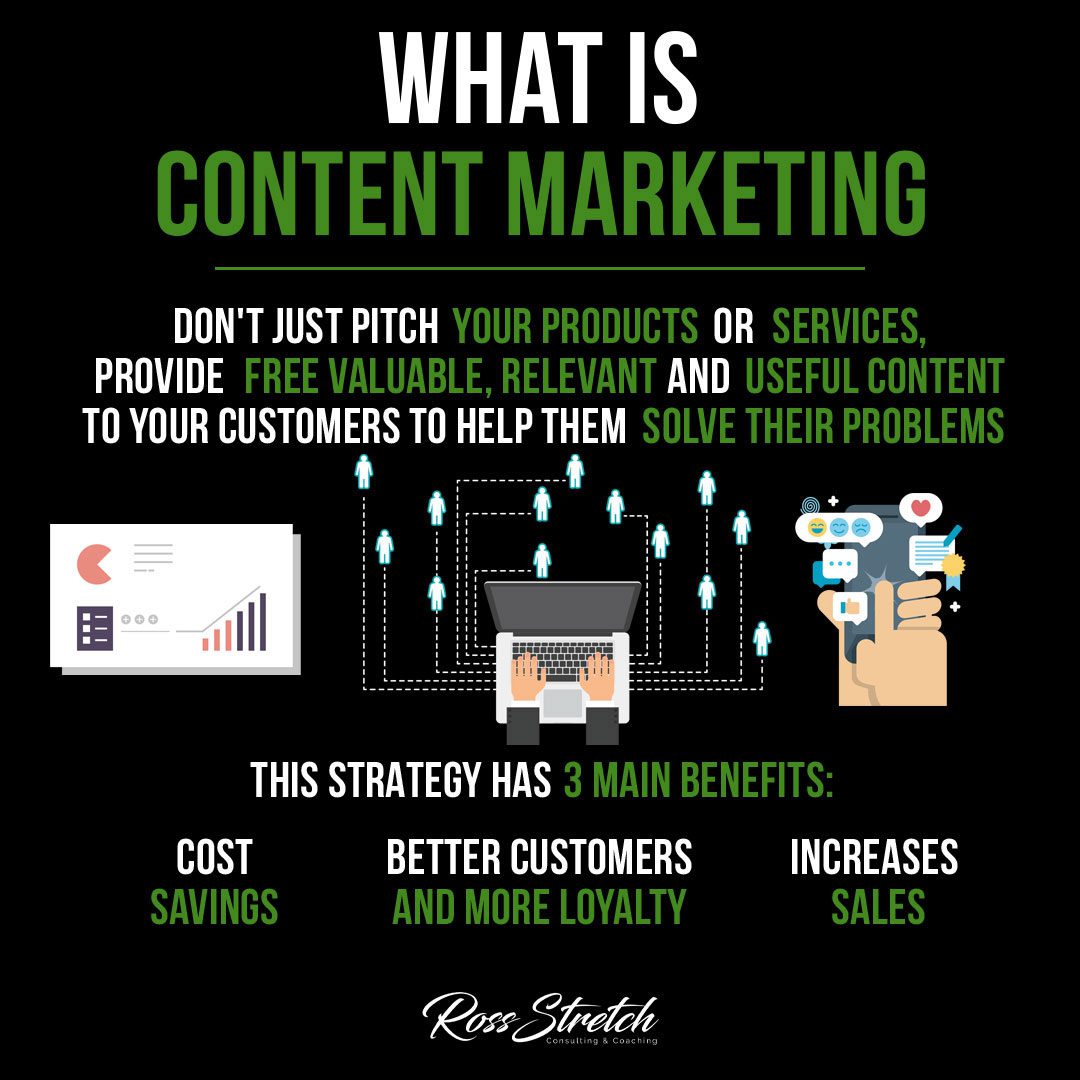
The economics of content marketing become compelling once you understand the compounding effect. A single high-quality article optimized for search can drive traffic and generate leads for years after publication. Compare that to a paid ad campaign, which produces results only while the budget is running. The upfront investment in content is higher in effort but lower in ongoing cost, and the returns grow rather than stagnate over time.
Content marketing also builds customer loyalty in ways that advertising rarely achieves. When a brand consistently provides genuinely useful information, it earns the status of a trusted resource rather than a vendor trying to sell something. That shift in perception has real commercial value — customers who trust a brand buy more frequently, are less price-sensitive, and refer others at higher rates. The content that established that trust continues to drive those behaviors long after it was created.
From a sales perspective, content guides potential buyers through the decision process on their own timeline. Educational content at the awareness stage helps people understand they have a problem worth solving. Comparison content at the consideration stage helps them evaluate their options. Case studies and testimonials at the decision stage provide the final social proof. This mirrors the buyer’s journey, and content marketing maps directly onto each stage of it.
Understanding Your Audience Before Creating Anything
The most common mistake in content marketing is creating content based on what the brand wants to say rather than what the audience wants to know. This produces content that serves internal purposes but generates no real traction because it doesn’t address actual needs. Effective content marketing begins with a thorough understanding of the target audience — their questions, challenges, vocabulary, goals, and decision-making process.
Audience research doesn’t have to be complicated. Review the questions your customers ask during sales calls and in support conversations. Look at what topics are driving traffic to competitors in your space. Use tools like Google’s People Also Ask section and keyword research platforms to understand what people are actively searching for. The goal is a clear picture of the problems your audience is trying to solve so that every piece of content you create serves a specific, real purpose rather than filling editorial space.
Building a Content System That Scales
Most content marketing efforts stall because they rely entirely on inspiration and individual effort rather than a repeatable system. A scalable content operation requires three things: a consistent publishing schedule, a clear editorial process, and a commitment to quality over volume. Publishing one deeply researched, well-crafted article per week will outperform five mediocre ones in virtually every measurable outcome, particularly in competitive niches where search engines reward genuine expertise and depth of coverage.
Content can take many forms — long-form articles, short-form videos, email newsletters, podcasts, infographics, and case studies are all valid depending on your audience’s preferences and your own production capabilities. The channel matters less than the consistency and quality. Pick the format you can execute well and maintain over time, build the process around it, and expand to other formats only once that core content engine is working reliably.
Distribution: Getting Your Content in Front of the Right People
Creating content is only half the equation. Without a distribution strategy, even excellent content sits unread. Organic search is the highest-leverage distribution channel for most content marketing programs — a piece of content that ranks on the first page of Google for a relevant search term generates consistent traffic without ongoing promotional effort. Achieving this requires search engine optimization: selecting the right keywords, structuring content appropriately, and building credibility through links from other trusted sources.
Email remains one of the most valuable distribution channels available. A list of people who have opted in to receive your content gives you a direct, algorithm-independent connection to your most engaged audience. Social media amplifies reach, particularly in the early stages before search traffic has built up. The most effective content programs use all three in combination — social to build initial reach, email to deepen relationships, and search to generate compounding traffic over time.
Measuring What Actually Matters
Content marketing generates a great deal of data, and most of it is noise. Vanity metrics — social shares, page views, follower counts — feel meaningful but rarely correlate with business outcomes. The metrics that matter are the ones that connect content performance to revenue: organic traffic growth, email subscribers acquired, leads generated from content, and customer acquisition cost compared to paid channels.
Set up tracking before publishing. Use Google Analytics to monitor traffic patterns and on-site behavior. Track which content pieces drive the most email sign-ups and lead form submissions. Review this data regularly and let it guide editorial decisions. Content topics and formats that generate actual business outcomes should be expanded on; content that generates engagement but no conversions should be reconsidered or repositioned in the buyer journey.
Conclusion
Content marketing is not a shortcut, and it rarely produces dramatic results in the first 90 days. But for businesses and creators willing to commit to it as a long-term strategy, it is one of the most cost-effective and sustainable ways to build an audience, establish authority, and generate revenue. The brands that win with content aren’t the ones with the biggest budgets — they’re the ones that understand their audience deeply, create content that genuinely helps, and show up consistently enough for the compounding effect to take hold.
Resources


 Ross Stretch