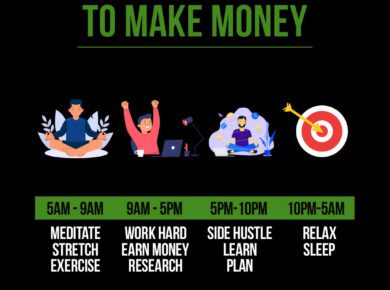
Every generation faces its defining moment — and ours is unlike anything before it. Technological acceleration, expanding access to knowledge, a global shift in how and where people work, and an energy transition of historic scope are converging in ways that create both unprecedented opportunity and unprecedented complexity. Understanding what makes this generation distinctive is not an exercise in self-congratulation — it is a practical analysis of the conditions that shape what is possible, and how to position yourself within them.
A Generation of Rising Cognitive Capability
Intelligence — or at least the measurable proxies for it — has been rising for more than a century. The Flynn Effect, named after researcher James Flynn, documents a consistent generational increase in IQ scores across the developed world throughout the 20th century. Today’s generation benefits from this cumulative cognitive uplift alongside improved nutrition, broader access to formal education, and the largest body of organized human knowledge ever assembled and made freely searchable.
The proliferation of online education has democratized access to world-class instruction in ways that were simply impossible for previous generations. Platforms like Coursera, Khan Academy, and edX make MIT coursework, Stanford lectures, and expert instruction in virtually any discipline available to anyone with an internet connection — for free or at minimal cost. A teenager in a rural area today has access to more educational resources than a well-funded student at a top university had twenty years ago. The implications for innovation, problem-solving, and economic participation are profound and still unfolding.
The Remote Work Revolution
The shift to remote and hybrid work is one of the most significant structural changes to the labor market in a generation. What began as a pandemic-era necessity has evolved into a permanent feature of the professional landscape. Upwork’s Future Workforce Report projects that approximately 22% of the US workforce will work remotely full-time through the late 2020s, with hybrid arrangements accounting for a substantial additional share.
This shift is redistributive in its effects. Workers who previously had to live in expensive cities to access high-paying professional roles can now work for global companies from anywhere. Entire industries have become accessible to talent in lower cost-of-living areas, fundamentally changing the relationship between geography and economic opportunity. New entrepreneurial categories have emerged to serve a newly mobile workforce — remote consulting, digital services, location-independent e-commerce, and asynchronous content creation — creating income streams that simply did not exist a decade ago.
The work-from-home shift has also permanently raised the ceiling for distributed team productivity. The widespread adoption of asynchronous collaboration tools, video communication platforms, and project management software has made it possible to run sophisticated global operations without a physical office — a capability that was aspirational before 2020 and is now table stakes.
The Democratization of Energy
The cost of solar power fell by more than 90% between 2010 and 2024. Wind energy costs dropped by over 70% in the same period. These are not incremental improvements — they represent one of the fastest cost reductions of any technology in industrial history, comparable in trajectory to the semiconductor cost curve that drove the computing revolution. The practical consequence is a fundamental shift in where energy wealth is created and who controls it.
For most of the 20th century, energy wealth was concentrated in regions with fossil fuel reserves. As renewable energy costs continue to fall, production becomes increasingly distributed — a homeowner with solar panels is now a micro-producer, communities that invest early in renewable infrastructure build economic resilience that compounds for decades, and developing regions that lack legacy fossil fuel grids can leapfrog directly to distributed clean energy systems. For investors, the energy transition represents one of the largest capital reallocation events in economic history. Trillions of dollars are moving from fossil fuel infrastructure into renewable energy, grid modernization, energy storage, and electrified transportation. Those who understand this transition early are positioned to participate in the wealth it creates.
Unprecedented Wealth Creation and Distribution
The number of millionaires globally has more than doubled over the past two decades, and the US remains the world’s largest pool of individual wealth. What has changed is the composition and the pathway. Where previous generations built wealth through careers in established institutions, today’s wealth creation is increasingly driven by technology, digital business models, and access to global markets that were previously available only to large corporations.
The barriers to building a meaningful business have never been lower. A skilled individual with a laptop and an internet connection can reach a global customer base, sell digital products at zero marginal cost, and build a sustainable income stream that was simply not possible before the internet era. The entrepreneurship premium — the additional wealth created by business ownership versus employment alone — has never been more broadly accessible. This does not mean wealth creation is easy or guaranteed, but it does mean that the structural barriers that once made it exclusive are genuinely eroding.
Exponential Technological Progress
Perhaps the most defining feature of this moment is the rate of technological change itself. Artificial intelligence, biotechnology, quantum computing, advanced materials science, and synthetic biology are all advancing at rates that make linear projection inadequate for planning purposes. The changes visible today — in AI-generated content, drug discovery timelines, and computing capability — were the subject of speculative forecasting just ten years ago.
The practical implication for individuals is not primarily about any specific technology. It is about the rate of change itself. Careers that were stable and reliable a decade ago are being transformed. New categories of work that did not exist five years ago are now in high demand and commanding premium compensation. Adaptability — the demonstrated ability to learn new skills, enter new fields, and update mental models as the landscape shifts — is the most durable competitive advantage available in this environment. It is more valuable than any specific credential or technical skill set, which will inevitably be superseded.
How to Leverage This Moment
Knowing that you live in an extraordinary moment is not enough on its own — it requires deliberate action to translate that context into personal advantage. The people who benefit most from periods of rapid change are those who stay genuinely informed, invest early in new capabilities, and build financial resilience that allows them to take calculated risks when the moment calls for it.
Build skills that compound across domains: technical literacy, clear communication, financial fluency, and the demonstrated capacity to learn new fields quickly. Invest in assets that align with the trends reshaping the economy — clean energy, digital infrastructure, and businesses that serve the remote and distributed workforce. Keep your cost structure lean enough to pursue opportunity when it appears without being held back by financial obligations that demand a specific income level. Develop the long-range perspective to distinguish between signal and noise in a world that generates both at unprecedented scale and speed.
Conclusion
What makes this generation special is not only what has been given to it — it is the scope of what is now possible. The convergence of rising educational access, remote work flexibility, clean energy abundance, digital entrepreneurship, and exponential technological progress creates conditions for personal and economic transformation that no previous generation has encountered. The question is not whether the opportunity exists. The question is whether you will position yourself to act on it deliberately, patiently, and with a long-range view of where these forces are heading.
Resources

 Ross Stretch