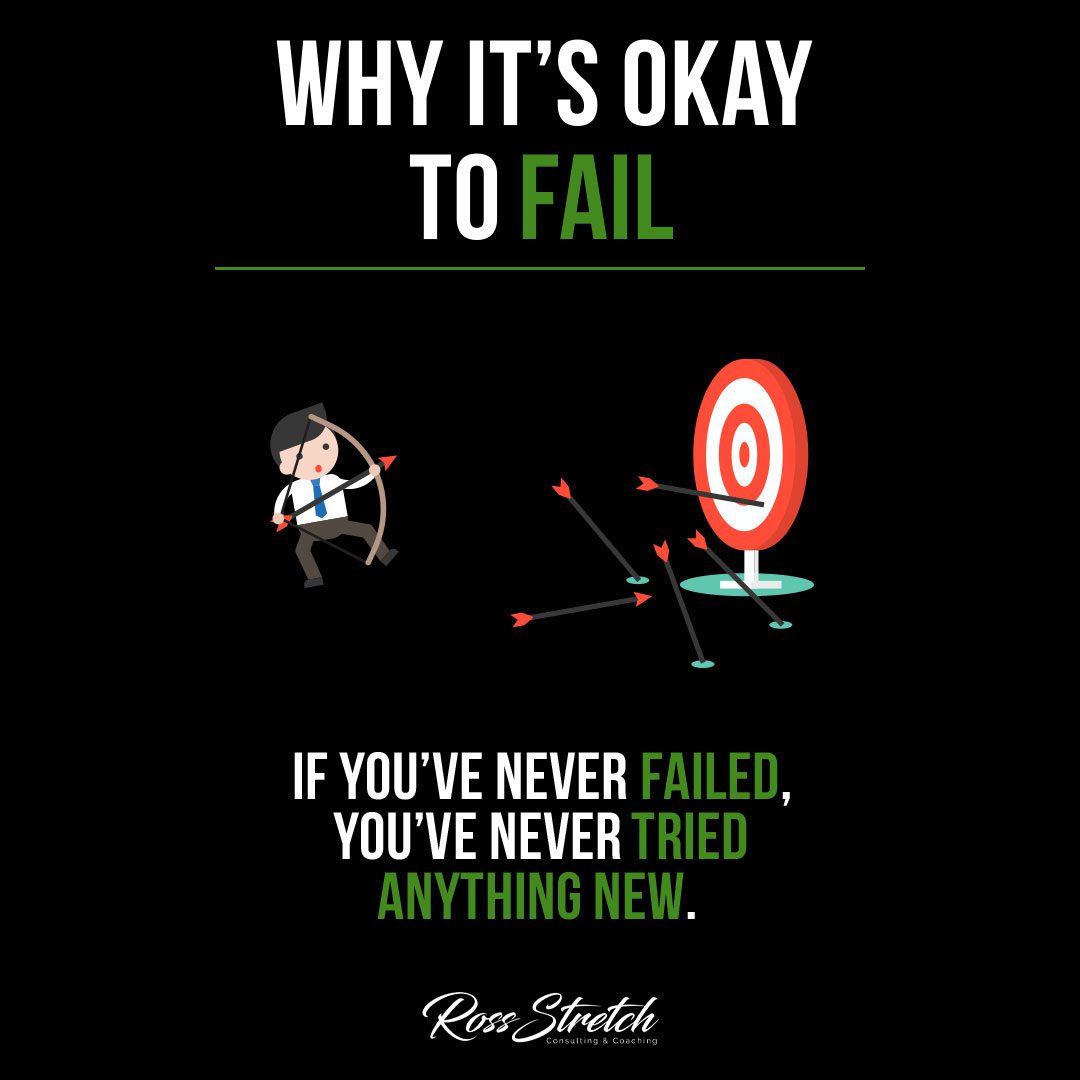
Failure is the word most people spend their entire lives trying to avoid. From the elementary school classroom to the corporate boardroom, the message is consistent: succeed or face the consequences. Yet some of the most accomplished people in business, science, and the arts describe their failures not as detours but as the precise mechanism through which their most important insights arrived. The fear of failure is understandable. But the refusal to risk failure guarantees mediocrity.
This is not a motivational claim — it is a structural reality of how learning works. Genuine progress in any field requires experimentation, and experimentation requires the genuine possibility of failure. Without that possibility, what you are doing is not exploration. It is execution within already-known parameters, and it produces incremental improvement at best. The question is not whether to accept the risk of failure. It is how to fail productively when it happens.
Failure Is the Price of Experimentation
Every meaningful innovation begins as a hypothesis — a belief that something might work that has not yet been proven. Thomas Edison’s process of testing thousands of materials before identifying a viable filament for the light bulb was not stubbornness. It was systematic experimentation, and each failed material represented genuine progress because it eliminated a possibility and narrowed the solution space. The failures were not obstacles to the breakthrough — they were the mechanism of it.
In business, the same principle applies. The products that failed before the breakthrough product are not embarrassments to be hidden — they are the research and development process made visible. Companies like Apple, Amazon, and Netflix have all launched initiatives that failed publicly and significantly. What distinguished them was not an absence of failure but a culture that treated failure as data and applied the lessons systematically to the next attempt rather than spending energy managing the optics of having been wrong.
Experimentation culture in high-performing organizations is no accident. It is a deliberate design choice — a recognition that the cost of never experimenting, measured in missed opportunities and stagnant growth, far exceeds the cost of the experiments that do not work out. The same logic applies at the individual level, applied to careers, side businesses, creative projects, and any ambitious personal goal.
What Failure Actually Teaches
The lessons available in failure are qualitatively different from the lessons available in success. When something works, you know your approach produced the desired outcome — but you often do not know precisely why, and you may attribute the success to the wrong variables. Success can be mistaken for skill when it was partly circumstance, or credited to decisions that were actually irrelevant to the outcome.
Failure, properly examined, is far more instructive. It reveals the gap between your mental model and reality. It exposes assumptions you were not aware you were making. It shows where your planning was too optimistic, where your execution was inconsistent, and which external factors you had underestimated or ignored entirely. A clear-eyed failure analysis — not self-flagellation, but genuine inquiry — consistently produces actionable insights that would have been invisible had everything gone according to plan.
The critical distinction is between experiencing failure and learning from it. Failure alone teaches nothing. It is the act of deliberately extracting the lesson — asking what went wrong, what you would do differently with the same information, and what you now know that you did not know before — that converts a bad outcome into genuine, lasting growth.
Building Resilience Through Repeated Exposure
Resilience is not a fixed personality trait you either possess or do not. It is a capacity built through repeated exposure to adversity, recovery, and continued forward movement. Every time you face a meaningful setback, extract the lesson, and continue anyway, you add to a psychological reserves account that makes the next difficulty easier to navigate. The entrepreneurs and professionals who seem unshakeable under pressure are not naturally fearless — they have accumulated more reps in the arena of real stakes.
Carol Dweck’s research on growth mindset — the belief that abilities and intelligence develop through effort and learning rather than being fixed at birth — demonstrates that individuals who view failure as feedback rather than as a verdict about their worth show greater persistence, higher long-term achievement, and more adaptive responses to setbacks. The mindset shift changes how the brain encodes the experience of failure and determines whether the instinctive response is withdrawal or re-engagement.
Practically, building resilience means deliberately choosing challenges at the edge of your current capability — far enough from your comfort zone that success is not guaranteed, but not so far beyond it that failure is certain regardless of effort. That productive discomfort zone is where real growth occurs, and the willingness to inhabit it consistently is one of the defining characteristics of professionals who keep improving throughout their careers rather than plateauing after initial success.
Overcoming the Social Stigma of Failure
One of the most significant barriers to a healthy relationship with failure is the social cost it carries in many professional environments. In cultures that prize visible success and associate failure with personal inadequacy, the risk of public failure feels disproportionately threatening — large enough to override the pull of ambitious goals. This is why talented people consistently pursue safer, smaller objectives than they are genuinely capable of achieving.
Reframing failure socially begins with recognizing that the people most worth impressing are not impressed by safe bets. Experienced entrepreneurs, executives, and investors who operate at high levels have almost all experienced significant failure themselves. They recognize that failing at an ambitious attempt demonstrates more character, judgment, and genuine engagement with the world than succeeding at a trivial one. A thoughtful, honest response to a past failure is often more compelling in high-level professional circles than a resume full of unremarkable wins.
The environment you choose matters enormously. Surrounding yourself with professionals who have a healthy relationship with failure — who discuss openly what has not worked and what they learned — creates a social context where risk-taking feels less existentially threatening and the feedback loop after failure is more constructive. This is not accidental; it is something you can deliberately engineer by choosing your professional communities with intention.
Creating Conditions Where Failure Is Productive
Not all failure is equally useful. Productive failure has specific characteristics: it occurs in pursuit of a meaningful and clearly defined goal, it generates real information about what needs to change, and the person experiencing it is prepared to examine what happened honestly rather than defensively. Unproductive failure — resulting from inadequate preparation, vague objectives, or a refusal to examine what went wrong — produces pain without insight and tends to create the kind of learned helplessness that discourages future attempts.
Creating the conditions for productive failure means investing seriously in preparation before attempting something challenging, defining clear success criteria so that you know specifically what did not work and why, and building in structured reflection after significant setbacks. A useful practice: within 48 hours of a meaningful failure, write down three factors that contributed to it, two things you would do differently with the same information, and one assumption about your capabilities or the market that needs to be revised going forward.
Conclusion
Failure is not something to be celebrated for its own sake, and it should never be manufactured for the sake of appearing relatable. But it must be accepted as a structural feature of any ambitious pursuit, and approached with the intellectual honesty that converts hard experiences into lasting capability. The professionals and entrepreneurs who build remarkable careers and businesses are not those who fail the least. They are those who fail forward — extracting the lessons, adjusting their approach, and returning to the challenge with better information than they had before. That cycle, repeated deliberately over years, is what the outside world eventually calls success.
Resources

 Ross Stretch