There’s a reason “people quit bosses, not jobs” has become one of the most repeated phrases in management literature — because it captures something painfully true about how authority is commonly exercised. The title of manager, director, or executive grants positional power, but positional power alone does not inspire people to do their best work. That requires something different: genuine leadership.
Understanding the distinction between a boss and a leader is not a semantic exercise. It has direct consequences for team performance, employee retention, organizational culture, and ultimately business results. Whether you currently manage a team or aspire to, understanding this difference — and making the deliberate choice to operate as a leader — is one of the highest-impact professional decisions you can make.
How Bosses Operate — And Why It Fails
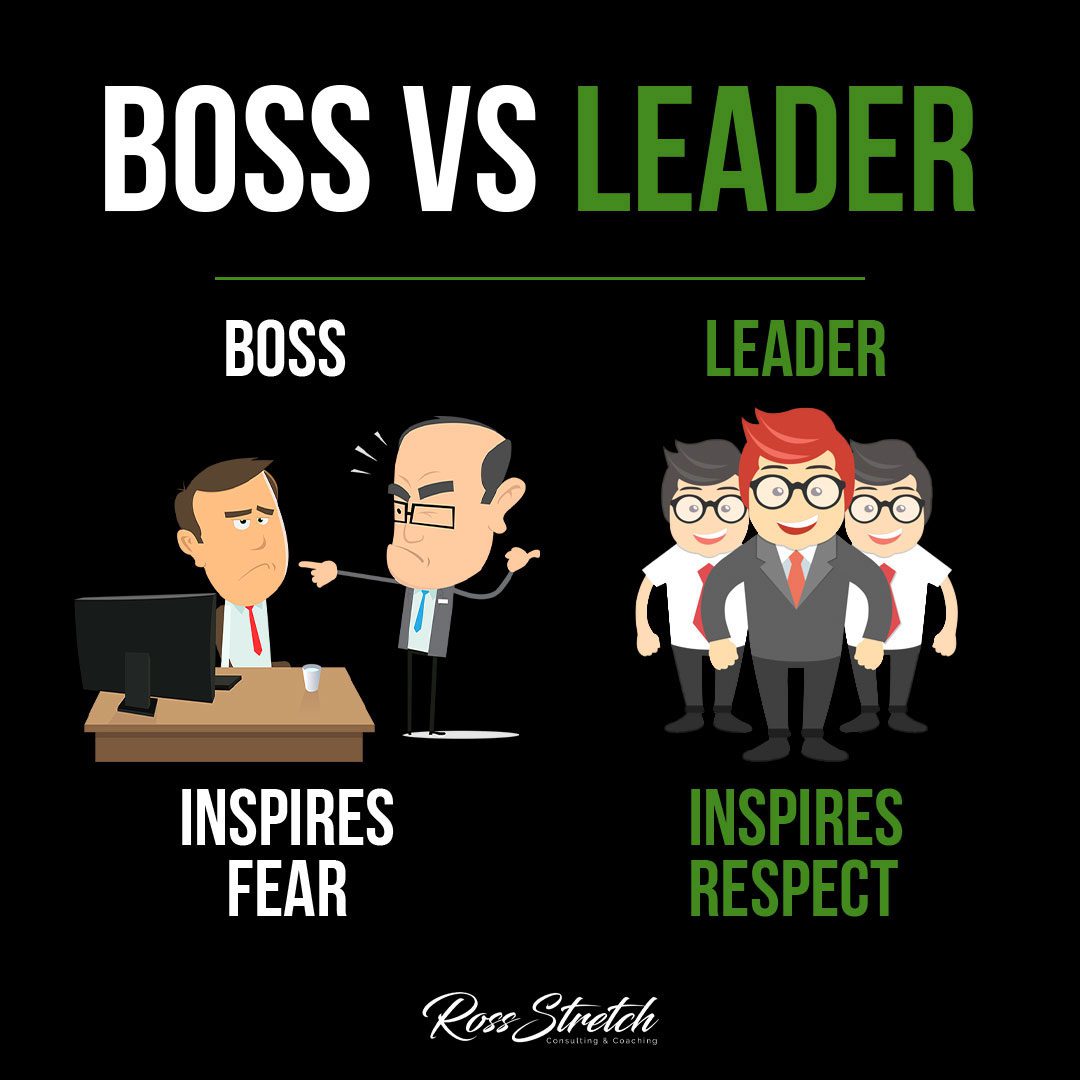
The boss model of management is built on authority. A boss uses their organizational position to extract compliance from those who report to them. Instructions flow downward; accountability flows upward. When things go wrong, the blame is distributed to the team. When things go right, the credit is claimed by the person at the top. Motivation in this environment is fear-based — perform what’s required to avoid consequences.
This model produces short-term compliance at the cost of long-term engagement. Teams managed by bosses rather than leaders tend to do exactly what’s asked of them — no more, no less. Innovation, discretionary effort, and genuine commitment don’t flourish in environments where the primary incentive is avoiding punishment. The result is mediocre performance, elevated turnover, and a culture that drives away the best talent — the people who have options and use them.
Gallup’s research on employee engagement consistently finds that managers account for at least 70% of the variance in team engagement scores. In practical terms, this means the quality of leadership a direct report experiences is the single biggest factor in whether they stay, grow, and perform — or quietly disengage and eventually leave. The cost of that turnover, across recruiting, onboarding, and productivity loss, is substantial by any measure.
What Leaders Do Differently
Leadership is not a title — it’s a practice. Where a boss demands respect, a leader earns it through consistency, transparency, and genuine investment in their team’s development. Where a boss micromanages to ensure control, a leader delegates effectively to build capability and trust. Where a boss takes credit, a leader recognizes contribution publicly and absorbs accountability privately.
Leaders motivate through vision and intrinsic incentives rather than fear and hierarchy. They understand that people perform at their highest when they know why their work matters, feel trusted to execute it, and believe their development is a genuine organizational priority. This doesn’t mean leaders are soft — the best leaders maintain high standards and make difficult decisions. The difference is that those decisions are made in service of the team and the mission, not in service of the leader’s ego or comfort.
Effective leaders also communicate differently. They listen more than they talk, ask questions before making pronouncements, and create psychological safety — the condition where team members feel secure enough to take risks, admit mistakes, and share ideas without fear of punishment. Google’s Project Aristotle research identified psychological safety as the single most important factor in high-performing teams, above technical skill, experience level, or any other variable the researchers examined.
The Real-World Impact on Teams and Organizations
The difference between boss-led and leader-led teams shows up clearly in performance data. Gallup’s research finds that highly engaged teams show significantly higher profitability and productivity, alongside meaningfully lower turnover compared to disengaged teams. Engagement, in turn, is overwhelmingly driven by the quality of direct management. Organizations that develop strong leaders at every level don’t just have better cultures — they outperform their competitors on financial metrics as well.
From a talent retention standpoint, the cost of losing a high-performing employee typically ranges from 50% to more than 100% of their annual salary, when you account for recruiting, onboarding, training, and the productivity gap during transition. Leaders who invest in their team’s growth and create environments where people genuinely want to work are delivering measurable financial value to their organizations — even before considering the downstream impact on innovation and customer experience.
Making the Shift from Boss to Leader
If you’re currently in a management role and you’re honest enough to see boss tendencies in your own approach, the shift is achievable — but it requires deliberate effort over time. It starts with asking a different question. Instead of “how do I get this person to do what I need?” ask “what does this person need to do their best work?” That reorientation changes everything about how the management relationship functions.
Practical steps include moving from directive communication to coaching conversations — asking your team members questions and helping them arrive at solutions rather than simply telling them what to do. It means giving public credit generously and being explicit about individual contributions to shared outcomes. It means owning failures at the team level, particularly those that originated from your own decisions or communication, rather than deflecting responsibility downward to those with less organizational power.
Perhaps most importantly, the shift requires developing genuine interest in the people you lead. Understanding their career goals, working styles, strengths, and current challenges allows you to manage them as individuals rather than as interchangeable resources. People who feel seen and understood by their manager are significantly more likely to bring discretionary effort to their work — the kind of engagement that can’t be mandated, only earned through consistent, authentic investment.
Conclusion
The distinction between a boss and a leader ultimately comes down to whether authority is used to extract or to elevate. Bosses extract — compliance, effort, results — through the pressure of hierarchy. Leaders elevate — capability, engagement, performance — through investment, trust, and shared purpose. In an economy where talent is the most valuable and most mobile asset in any organization, the ability to lead rather than simply manage is not a soft skill. It is a core business competency. Decide which one you want to be, and then act accordingly — because the people on your team have already decided what they think you are.
Resources
- Leaders Eat Last by Simon Sinek — A compelling case for leadership rooted in human trust, safety, and biological drives
- Harvard Business Review: Leadership — Research-backed articles on leadership development, management effectiveness, and team performance
- The 21 Irrefutable Laws of Leadership by John Maxwell — A widely used foundational leadership framework across business, military, and nonprofit sectors
- Google re:Work — Understanding Team Effectiveness — The original research from Project Aristotle on what actually makes teams perform at the highest level

 Ross Stretch