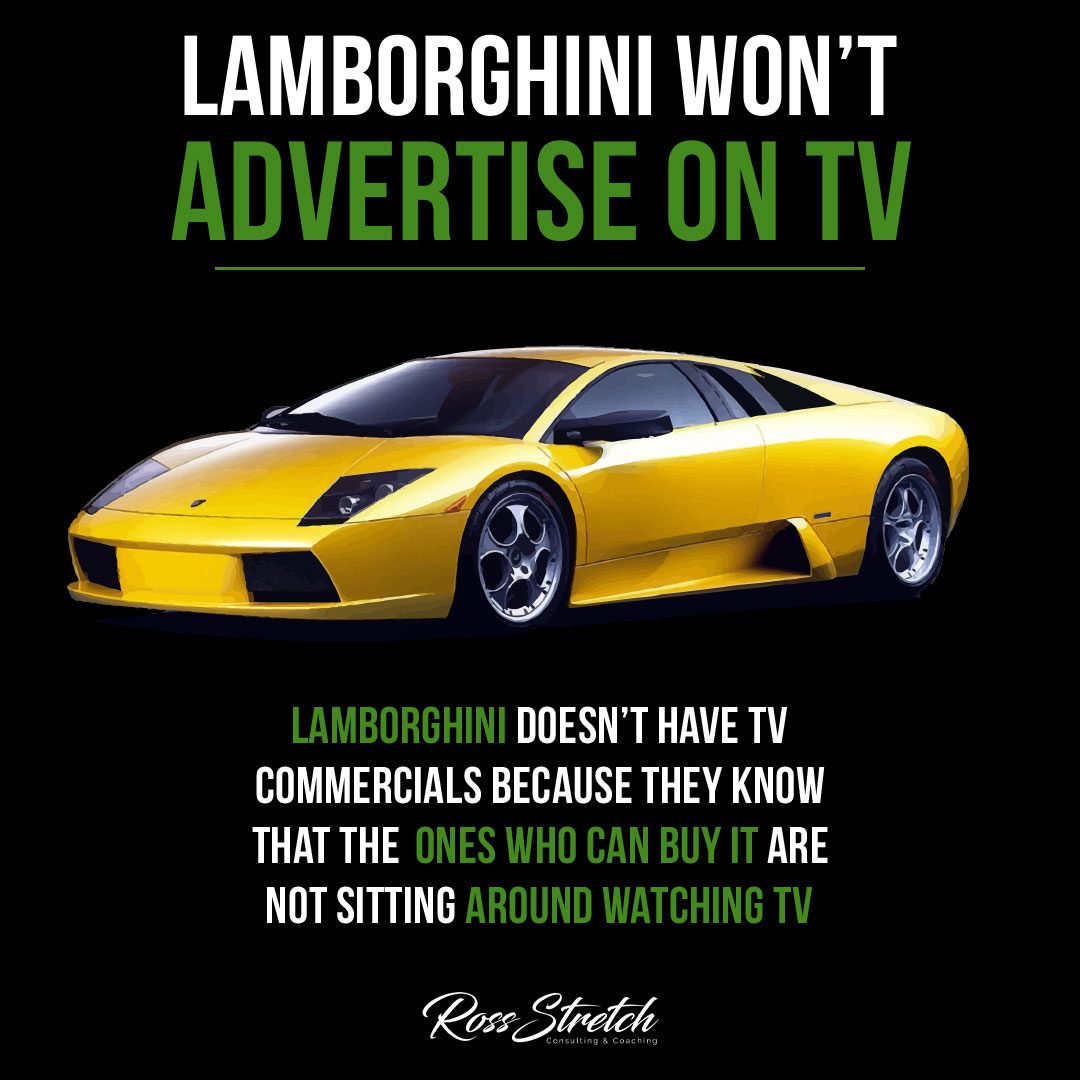
Lamborghini builds roughly 10,000 cars per year. General Motors produces more than that in a single day. The difference is not just manufacturing capacity — it is a deliberate philosophy that shapes every aspect of how Lamborghini operates, including how it markets itself. While mass-market automakers spend hundreds of millions annually on television commercials, Lamborghini does not run TV ads. This is not a budget constraint. It is a strategic choice rooted in a precise understanding of who buys luxury goods, why they buy them, and what kind of marketing actually resonates with that audience. Studying Lamborghini’s marketing strategy reveals principles about brand exclusivity and premium positioning that apply to any business aiming to command a genuine price premium over time.
\
\
\
\
Who Buys Luxury — and Why the Answer Changes Everything
\
\
Luxury consumers are not like mass-market consumers. They are not primarily motivated by value for money — they have sufficient financial resources that cost is rarely the dominant factor in a purchase decision. What drives luxury buying is identity, exclusivity, craftsmanship, and the desire to be associated with something genuinely rare. A Lamborghini is not transportation. It is a statement about who its owner is and what they have achieved. That distinction has profound implications for how the brand must communicate.
\
\
Mass-market advertising is designed to reach the widest possible audience as efficiently as possible. But for Lamborghini, reaching a broad audience is not the goal — reaching the right few thousand people globally is the goal. More importantly, reaching those people in a way that reinforces the brand’s exclusivity and prestige is essential. A Lamborghini commercial airing between game show segments on network television would not just be ineffective — it would actively undermine what makes the brand desirable in the first place.
\
\
The luxury consumer’s psychology also means that scarcity enhances rather than frustrates desire. Knowing that a Lamborghini is difficult to acquire — that certain models carry waitlists, that specific configurations are allocated by relationship rather than simply purchased — increases rather than decreases its appeal. Traditional advertising, with its implicit promise of availability to everyone, is antithetical to the exclusivity dynamic that luxury pricing depends on.
\
\
\
\
Why Mass-Market Advertising Undermines Luxury Brands
\
\
The core problem with mass-market advertising for a luxury brand is dilution. When you see a product advertised during primetime television, you implicitly understand that it is available to most people — that the manufacturer wants as many buyers as possible. That accessibility is the foundation of mass-market brand-building. But accessibility is the enemy of luxury, because luxury derives much of its value from the signal it sends, and that signal requires exclusivity to remain meaningful.
\
\
Owning a Lamborghini communicates something specific to others precisely because most people cannot own one. The moment the brand begins appearing in environments that everyone shares — broadcast television, mass-market publications, mainstream social media advertising — it starts to feel less rare. And a luxury good that feels less rare commands less of a premium, because the aspirational signal that justified the price is weakening. The brand does not need to become common for this to happen; the perception of commonality is enough to begin eroding the pricing power.
\
\
This is why luxury brands across categories — from Hermès to Rolex to Porsche’s highest trim lines — invest heavily in controlling where and how their brand appears publicly. Every touchpoint is evaluated not just for reach, but for whether it reinforces or dilutes the brand’s position in the minds of the audience that matters most.
\
\
\
\
Lamborghini’s Deliberate Marketing Choices
\
\
Rather than broadcasting to millions, Lamborghini invests in experiences and environments that reach exactly the right people in exactly the right context. The brand is deeply embedded in motorsports — both through its own racing programs and through high-profile track day events that allow qualified buyers to experience the vehicles in a controlled, exclusive environment. These events generate earned media coverage and organic word-of-mouth among precisely the demographic the brand serves.
\
\
High-profile collaborations and carefully selected partnerships extend the brand’s presence without sacrificing its positioning. Associations with elite athletic programs, premium lifestyle events, and prestigious international competitions keep Lamborghini visible in environments where its audience naturally gathers, without requiring a television budget or a mass-market distribution approach.
\
\
The brand also relies heavily on its existing owners as authentic brand ambassadors. A Lamborghini spotted at an exclusive gathering generates more genuine desire than any paid placement could produce. When owners showcase their vehicles in the right contexts, they do marketing work that no advertising agency can replicate — authentic, peer-validated, and credible in a way that paid creative is structurally incapable of achieving.
\
\
\
\
Digital Channels and the New Luxury Audience
\
\
Lamborghini’s avoidance of traditional advertising does not mean avoiding digital platforms. The brand maintains a sophisticated presence across YouTube and Instagram — but entirely on its own terms, with complete control over quality and context. Launch videos for new models are cinematic and produced to a standard that reinforces brand prestige rather than diluting it. These videos routinely accumulate millions of views from enthusiasts who will never buy the product, but whose admiration contributes to the cultural cachet that makes actual buyers willing to pay a premium.
\
\
The distinction between Lamborghini’s digital presence and standard social media advertising is control and intentionality. The brand does not run retargeted display ads or sponsor generic influencer content aimed at broad demographics. It produces editorial-quality content placed in environments where it will be received with the reverence the brand commands. The goal is never raw impression volume — it is impression quality and the meaning those impressions carry.
\
\
\
\
The Exclusivity Principle: Scarcity Sustains Premium Pricing
\
\
Lamborghini intentionally limits its production volume. This is not purely a manufacturing constraint — it is a deliberate strategic choice. By producing fewer vehicles than the market could theoretically absorb at lower prices, the brand maintains waitlists, supports strong residual values, and preserves the sense of rarity that makes ownership feel meaningful and exclusive. The scarcity itself is part of the product experience.
\
\
This principle extends to every dimension of the brand’s market behavior. Limited-edition models sell out before production begins. Special collaborations are intentionally restricted to small numbers. Certain paint options and configurations are available only to customers with an established purchase history. Every one of these mechanisms reinforces the same message: owning a Lamborghini is a privilege that cannot simply be purchased by anyone with sufficient funds at any given moment — and that friction is a feature, not a flaw.
\
\
For entrepreneurs and marketers, the lesson is broadly applicable regardless of industry. The brands that command lasting price premiums are those that maintain genuine differentiation, control their distribution and communication channels carefully, and resist the temptation to chase volume at the expense of positioning. Exclusivity, once lost, is extraordinarily difficult to rebuild.
\
\
\
\
Conclusion
\
\
Lamborghini’s marketing strategy is a masterclass in understanding your audience and aligning every decision to serve that understanding precisely. By refusing to follow the mass-market advertising playbook, the brand protects the scarcity and exclusivity that make it genuinely desirable. The channels you choose, the audiences you target, and the environments your brand appears in all send signals about what your product is worth. Marketing to everyone often means being valued deeply by no one. The brands that sustain lasting premiums are those that know exactly who they serve — and make every decision accordingly.
\
\
\
\
Resources
\
\
- \
- Lamborghini Official Website — explore the brand’s digital presence firsthand to see how luxury positioning translates to an online experience at every level.
- Harvard Business Review: Putting the Luxury Back in Luxury — analysis of what makes luxury brands work and how exclusivity is maintained in modern competitive markets.
- The Luxury Strategy by Jean-Noel Kapferer and Vincent Bastien — the definitive book on how luxury brands are built, positioned, and protected from the dilution that destroys premium pricing power.
- Business of Fashion: The Science of Luxury — in-depth coverage of luxury brand strategy, consumer psychology, and the economics of exclusivity across categories.
\
\
\
\


 Ross Stretch