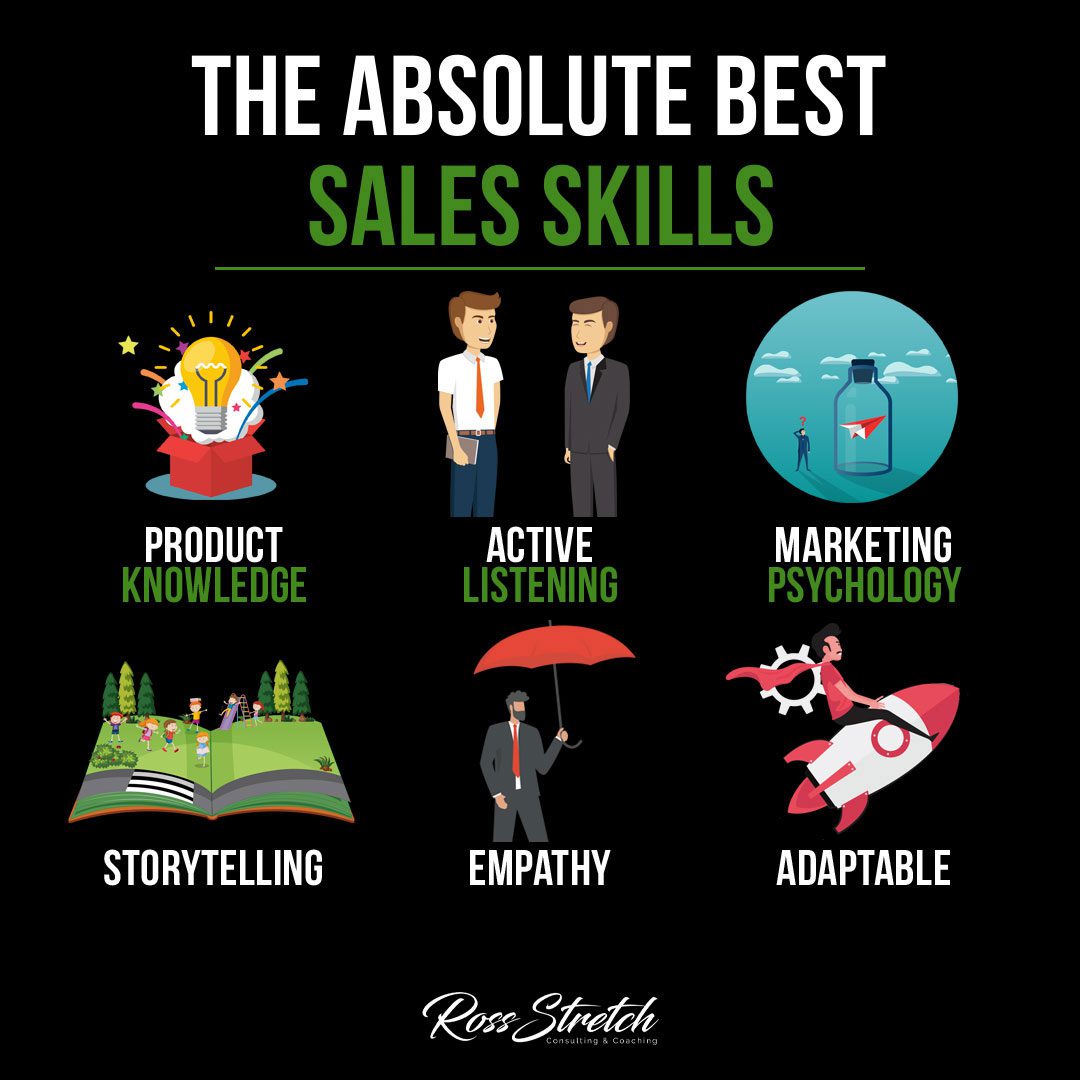
In the dynamic world of sales, the difference between average performers and top earners is rarely the number of calls they make or the products they sell — it’s the depth of their skills. While CRM tools, automation, and data analytics continue to transform the profession, human-centered sales skills remain the decisive edge. The ability to listen deeply, communicate persuasively, adapt in real time, and build genuine trust is what separates professionals who consistently close deals from those who rely on volume and luck alone. In this guide, we break down the six core competencies that define sales excellence — and how to systematically develop each one.
Product Knowledge: The Non-Negotiable Foundation
Deep product knowledge is the bedrock on which every other sales skill rests. When you know your product or service with genuine mastery — not just the feature list, but the underlying value, the ideal use cases, the competitive differentiators, and the common objections — your entire selling posture changes. You stop trying to convince and start simply communicating truth. Customers can feel the difference between a salesperson who genuinely understands what they’re offering and one who is reciting a script.
Product knowledge also enables the kind of diagnostic questioning that transforms a sales conversation from a pitch into a consultation. When you understand what your product can and cannot do with precision, you can ask sharper questions, make more relevant recommendations, and speak with the calm authority that builds credibility fast. According to research from Richardson Sales Performance, salespeople who demonstrate expertise early in a conversation are significantly more likely to advance opportunities through the pipeline and ultimately close.
- Familiarize yourself with every feature and its underlying benefit: Know each use case, not just the headline value proposition.
- Stay current on industry trends: Understand how your product fits into the broader market landscape and competitive environment your customers navigate.
- Anticipate objections proactively: Map every common customer concern to a clear, honest response backed by evidence or customer proof.
- Commit to continuous learning: Product knowledge depreciates — schedule regular refreshers and stay connected to your product and customer success teams.
Active Listening: The Skill Most Salespeople Think They Have But Don’t
Survey after survey of sales managers identifies poor listening as the most common fatal flaw in underperforming salespeople. It’s easy to understand why: sales conversations are high-stakes, pressure-filled environments where the urge to talk — to explain, convince, and close — is intense. But the professionals who win consistently have learned a counterintuitive truth: the person asking the questions and listening carefully is controlling the conversation, not the one doing the most talking.
Active listening goes well beyond staying quiet while the customer speaks. It means attending to tone, pace, and the specific language a customer uses — especially the emotional language, which reveals what they truly care about versus what they claim to care about. It means asking follow-up questions that demonstrate genuine comprehension, and being willing to let a conversation go in unexpected directions. Customers will consistently tell you exactly how to sell to them — if you’re paying close enough attention to hear it.
- Give undivided attention: Eliminate all distractions in sales conversations — no multitasking, no note-taking at the expense of genuine engagement.
- Ask probing questions: Go deeper than the surface-level need to uncover the underlying pain, priority, or aspiration driving the decision.
- Paraphrase and confirm: Reflect back what you’ve heard to verify understanding and signal that you’re genuinely engaged with their situation.
- Practice empathy: Strive to understand not just what customers need logically, but how they feel about their current situation emotionally.
Marketing Psychology: Understand How Decisions Are Actually Made
Customers don’t make purchasing decisions through rational analysis alone — they make them through a combination of emotion, social influence, perceived risk, and cognitive shortcuts. This is not a cynical observation; it’s well-documented behavioral science. Robert Cialdini’s foundational research on influence, Daniel Kahneman’s work on cognitive biases, and decades of consumer psychology research all converge on the same conclusion: understanding the psychological underpinnings of decision-making is essential to ethical and effective selling.
The most powerful applications of marketing psychology in sales are built around reducing perceived risk and increasing perceived value. Social proof — testimonials, case studies, logos, and peer references — directly addresses the “will this work for me?” anxiety that blocks most purchasing decisions. Scarcity and urgency activate loss aversion, one of the most reliable motivators in human psychology. And reciprocity — genuinely helping a prospect before asking for anything — establishes goodwill that is consistently returned in kind.
- Leverage social proof: Make relevant case studies and testimonials a standard part of every sales conversation, matched to the prospect’s profile.
- Create appropriate urgency: Use legitimate time-sensitive factors — not manufactured pressure — to help prospects commit to moving forward.
- Appeal to both logic and emotion: Give customers the rational justification they need internally, but ensure your messaging resonates emotionally as well.
- Apply reciprocity: Offer genuine value — insights, referrals, free resources — before asking for any commitment in return.
Storytelling: The Language the Human Brain Is Built For
Data and logic inform; stories persuade. Neuroscience research by Paul Zak at Claremont Graduate University has demonstrated that narrative activates regions of the brain associated with experience and emotion — the same regions that drive purchasing decisions. When a customer hears a relevant story about how someone like them solved a problem like theirs using your product, their brain processes it not as information but as lived experience. This creates a level of engagement and memorability that statistics and feature lists simply cannot produce.
The most effective sales stories follow a simple, consistent structure: establish the context of a customer who faced a specific challenge, show the turning point when they adopted your solution, and quantify the transformation that followed. The best salespeople maintain a library of three to five high-impact stories they can deploy fluidly in conversation — matched to the specific profile and concerns of the prospect in front of them. This is storytelling as craft, not improvisation.
- Build a story library: Develop three to five compelling customer narratives that cover your most common use cases, industries, and objections.
- Make it relevant: Match the story to the customer’s industry, role, or problem — relevance amplifies emotional impact dramatically.
- Quantify the outcome: Numbers anchor the story in reality and give customers concrete evidence to justify their decision to internal stakeholders.
- Practice delivery: A great story told poorly loses its power — rehearse until the narrative flows naturally and conversationally, not like a memorized pitch.
Empathy: The Difference Between Selling and Serving
The most trusted sales professionals are not the ones who are most persuasive — they’re the ones who most genuinely care about whether their solution actually helps the customer. Empathy in sales means taking the customer’s interests seriously enough to sometimes recommend against a purchase, to acknowledge a product limitation honestly, or to refer a prospect elsewhere if another solution truly fits better. This level of honest advocacy is rare, and it builds the kind of trust that produces repeat business, referrals, and relationships that outlast any individual transaction.
Empathy also plays a critical practical role in the sales process itself: it enables accurate diagnosis. When customers feel genuinely heard and understood, they reveal more — more about their real priorities, budget constraints, internal politics, and decision timeline. This information is essential. It allows you to tailor your solution, anticipate objections before they surface, and position your value proposition with a precision that generic pitches can never achieve.
- Prioritize their outcome over your quota: When customers sense that your advice is genuinely in their interest, resistance drops and trust rises immediately.
- Validate emotions and frustrations: Acknowledge the customer’s current pain before jumping to solutions — people buy from those who understand their problem.
- Offer tailored solutions: Customize your recommendation to their specific situation — never pitch the same way to two different customers.
- Follow up with genuine care: Post-sale support and check-ins signal that you’re invested in their success, not just their signature on a contract.
Adaptability: The Skill That Keeps All the Others Relevant
Markets change. Customer priorities shift. Technology creates new buying behaviors and new competitive dynamics. The sales professionals who maintain peak performance across these changes are not those with the most rigid frameworks — they’re those with the most flexible ones. Adaptability in sales means reading the room accurately enough to adjust your approach in real time, staying current enough to understand how your customer’s world is evolving, and being humble enough to update your methods when the evidence shows they’re no longer working.
Adaptability also operates at the individual level. Every customer is different — in communication style, in decision-making process, in what they find credible and persuasive. The salesperson who applies the same script to every prospect will always leave value on the table. The salesperson who quickly reads which approach a specific person responds to, and adjusts accordingly, consistently outperforms. This requires genuine curiosity about people and a commitment to being in a permanent state of learning.
- Tailor your communication style: Match your pace, depth, and formality to each individual customer’s preferences — not your own defaults.
- Welcome feedback from lost deals: Every significant loss is a data point. Debrief systematically and incorporate the lesson into your next opportunity.
- Stay current on your market: Follow your industry, your customers’ industries, and the evolving sales landscape through regular reading and professional development.
- Invest in continuous training: Top performers in sales consistently attend more workshops, read more books, and seek more coaching than their peers — not less.
Conclusion
Mastering sales excellence requires building across all six of these competencies in parallel — not sequentially. Product knowledge without empathy produces technically accurate pitches that feel cold. Storytelling without active listening produces compelling narratives aimed at the wrong problem. Each skill reinforces the others, and the professional who invests seriously across all six creates a compounding advantage that separates them from the vast majority of their peers.
The best news is that every one of these skills is learnable at any stage of a sales career. They respond directly to deliberate practice, honest self-assessment, and a genuine commitment to serving customers well. Identify your biggest current gap, build a focused development plan around it, and track your results rigorously. The improvement will be measurable — and it will show up directly in your pipeline and your commission statement.
Resources

 Ross Stretch